case study
BibaFlow
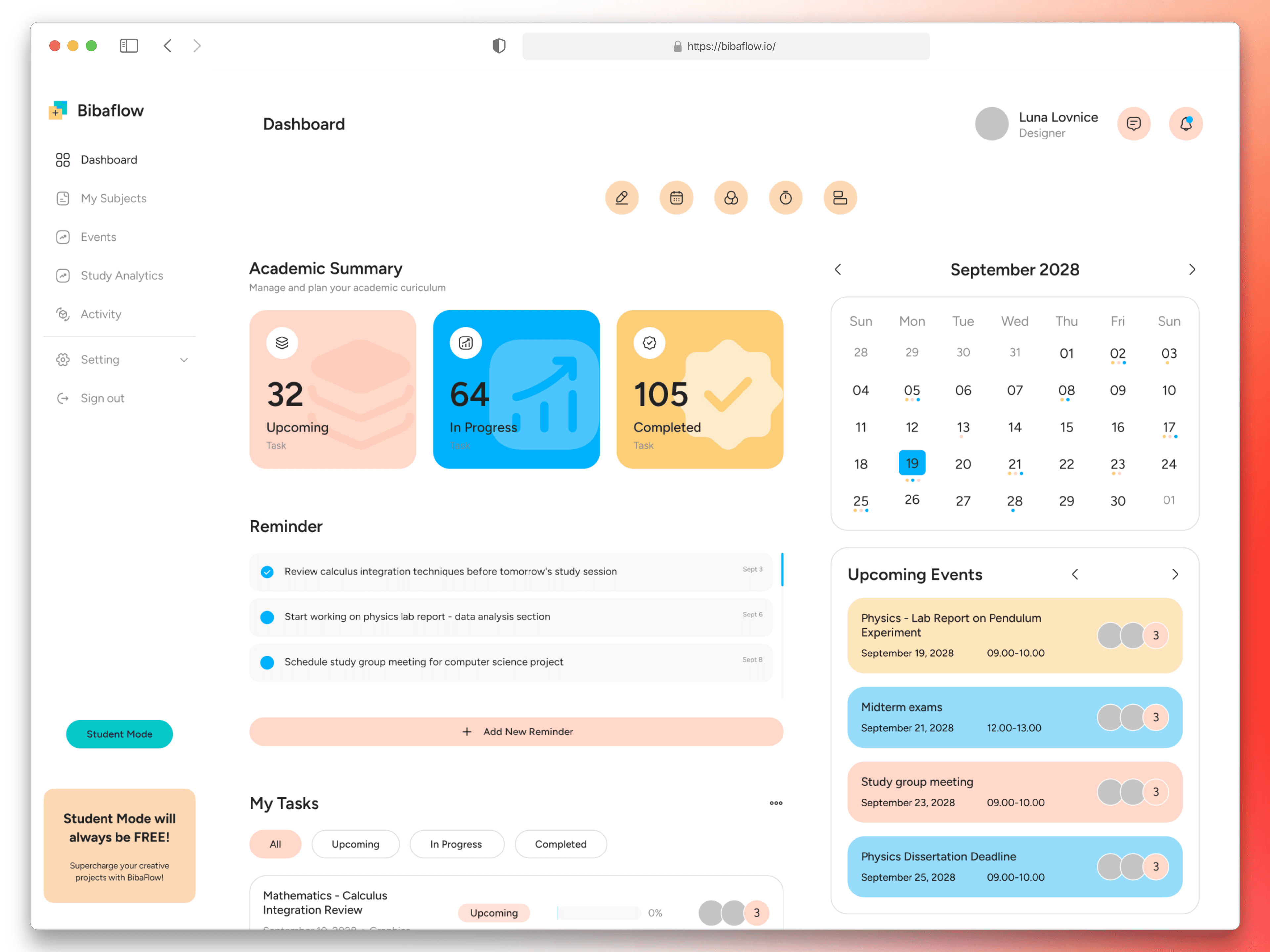
Worked with the Bibaflow team to turn the way they already worked into one workspace for projects, tasks, time, budgets and billing. It changes shape for company leaders, team members, freelancers and students, and was built on Bubble and Stripe for multi-company SaaS from day one.
- Timeline
- 1 to 3 months
- Stack
- Bubble + Stripe
- Architecture
- Multi-company
- Role
- Product Design, Bubble Development
Background
The Bibaflow team ran its work across spreadsheets, chat apps and SaaS tools that were never built to work together. Tasks were scattered, nobody could see a whole project, and tracking time or accountability meant constant manual follow-up.
The client did not want to bend their process to fit generic project software. They wanted a platform built around how the team actually worked, which could later be sold to other teams as a subscription product.
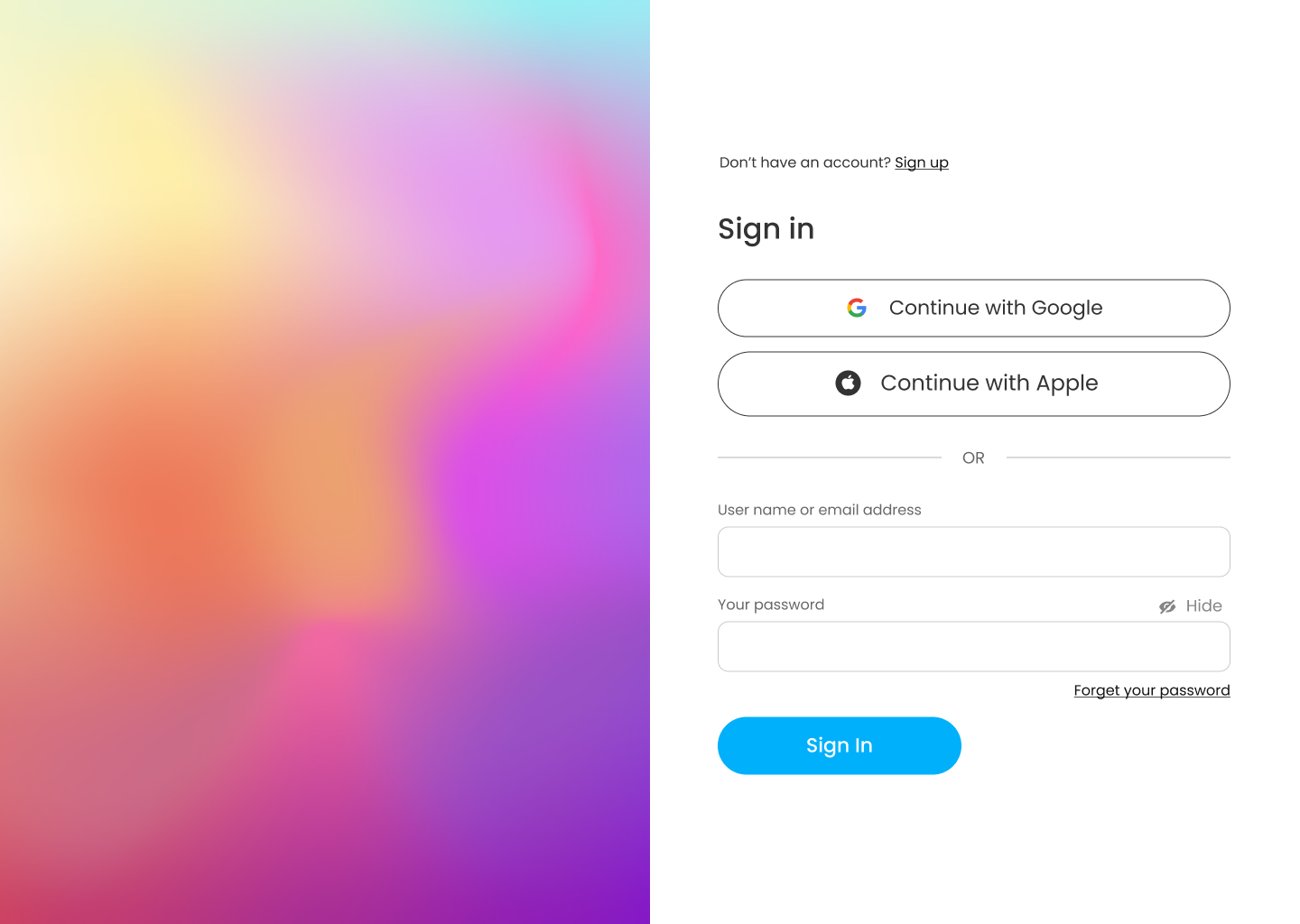
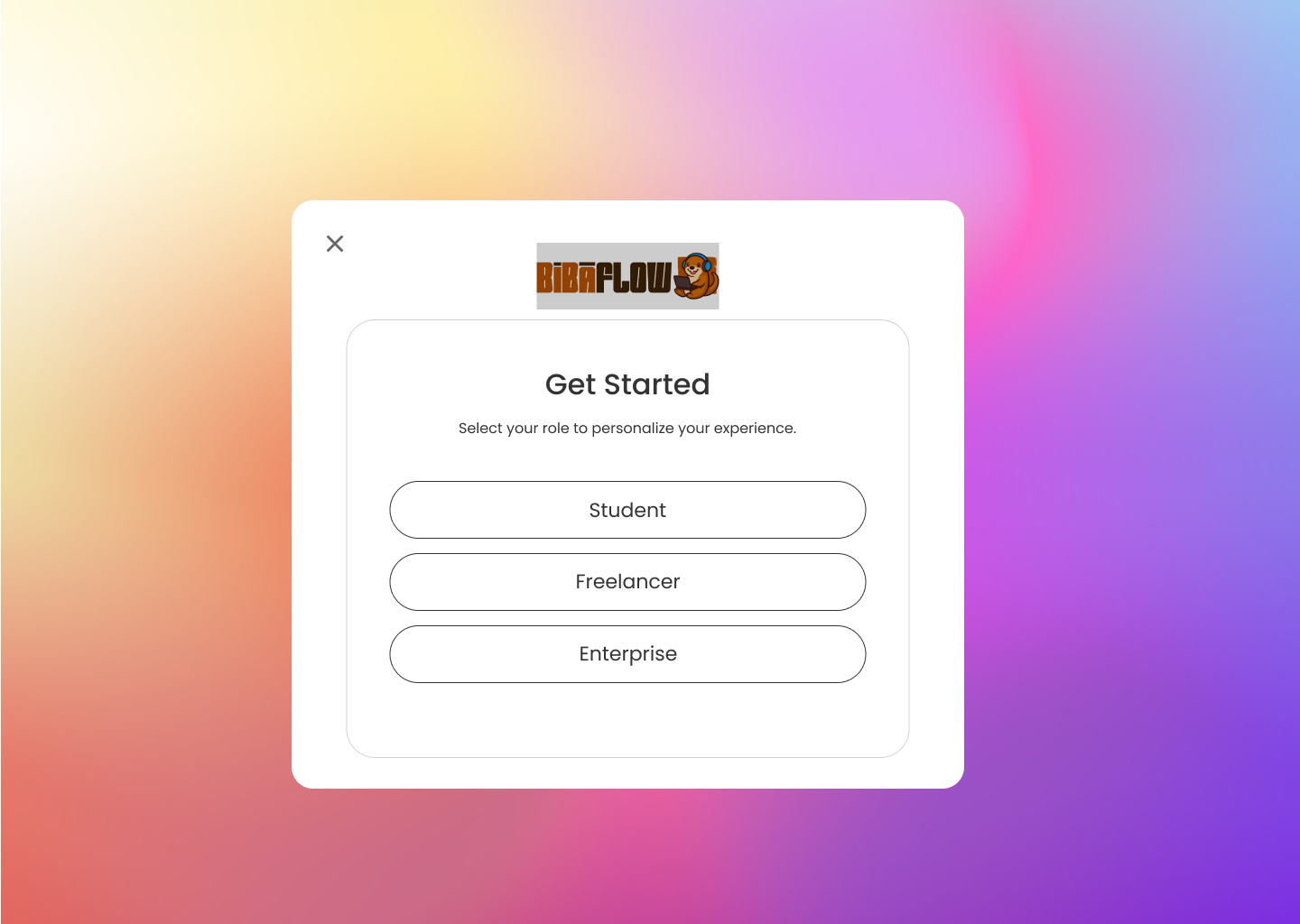
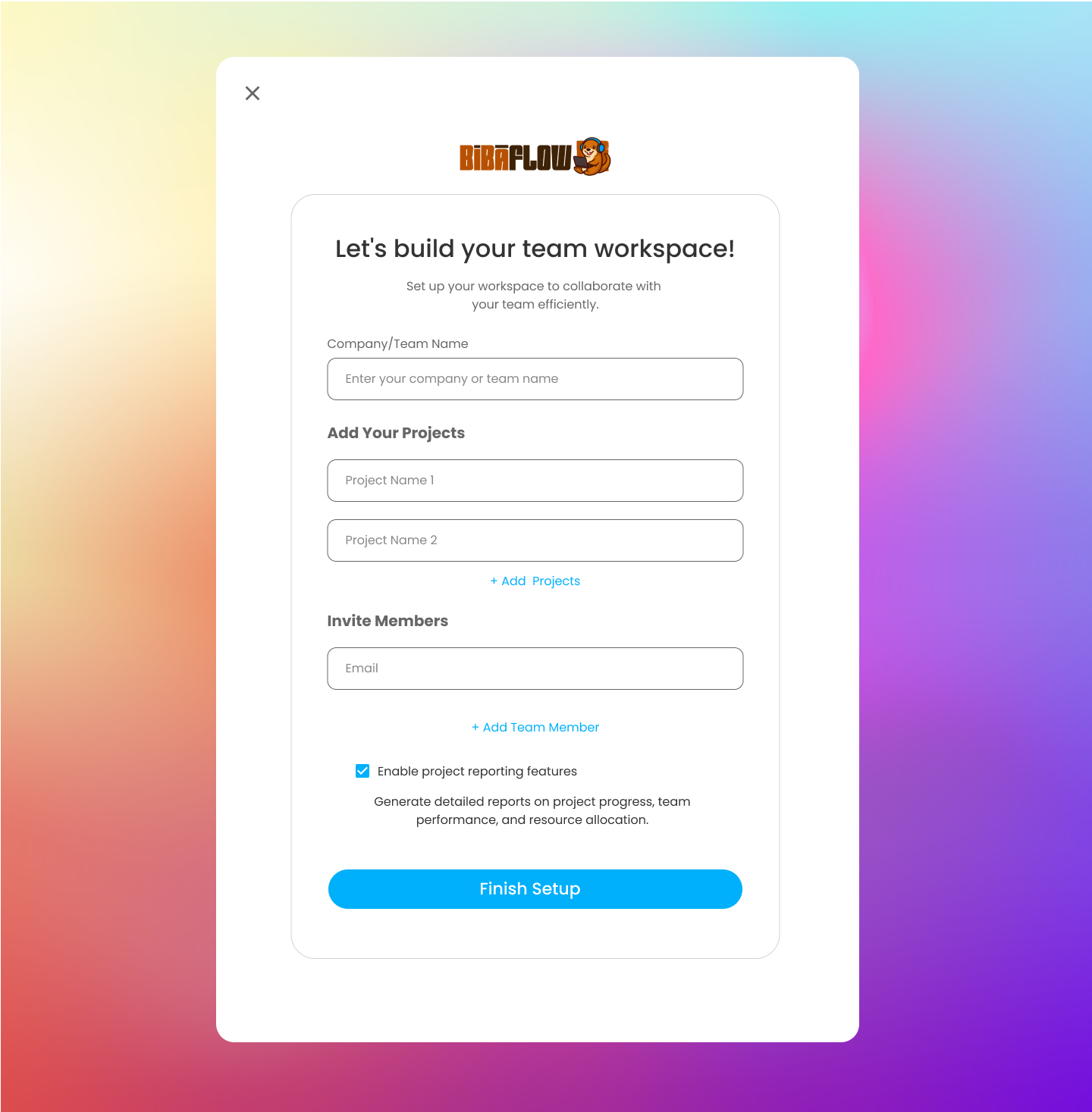
Sign up by role · 1/4 Sign in or sign up. Next: Sign up link
What needed to change
- Serve company leaders, team members, freelancers and students without overwhelming any of them.
- Track time where the work happens, instead of in a separate productivity app.
- Support many companies, roles and paid plans from day one, so the internal tool could become a SaaS product without a rebuild.
Key decisions
I mapped the team's workflow with the founder, designed the product in Figma, then built it in Bubble. Four calls shaped the product.
Ask who you are first. Sign-up starts with one question: Student, Freelancer or Enterprise. A company leader names the company, adds projects, invites members by email and can switch on project reporting. Members join an existing workspace, and students get an academic view with subjects and study analytics. The same answer sets the plan in Stripe: Student mode is free, Freelancer has an upgrade path, and Enterprise is the team plan.
Keep time tracking inside the work. A task opens into a detail panel with priority, dates, status, assignees, requirements, attachments and comments. Deep Focus runs 15, 30 or 60 minute sessions, and anyone can log time by hand against a project and task. That time feeds Reports: hours tracked, tasks completed, average project progress and tasks per hour, with PDF export.
Turn budget rules into logic. Each member has an hourly rate and tax rate, and salary cost is calculated from logged hours, so nobody has to do the maths. Expenses are logged against clients, and every budget shows usage, forecast and a status: Over Budget, At Risk or Success.
Build for many companies from day one. Company workspaces, role-based permissions and Stripe subscriptions sit in the data model from the start. Owners see everything in their company, and members see what they need.
Scope of work
- Project and task management workflows
- Role-based authentication & permissions
- Company workspaces & team management
- Time tracking & focus sessions
- Notification system
- Stripe subscription & billing integration
- Backend workflow automation
- Responsive application development
The product
Flows from the product, played screen by screen. Hover to pause, or tap a bar to jump to a step.
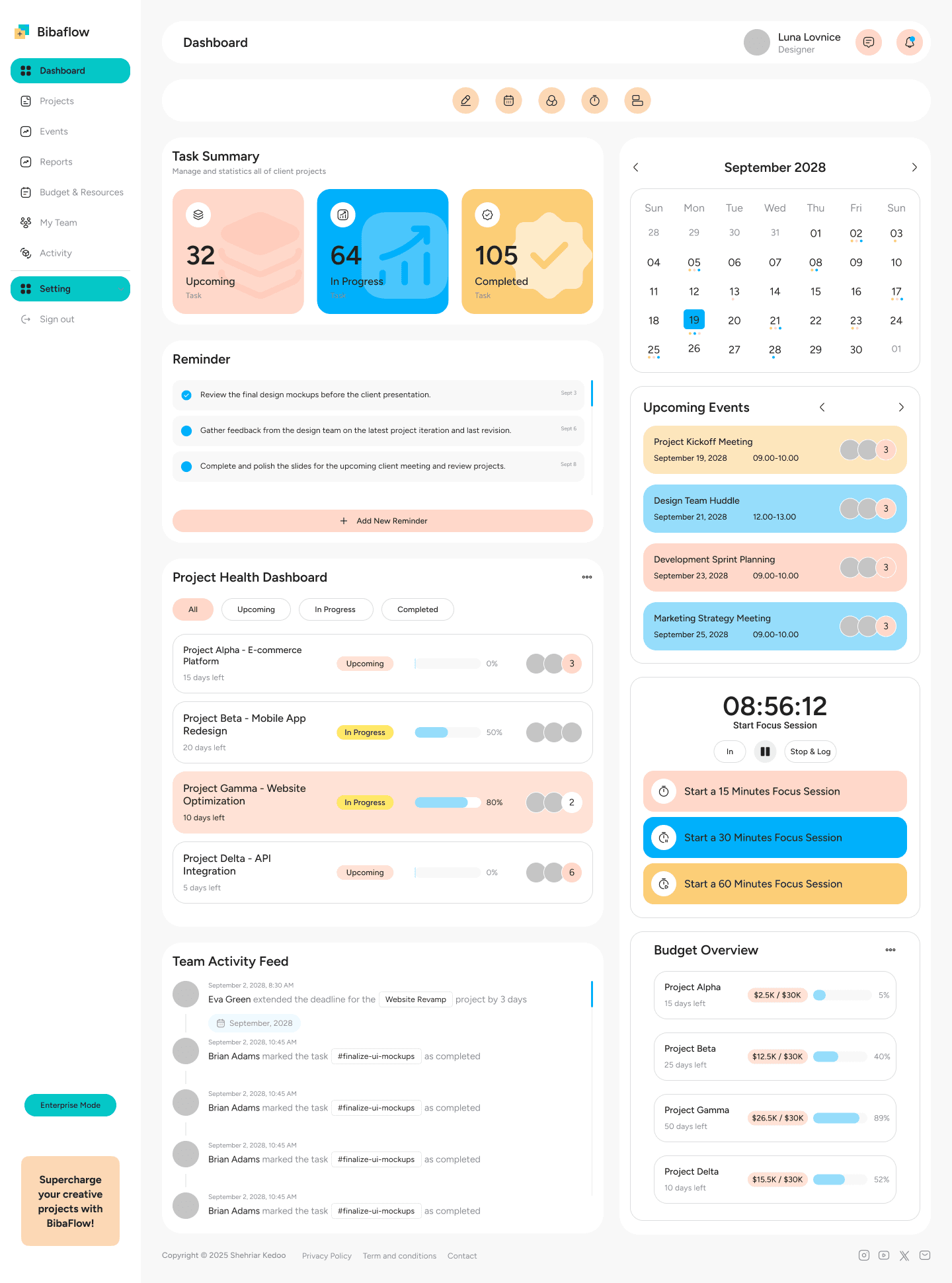
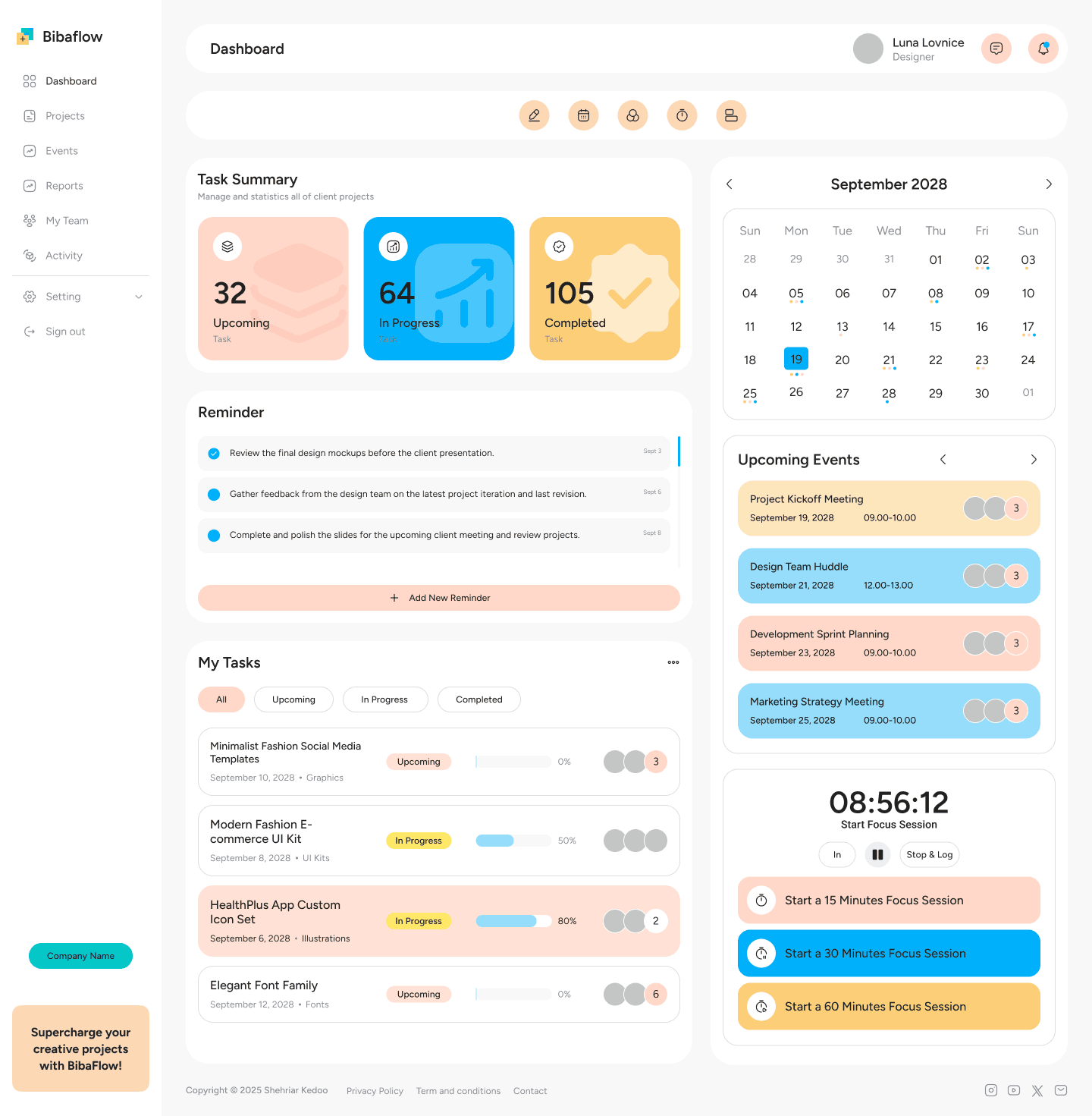
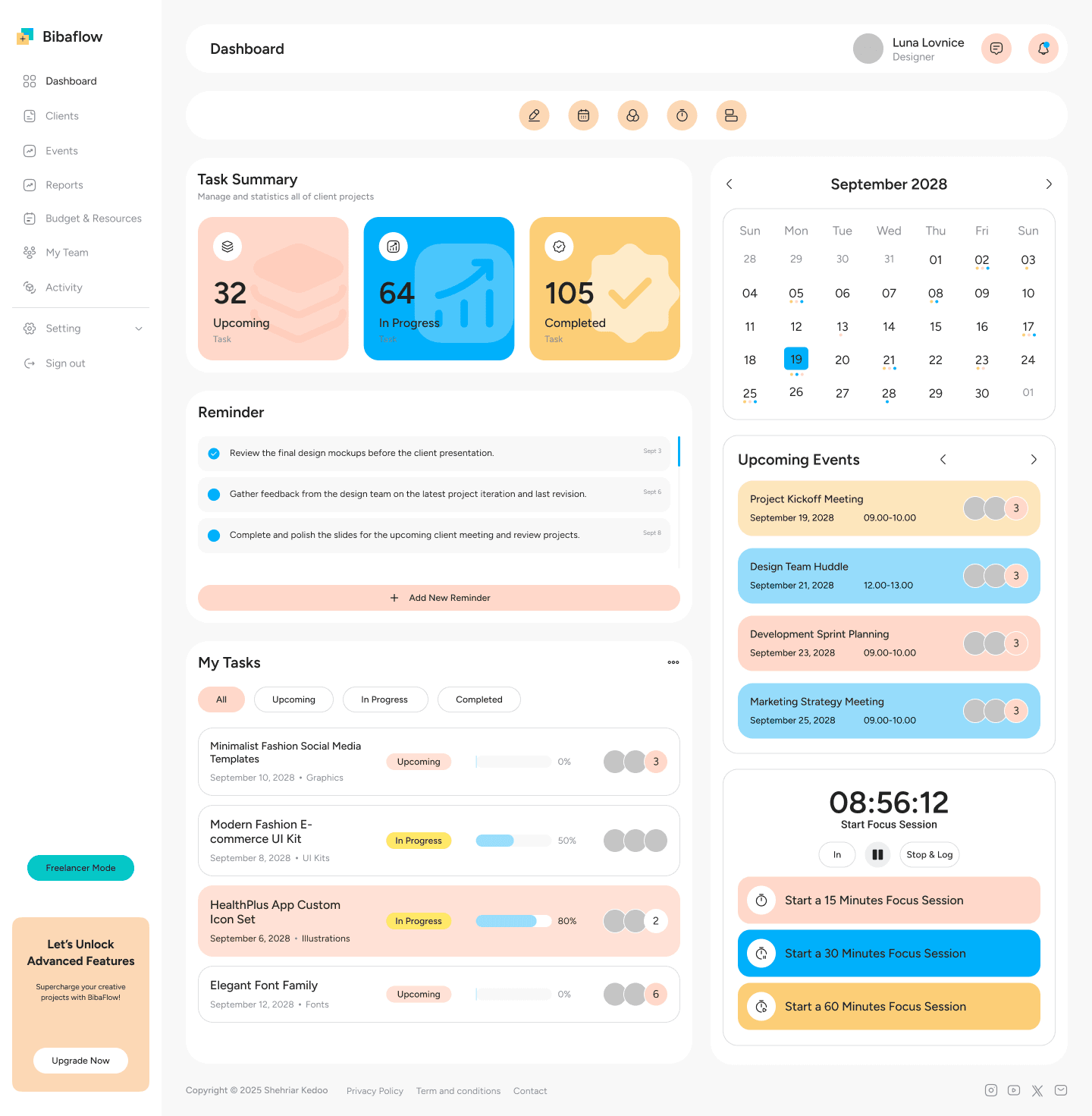
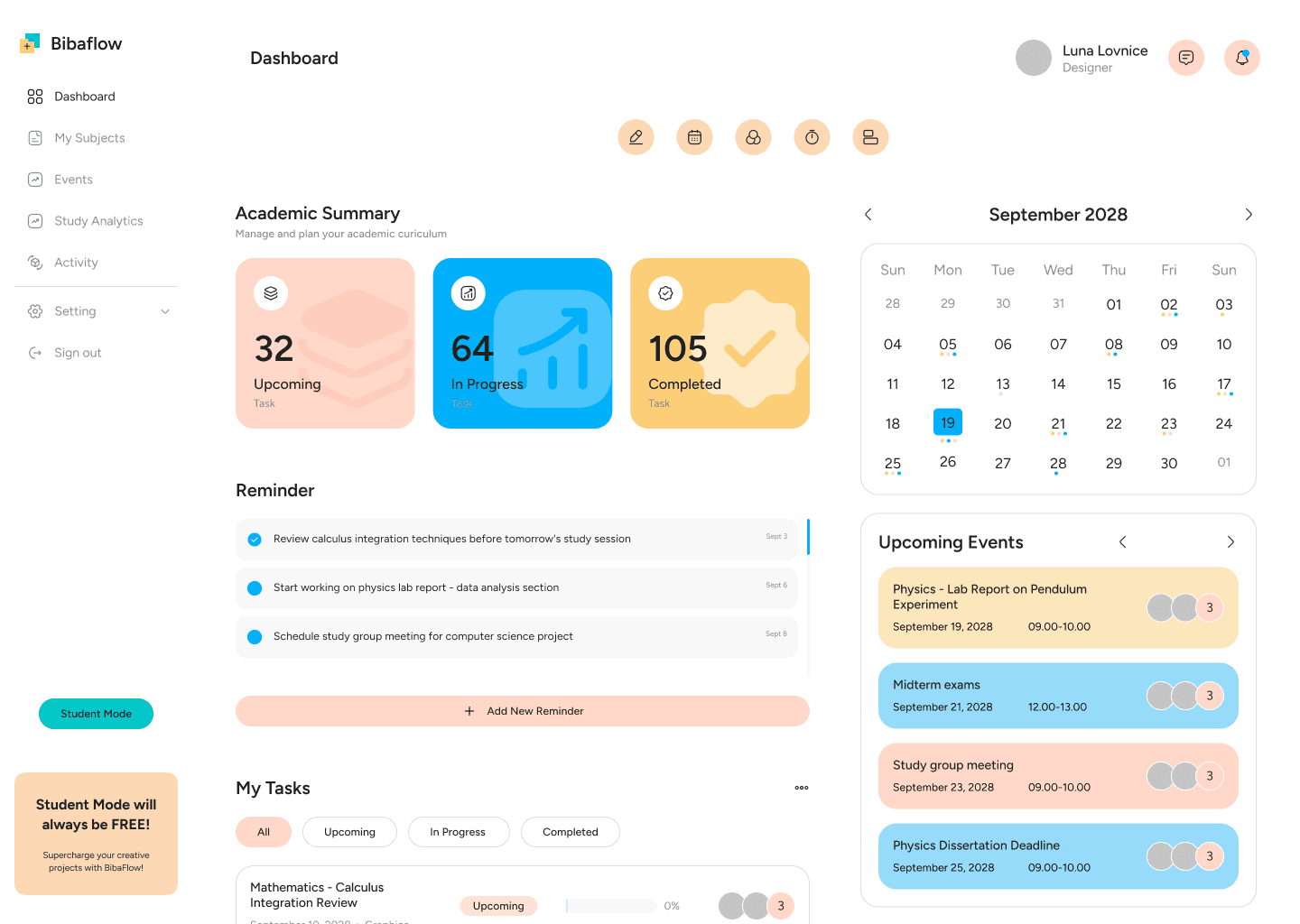
One product, four dashboards · 1/4 Company leader. Next: Enterprise Mode switcher
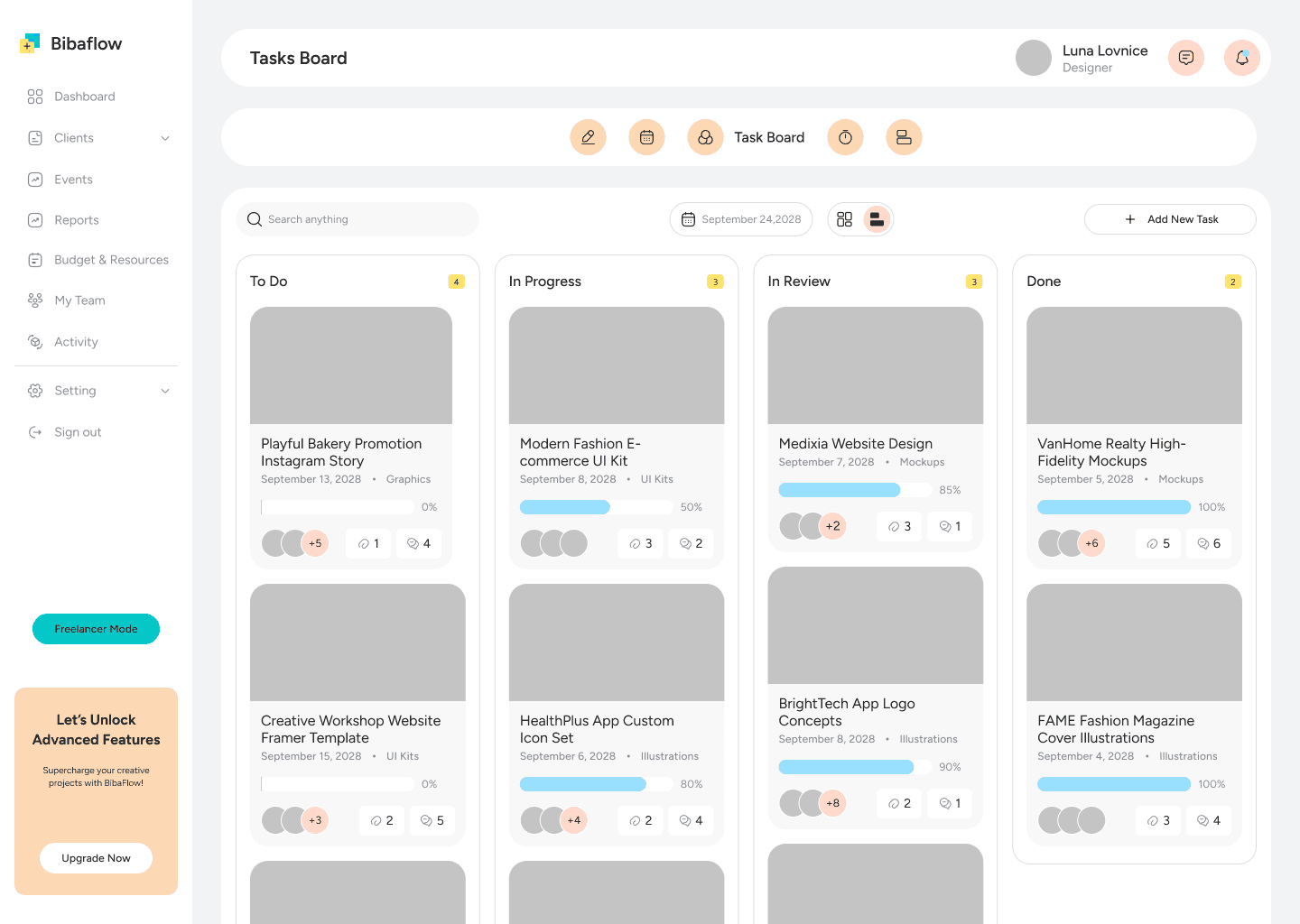
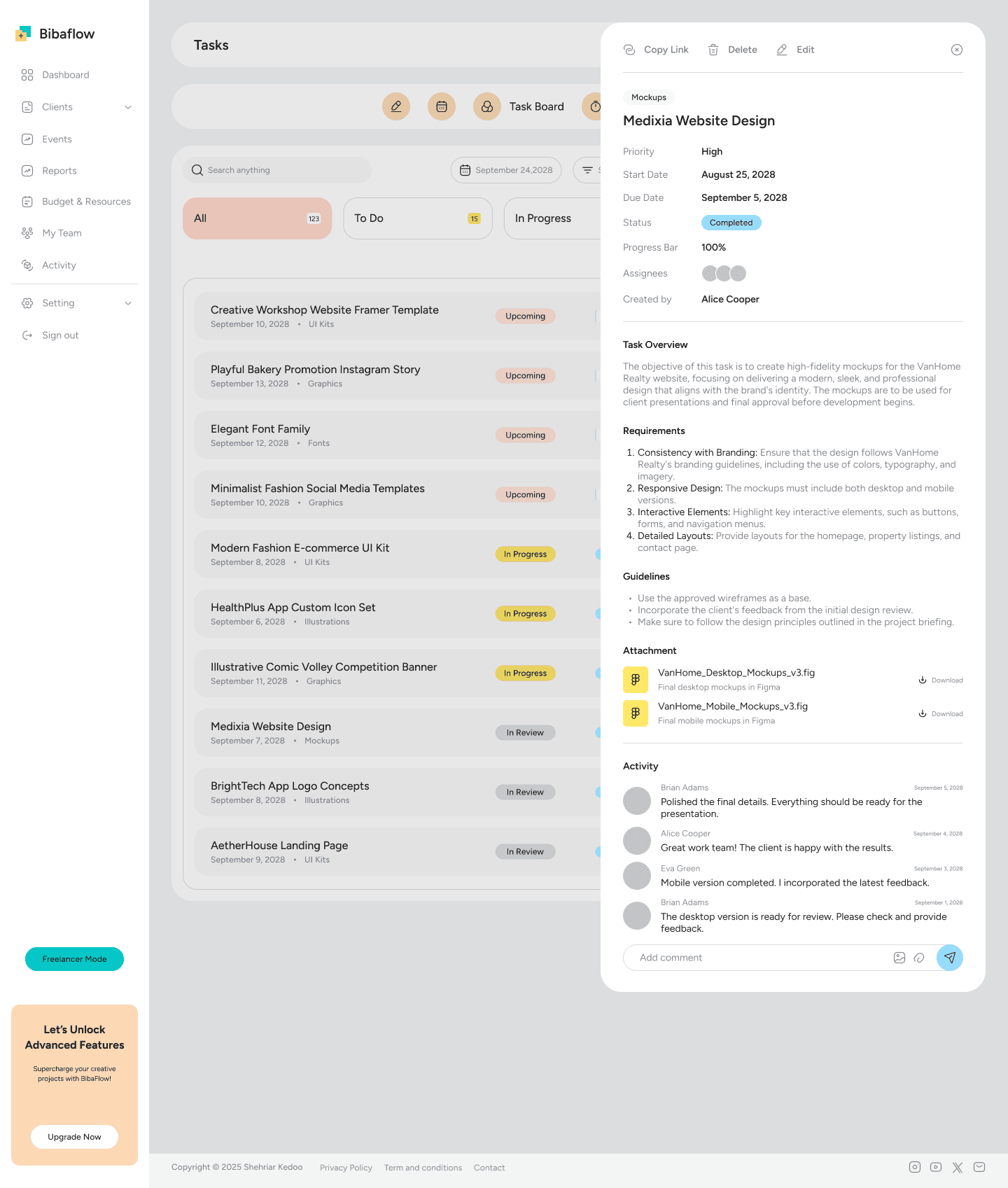
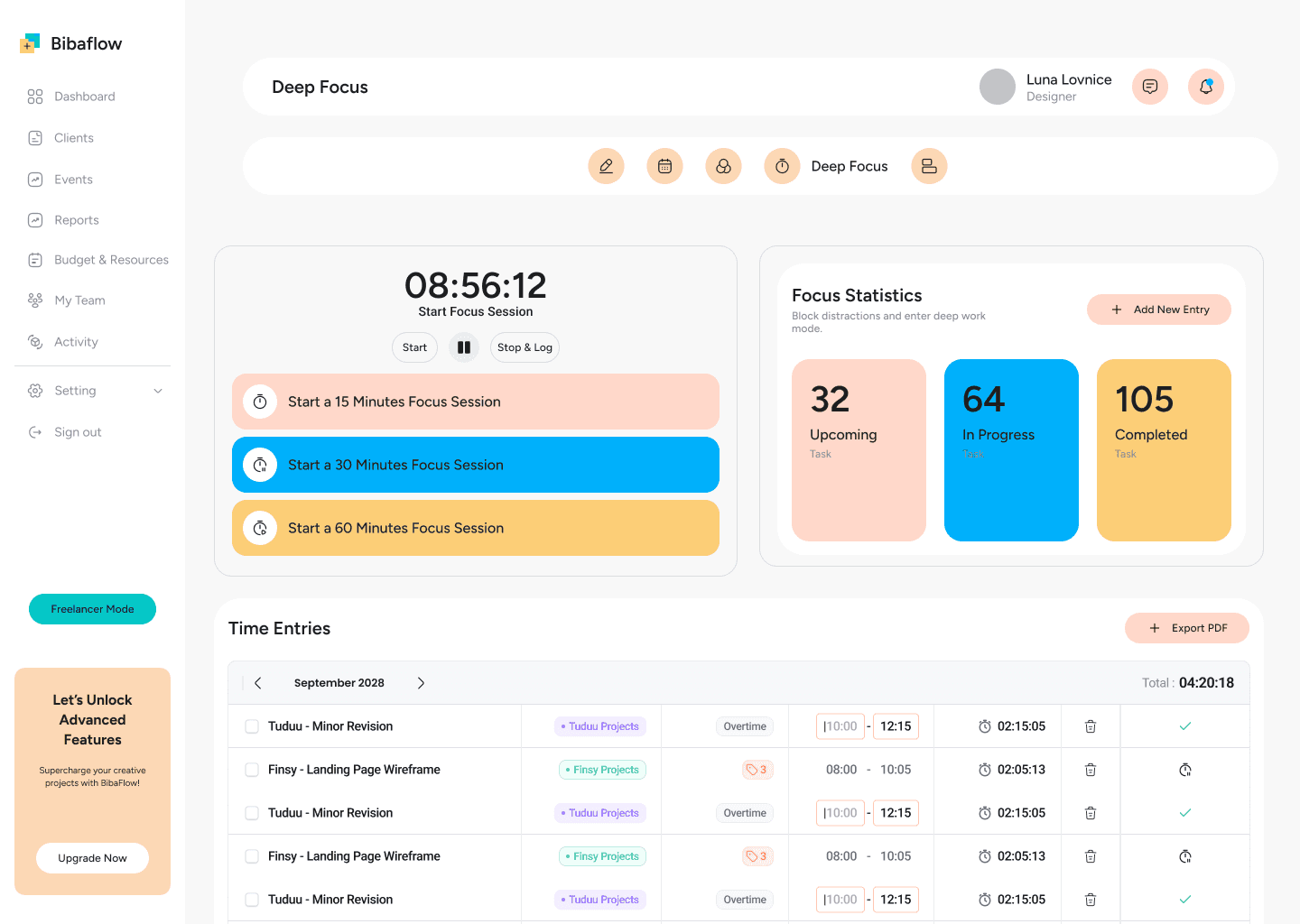
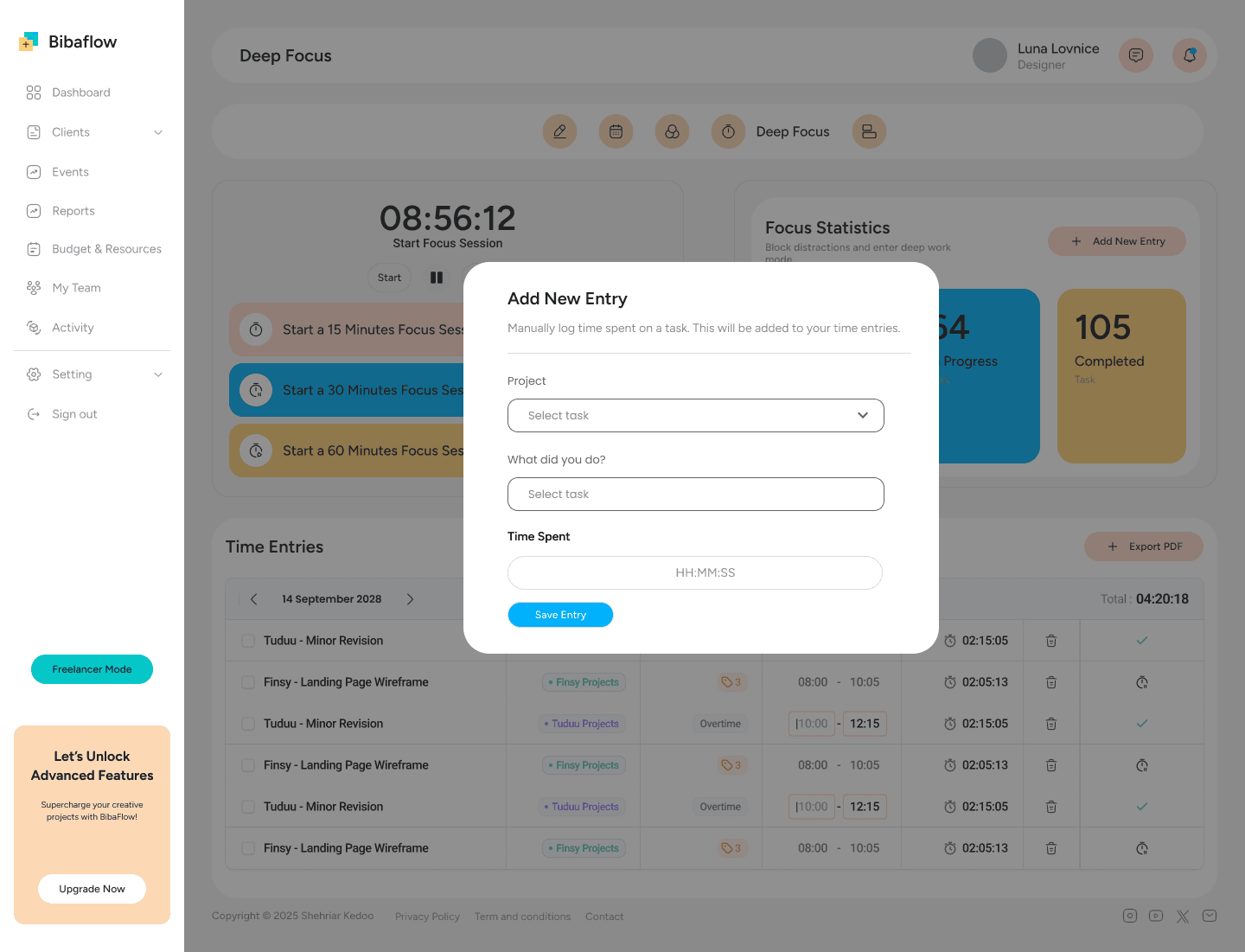
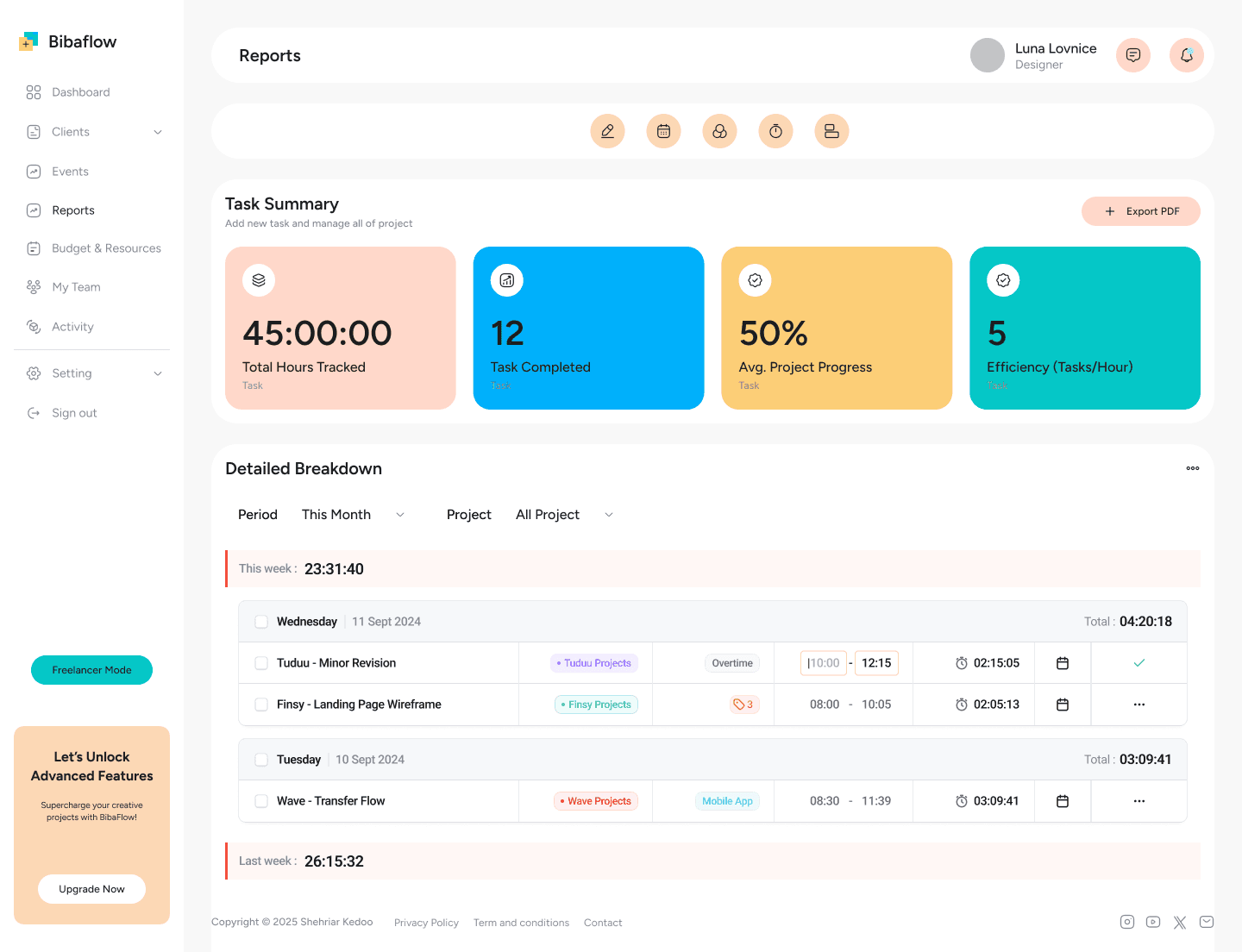
From task to tracked time · 1/5 Task board. Next: Medixia Website Design task card
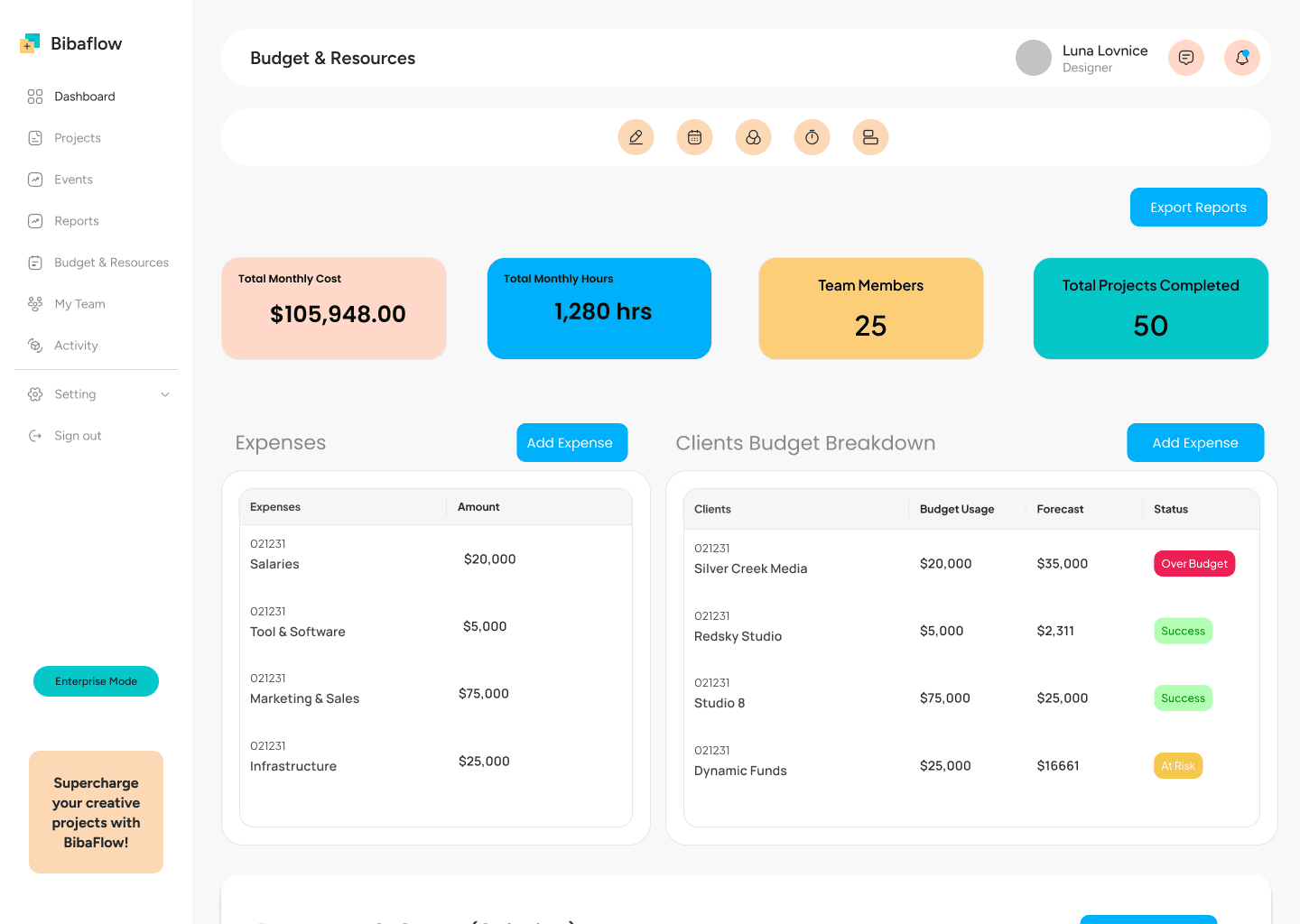
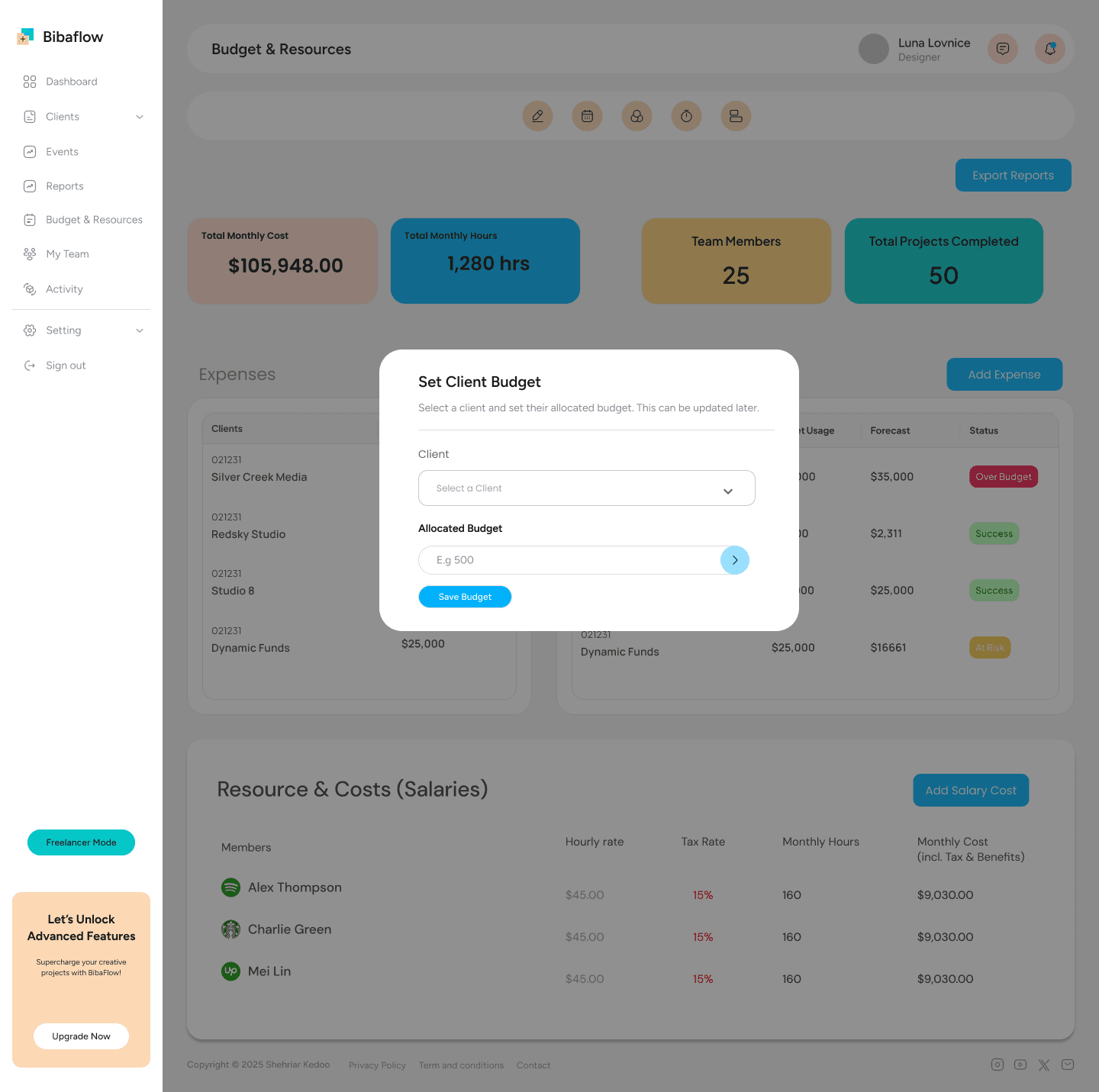
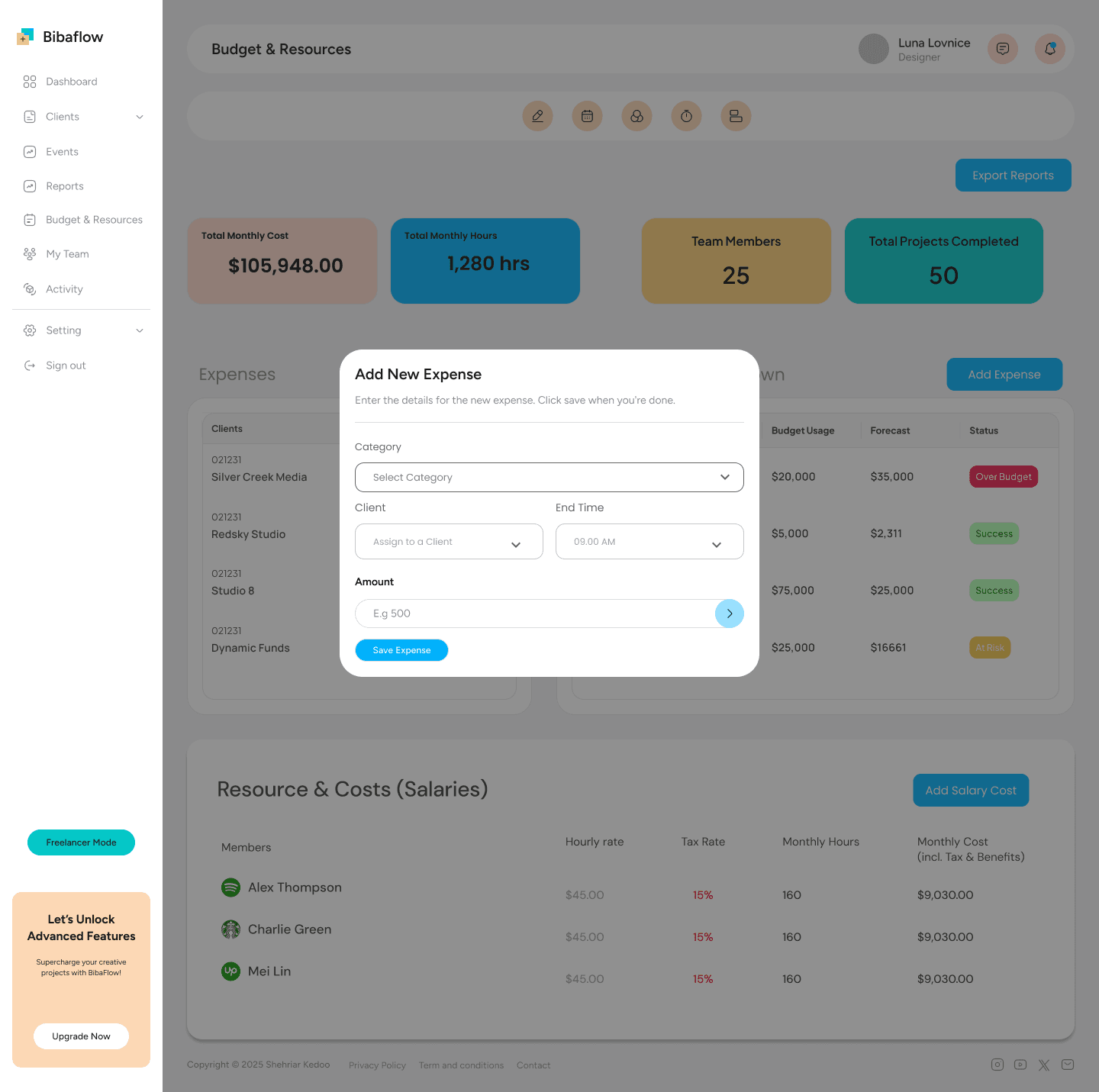
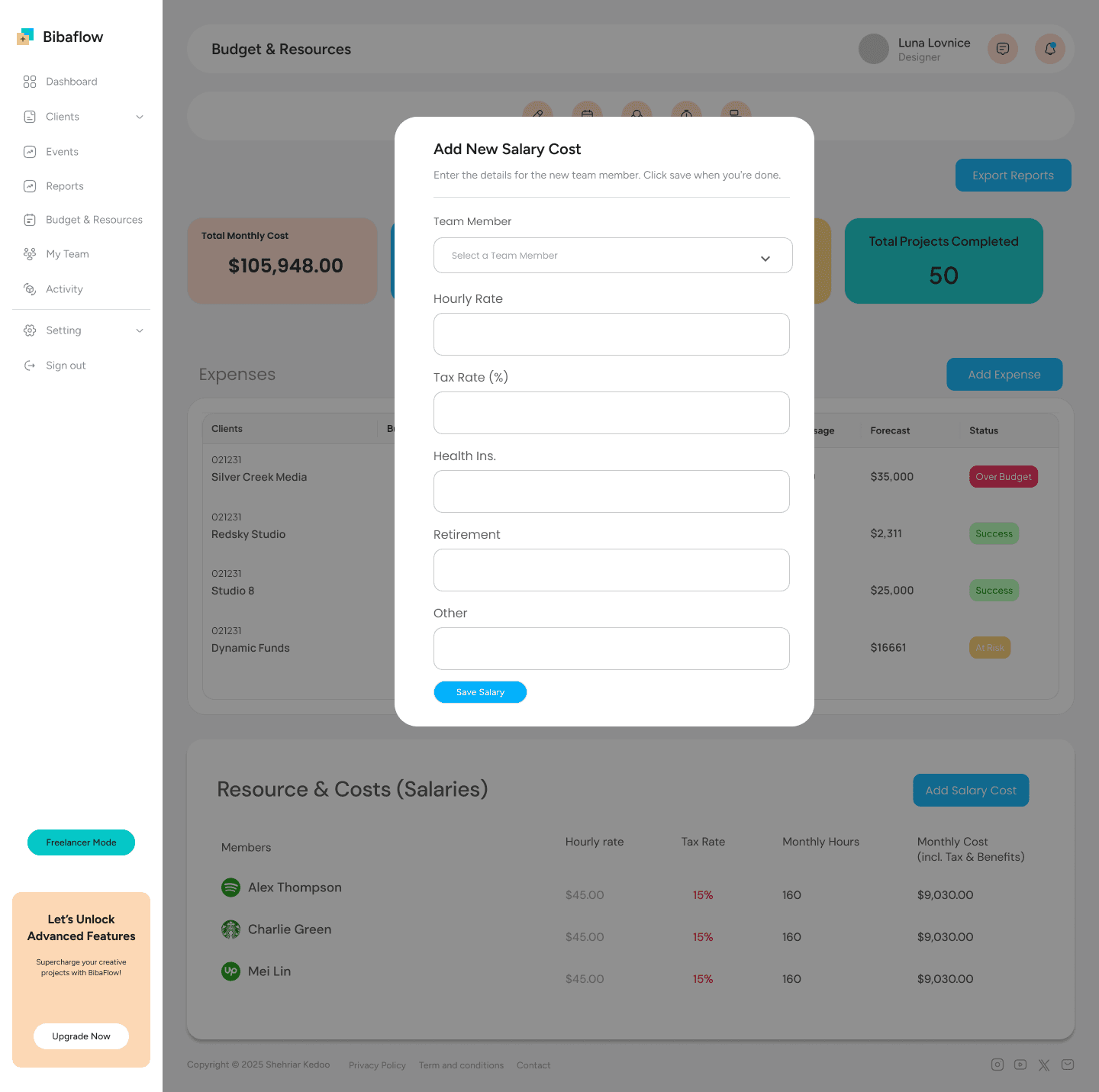
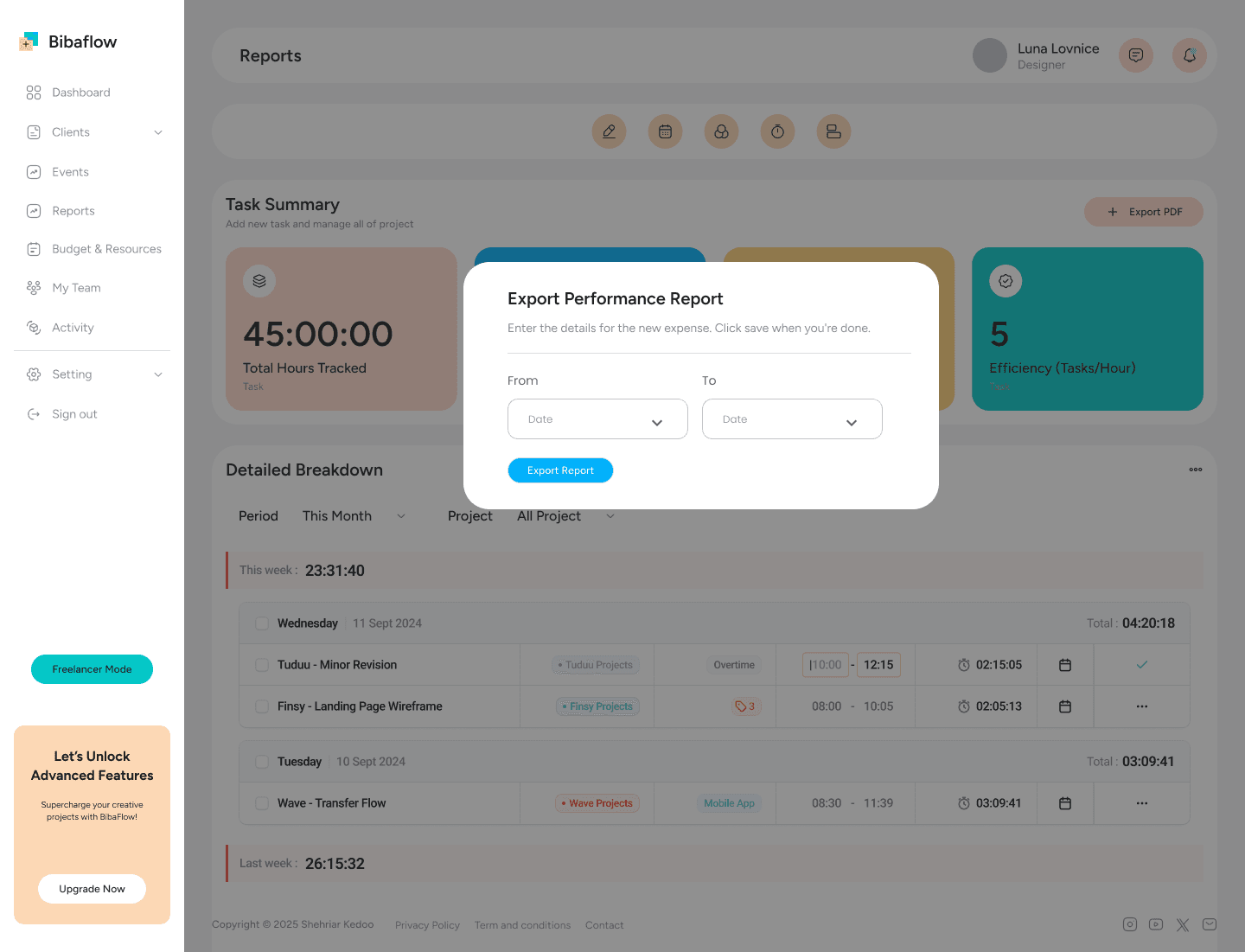
Budgets that calculate themselves · 1/5 Budget and resources. Next: Add Expense (Clients Budget Breakdown)
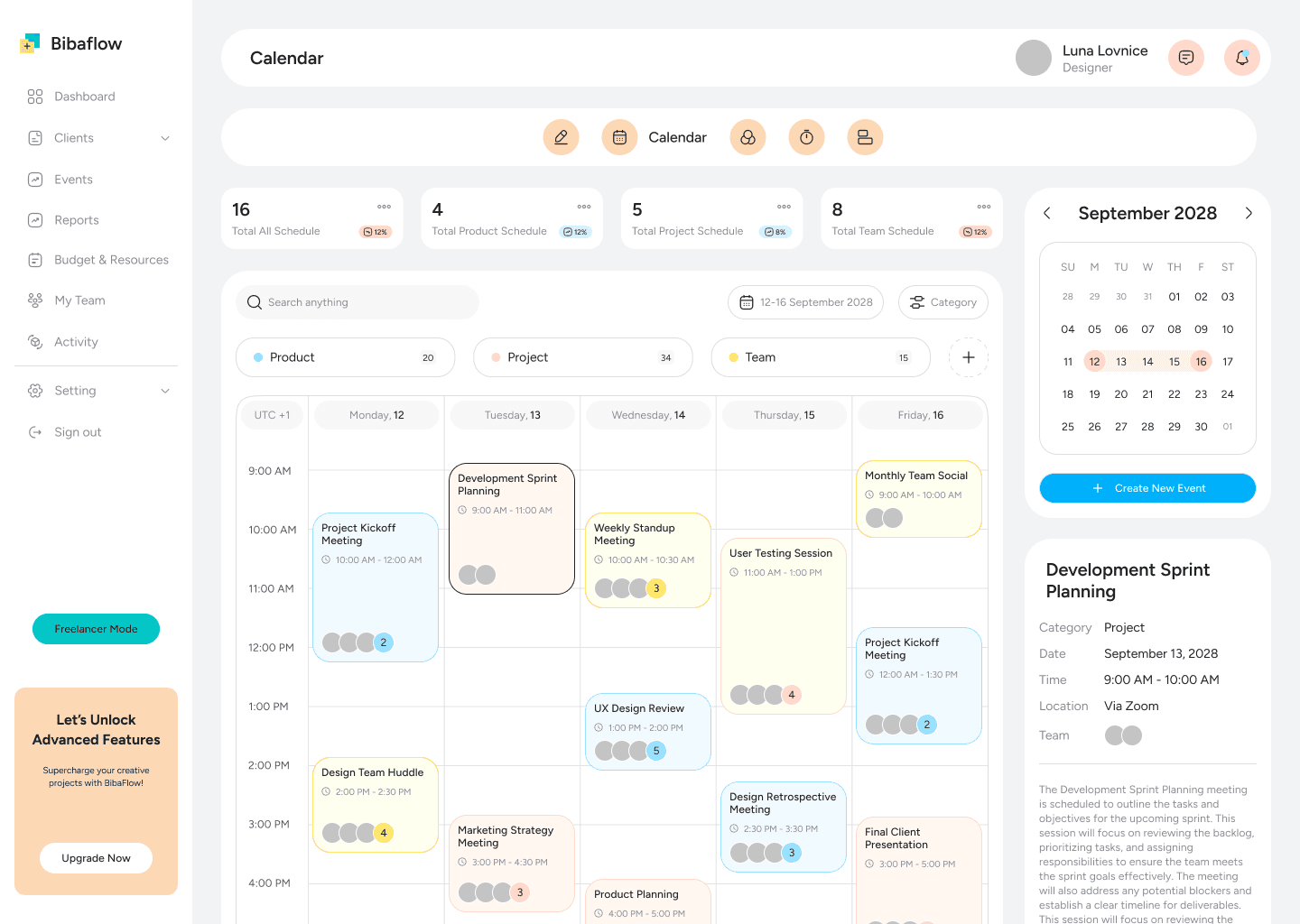
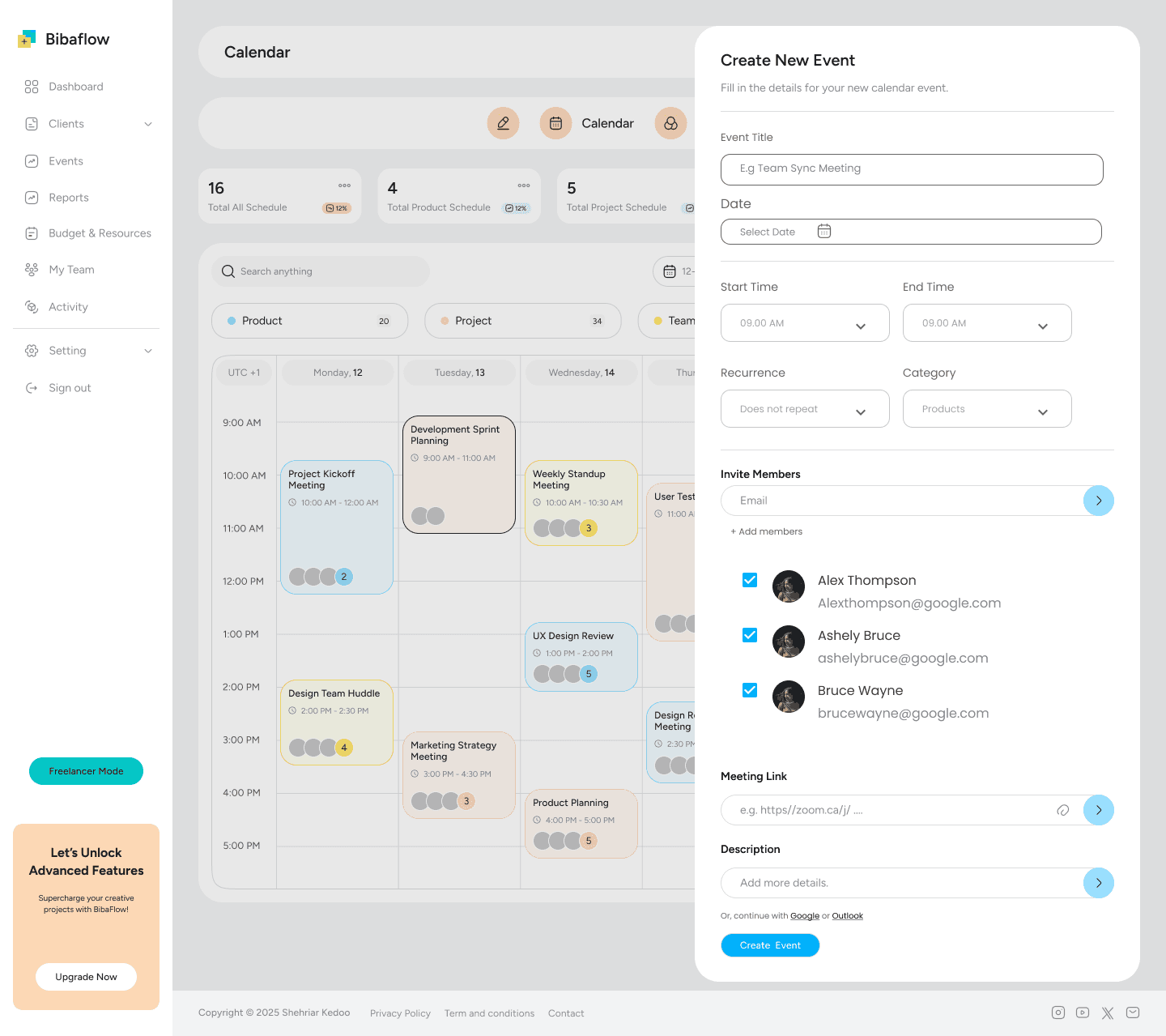
Plan events with the team · 1/2 Calendar. Next: Create New Event button
The outcome
BibaFlow brought projects, tasks, time, budgets, reports and billing into one workspace that the team uses day to day, replacing the disconnected tools they relied on before. The business now owns software built around its own processes, instead of adapting its processes to generic software.
The multi-company architecture is already in place, so the platform is ready to expand to more teams and launch as a subscription product.
“Tife supported us in the development of our task management software by analyzing gaps in the existing system and proposing technically sound solutions to address missing features. He helped translate our real-life workflows into functional system logic. His input improved both usability and system completeness. Overall, working with him was fast and efficient, with clear progress made in each phase of development. Constant communication—through regular check-ins, technical discussions, and feedback loops—was a key factor in delivering a well-implemented and fully functional project.”
Let's talk
Want something like BibaFlow for your business? Book a free strategy call and leave with a clear next step.