case study
Dojohub CRM
Designed and built DojoHub with the founder of a jiu-jitsu gym in six to seven months: a web dashboard where owners set up their school and run leads, students, classes and Stripe billing, and a mobile app for iOS and Android where students book classes, sign the waiver and track their belts.

- Timeline
- 6 to 7 months
- Platforms
- Web, iOS + Android
- Stack
- Bubble + Stripe
- Role
- Product Design, Visual Identity, UX Strategy, Bubble Development
Background
Martial arts school owners were spending more time on admin than on the mat. Class schedules, belt promotions, payments and new students were spread across spreadsheets, group chats and manual processes. Payments were missed, promotions were forgotten, and students slipped through the cracks, especially at schools growing beyond a handful of classes.
To see the routine first-hand, I started training at the founder's gym, and that time on the mat shaped most of the design. The biggest lesson: students want an easy way to talk to their coach, and they also want to keep their privacy.
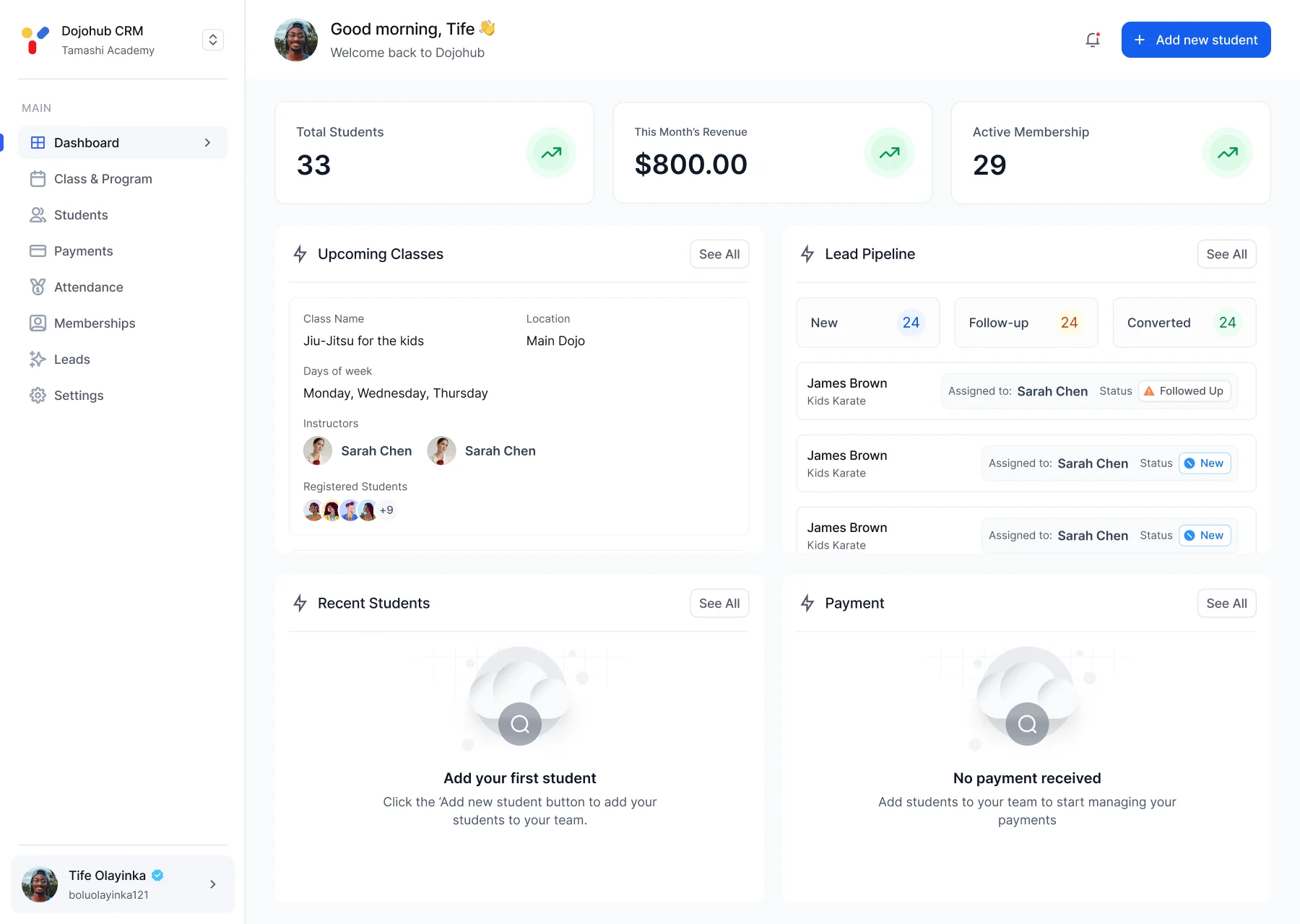
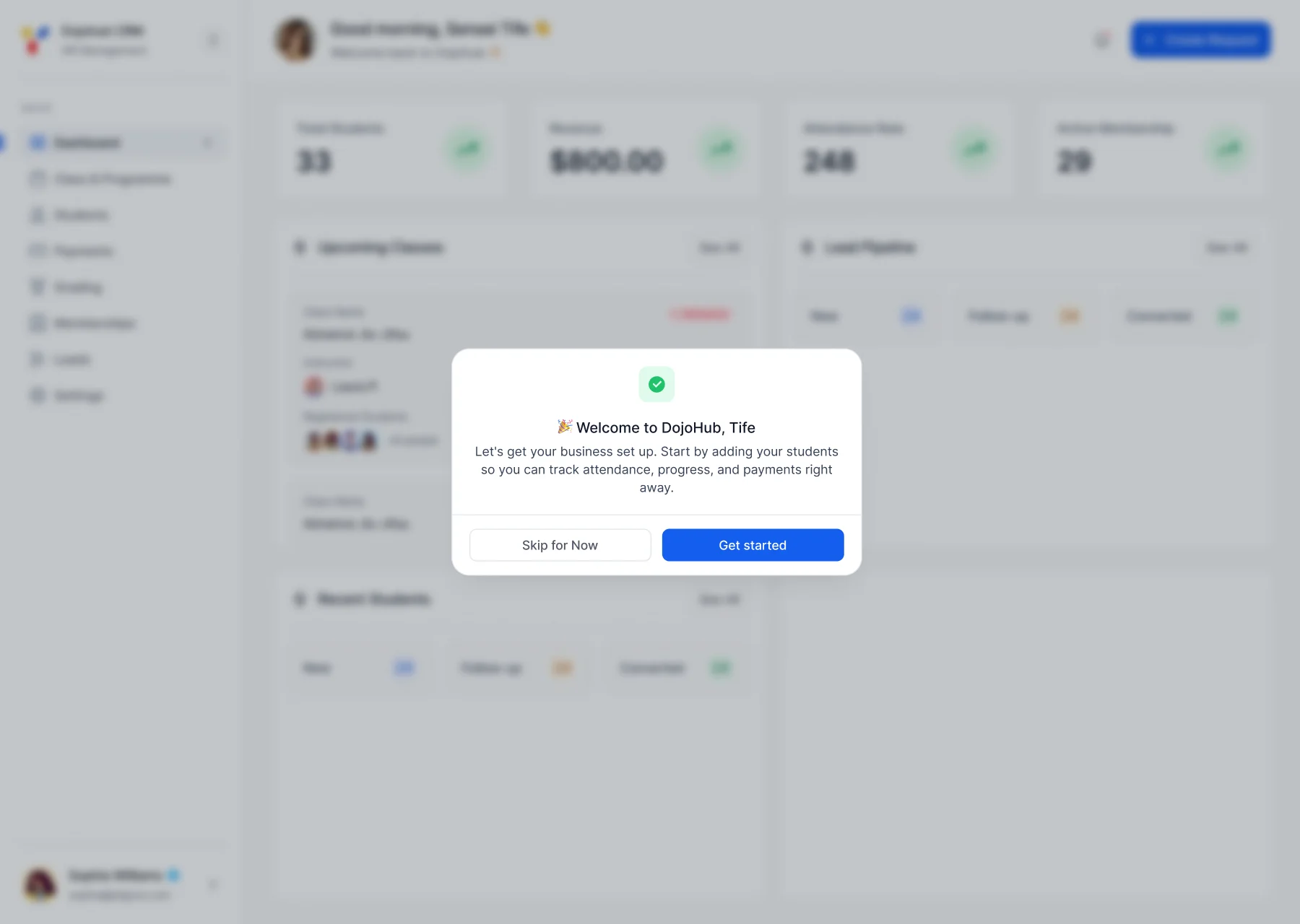
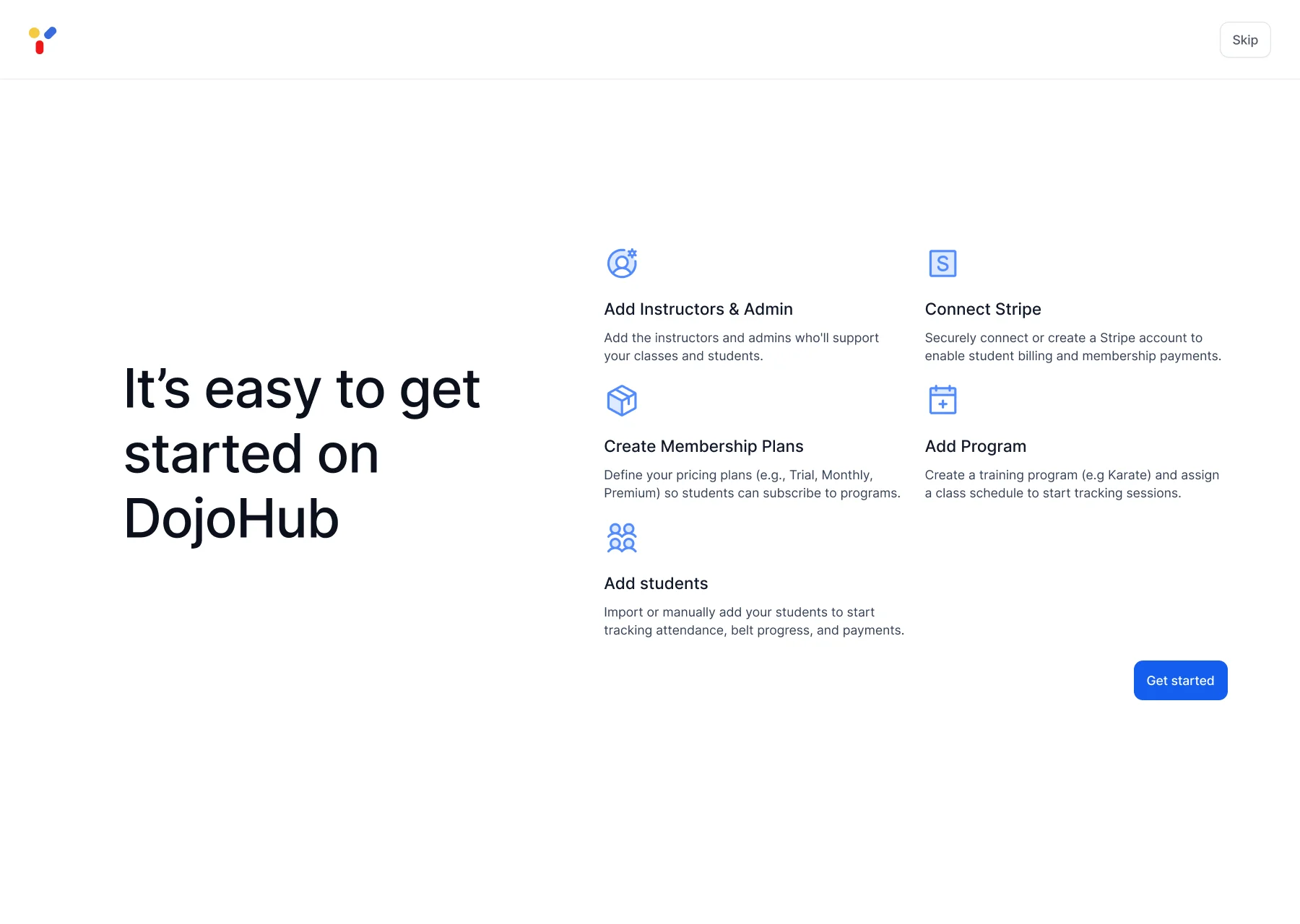
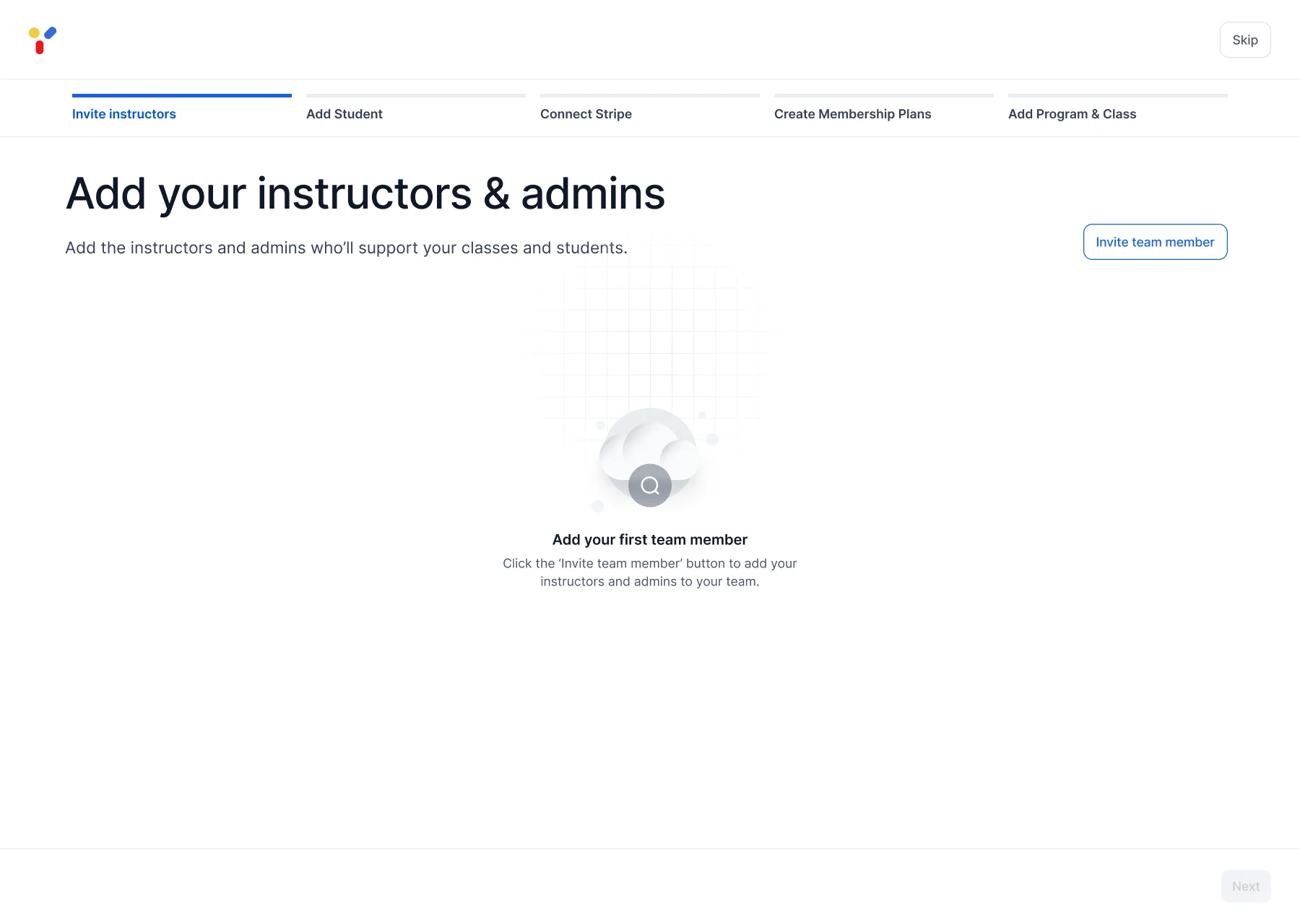
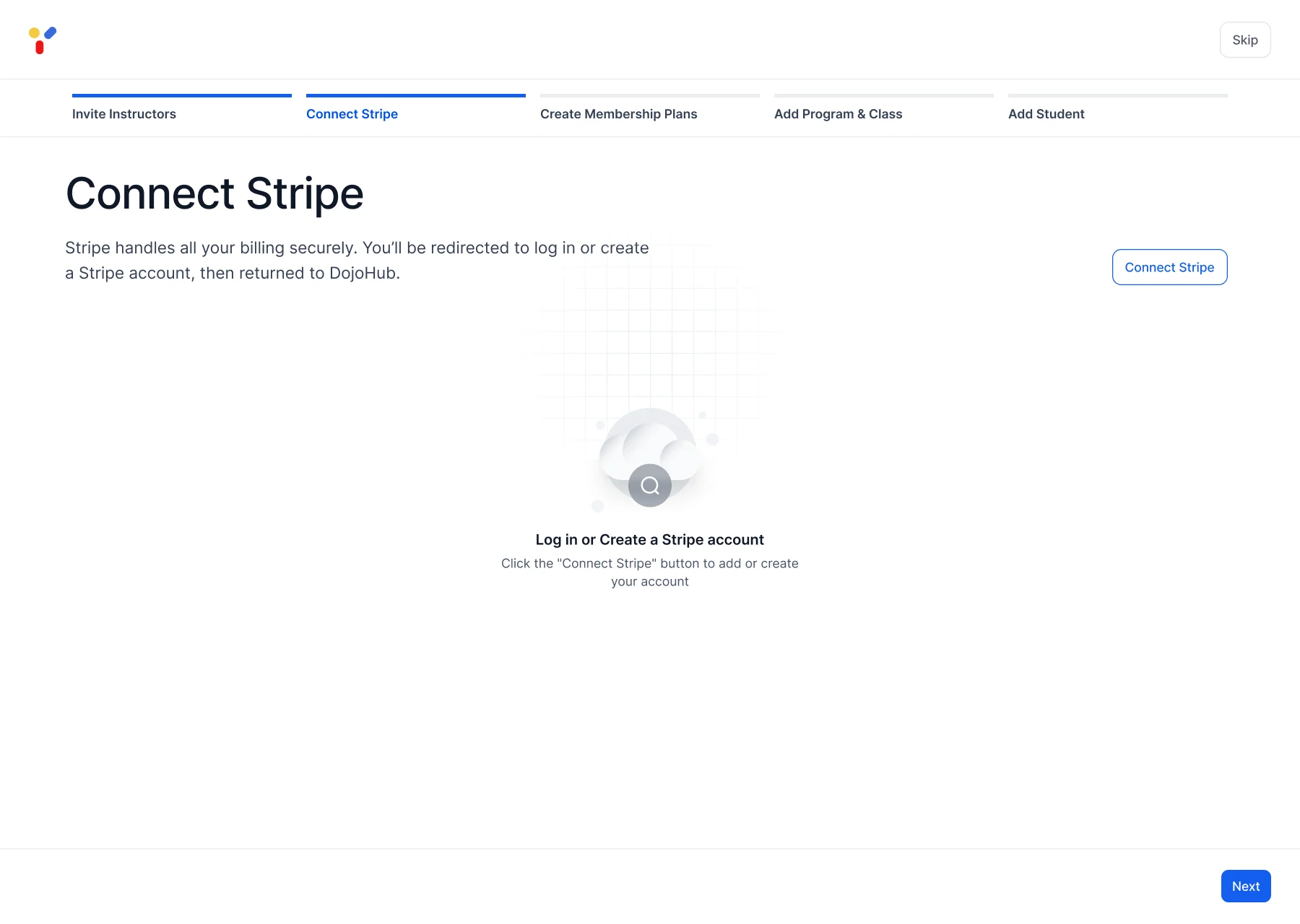
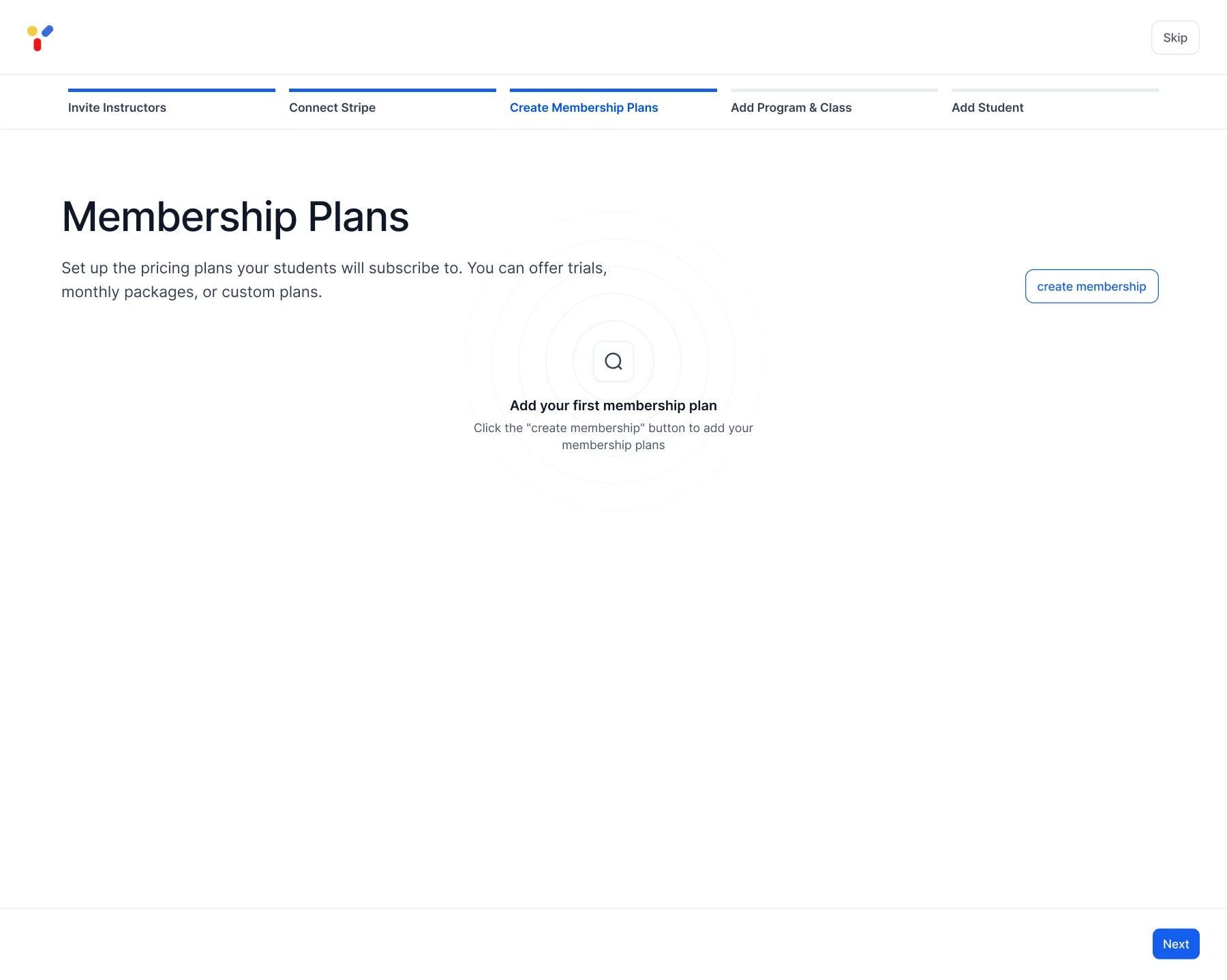
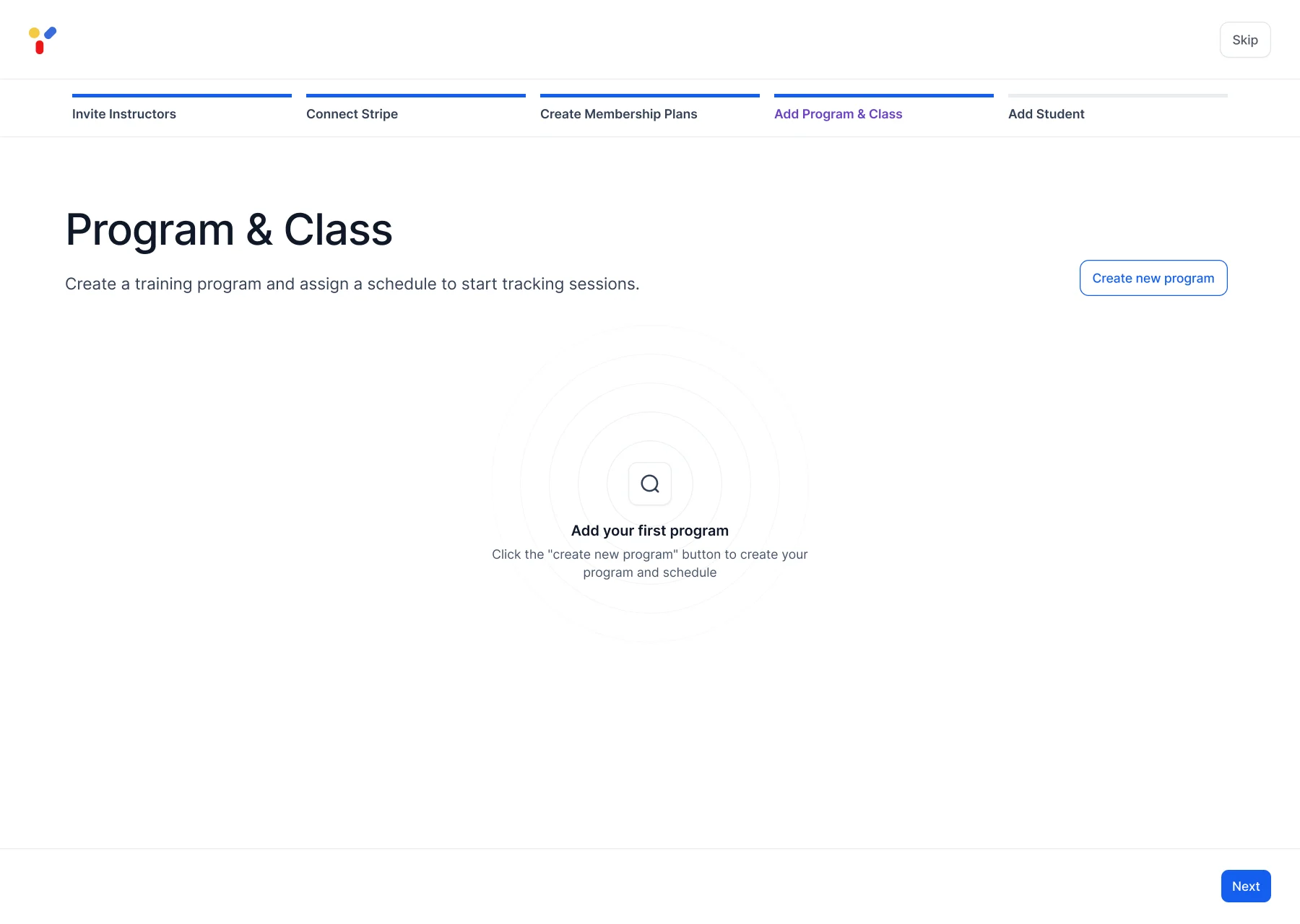
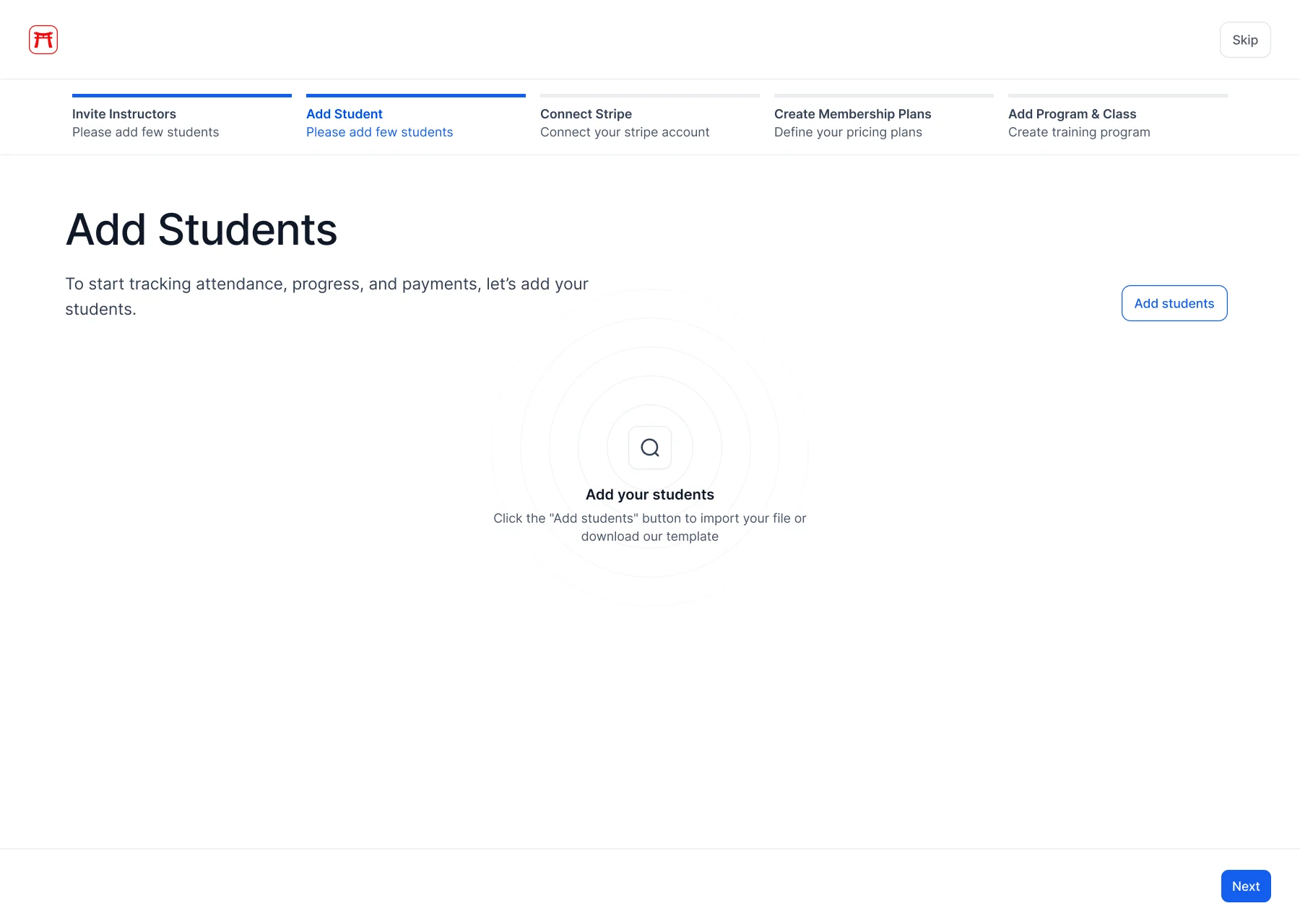
Set up a new dojo · 1/8 Empty dashboard
What needed to change
- Class schedules, attendance and belt progress were tracked by hand across disconnected tools.
- There was no central place for reminders, so students missed classes and fell behind on payments.
- Recurring subscriptions, failed payments and belt eligibility meant cross-referencing several spreadsheets.
- Setting up new students or a new location had no consistent process.
Key decisions
Two surfaces for two very different users. Owners and instructors do admin at a desk; students live on their phones before and after class. So DojoHub has a web dashboard for running the school and a mobile app on iOS and Android for students to book classes, sign the waiver, read instructor notes and track belts.
A guided setup, so a new dojo never stares at an empty dashboard. New owners land on a welcome screen and a five-step checklist: invite instructors and admins, connect Stripe, create membership plans, add programs and classes, then add students. Each step has an empty state that says what to do next, and owners can skip and come back.
Leads turn into students without retyping. Enquiries land in a lead pipeline (new, follow-up, converted). Converting a lead opens the student form already filled with their name, email and phone.
Payments run through Stripe, so failed payments are not a spreadsheet job. I modelled programs, classes, belts and memberships as related data and used Stripe webhooks for subscriptions, cancellations and failed payments. Everything was built in Bubble, which meant careful architecture to keep web and mobile responsive within the platform's limits.
Scope of work
- Design and Bubble development of the owner web app and the student mobile app (iOS and Android)
- Guided five-step setup for new dojos
- Lead pipeline and lead-to-student conversion
- Student profiles: progress, belts, membership and notes
- Relational data model for programs, classes, belts and memberships
- Stripe subscriptions, cancellations and failed payments via webhooks
The product
The owner web app and the student iOS app, flow by flow.
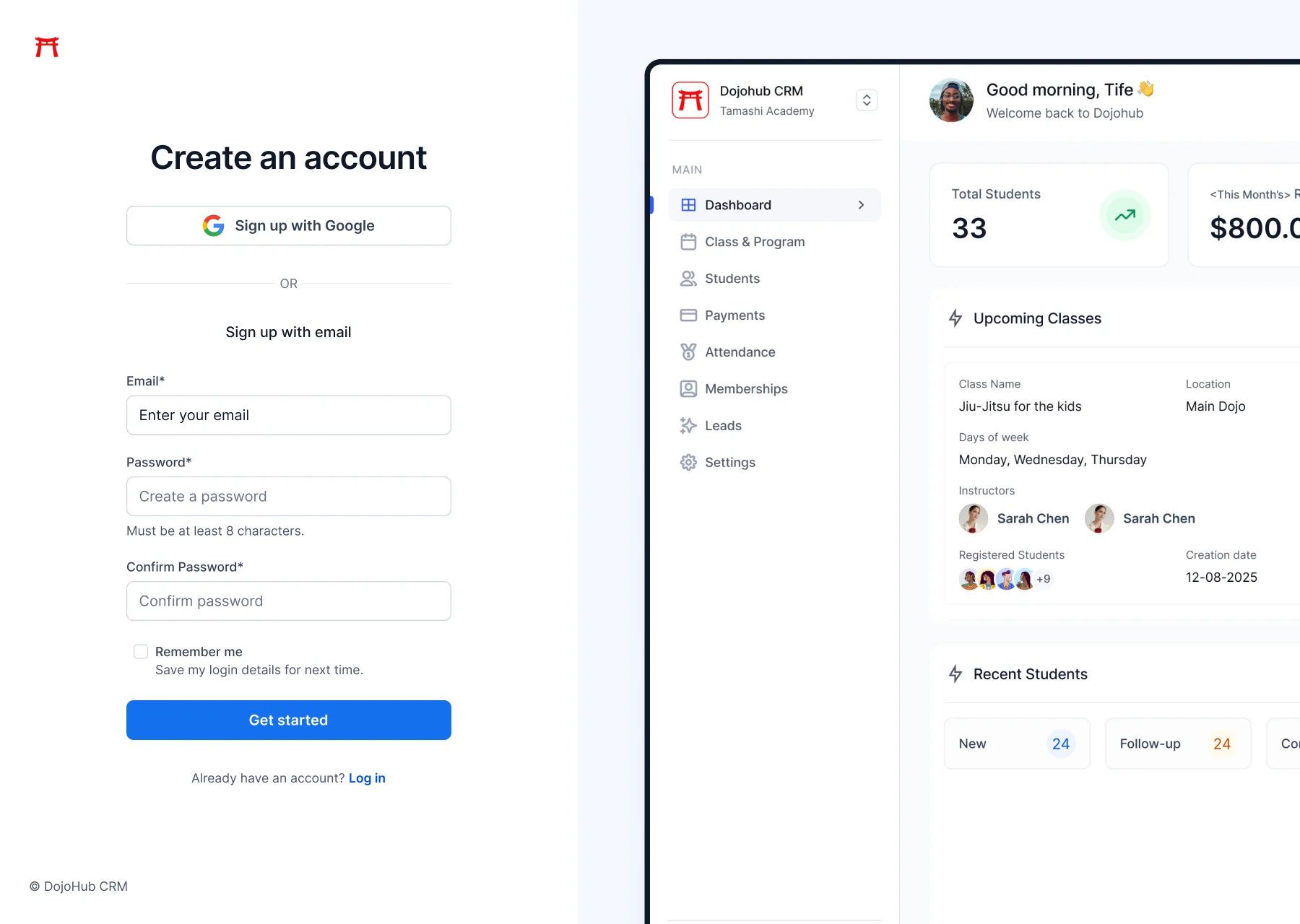
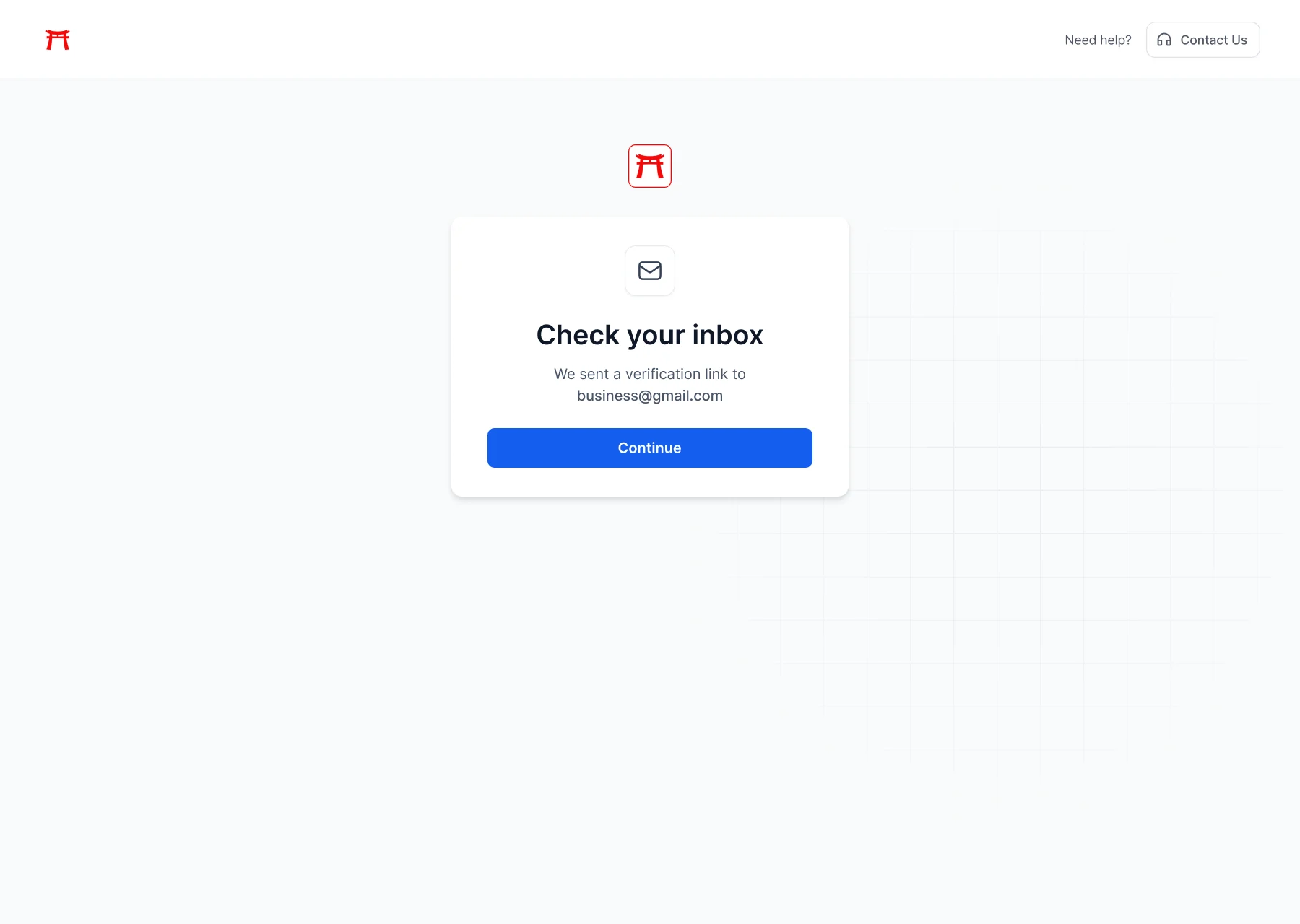
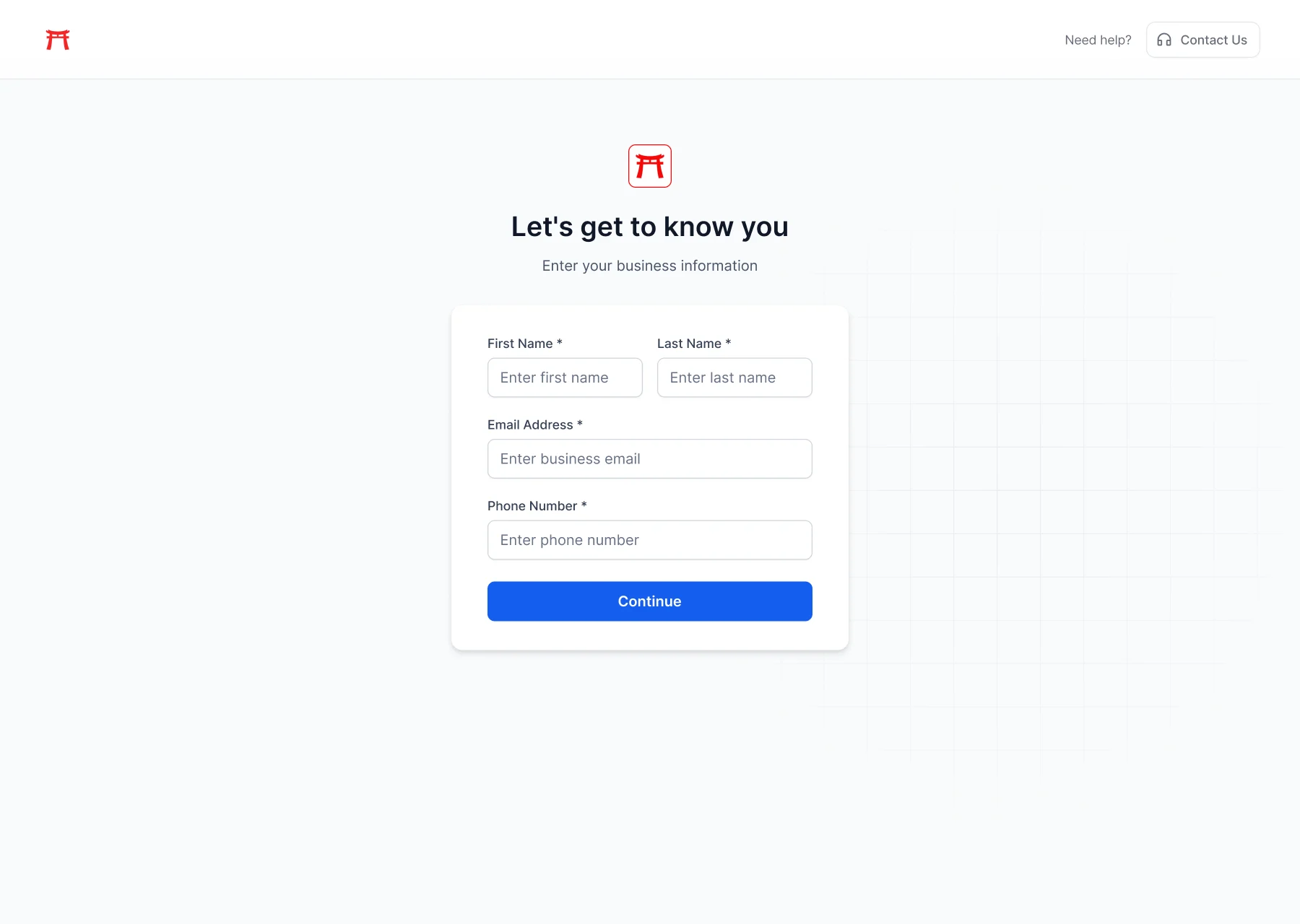
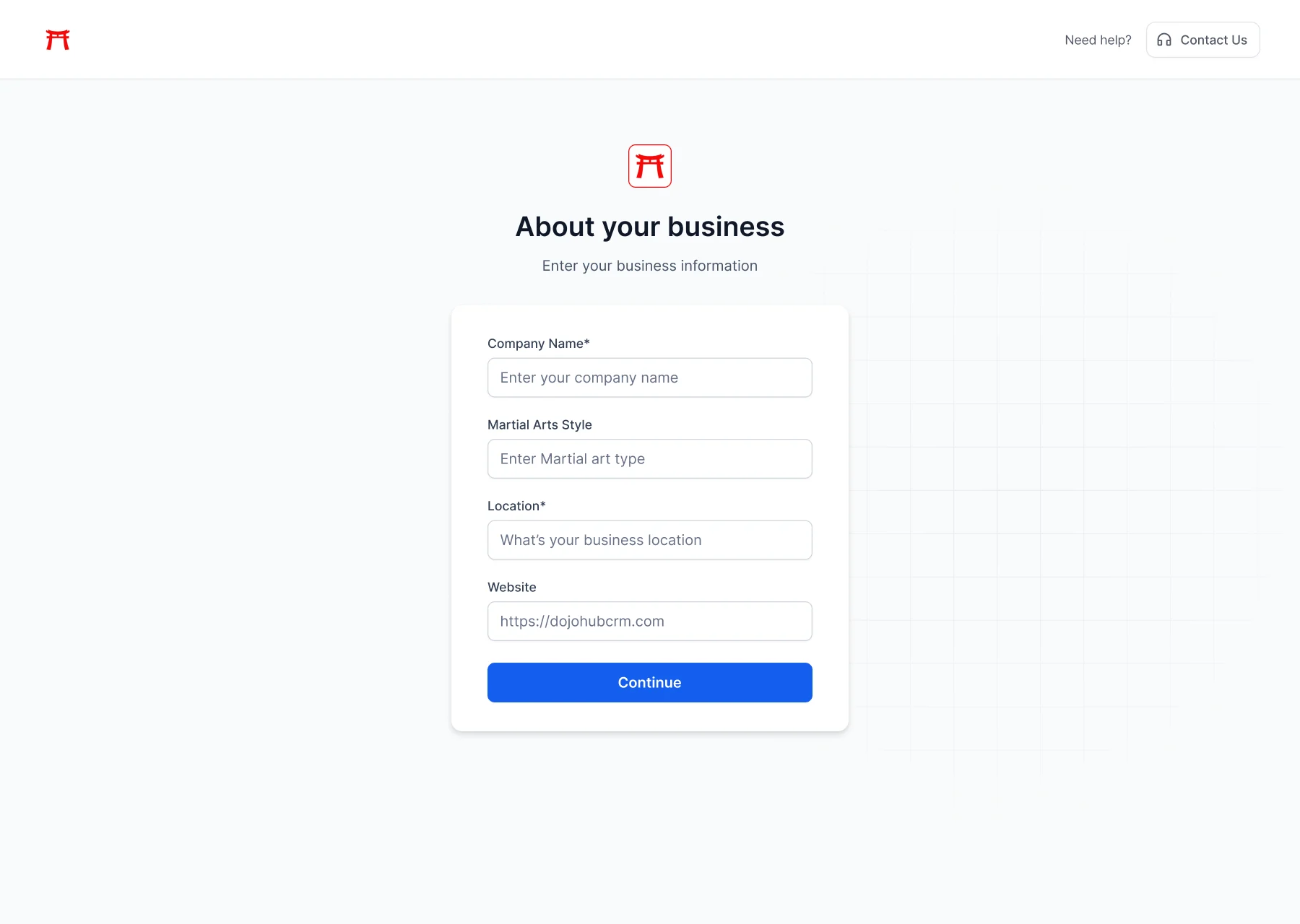
Create an account · 1/4 Sign up
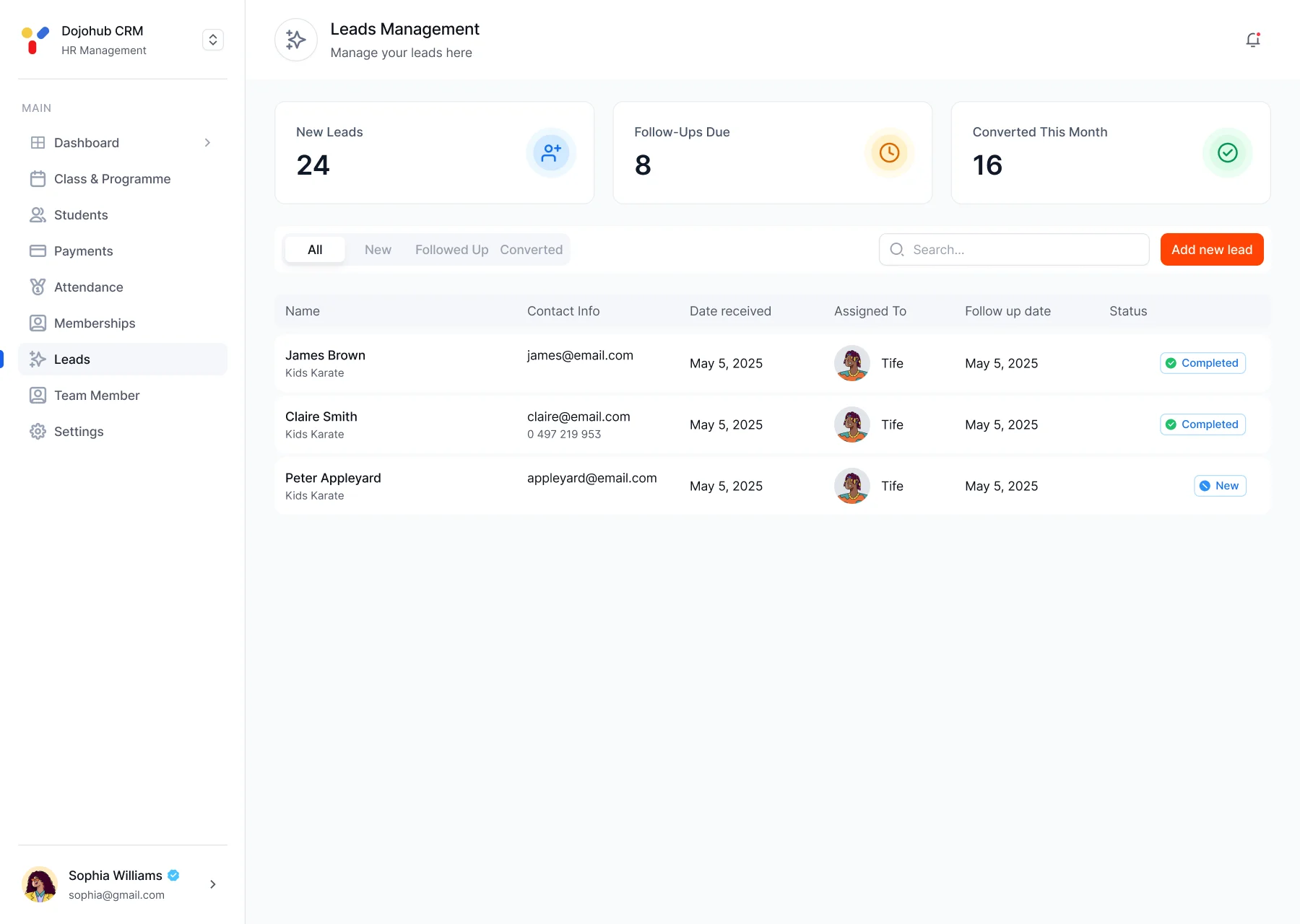
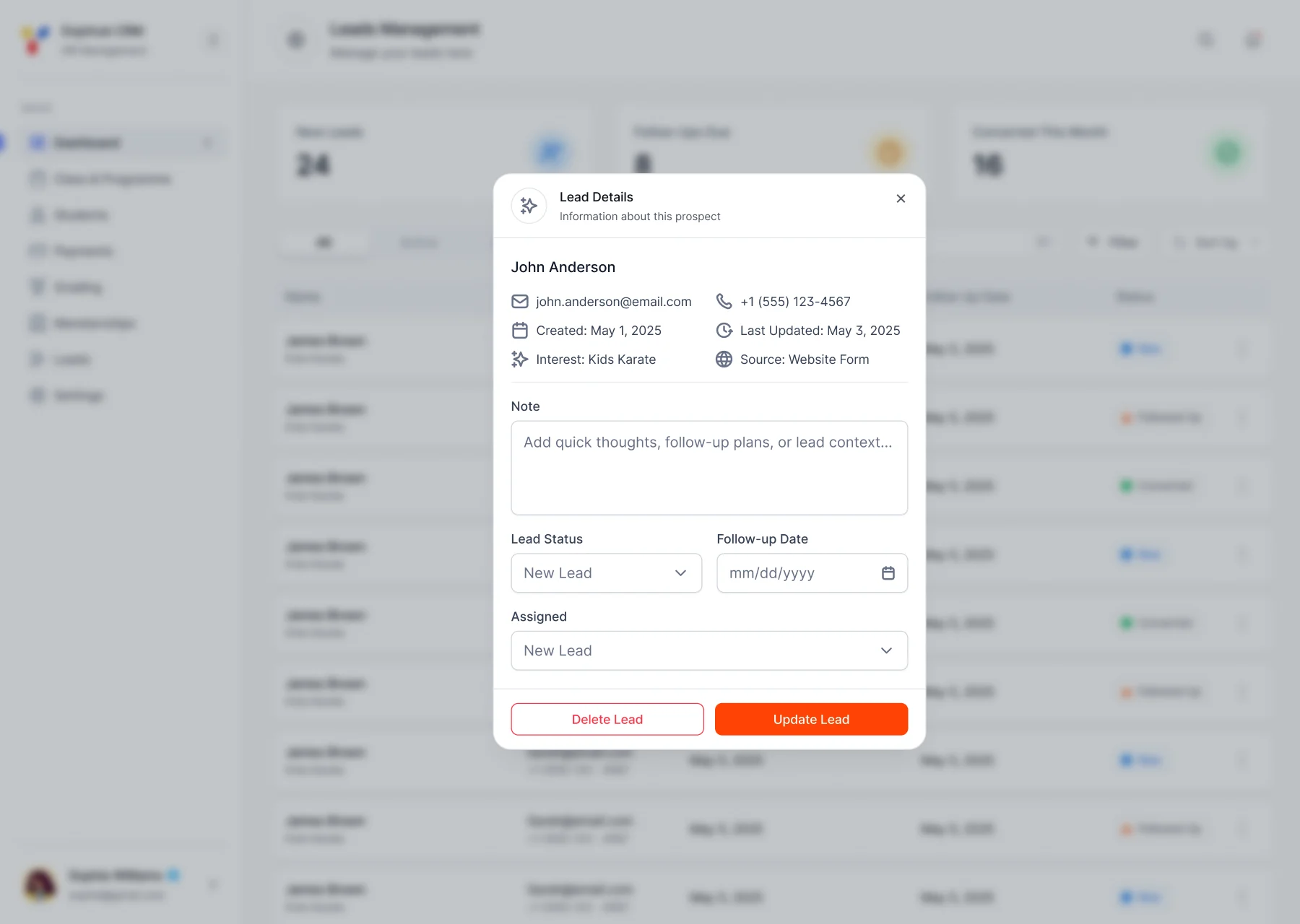
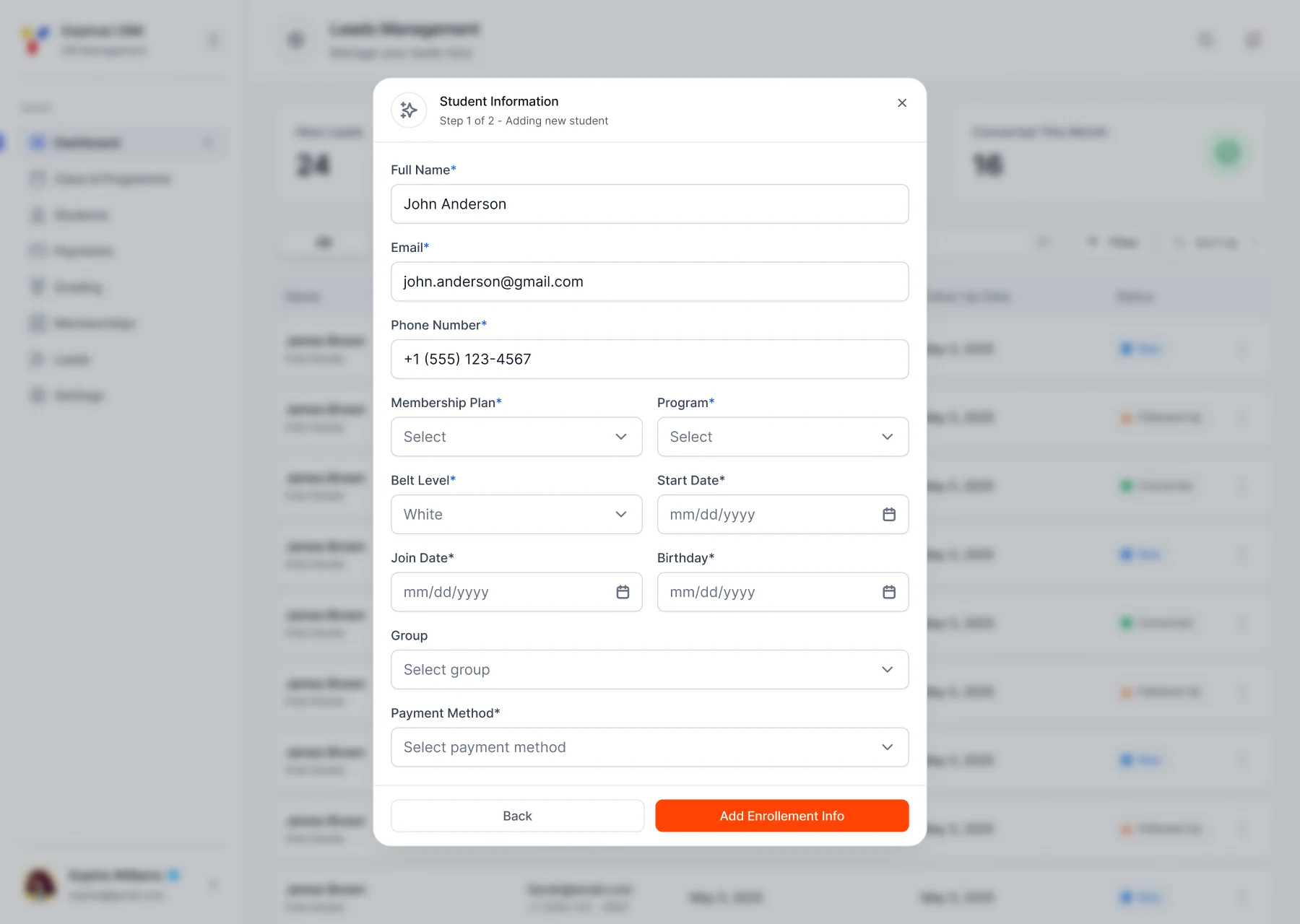
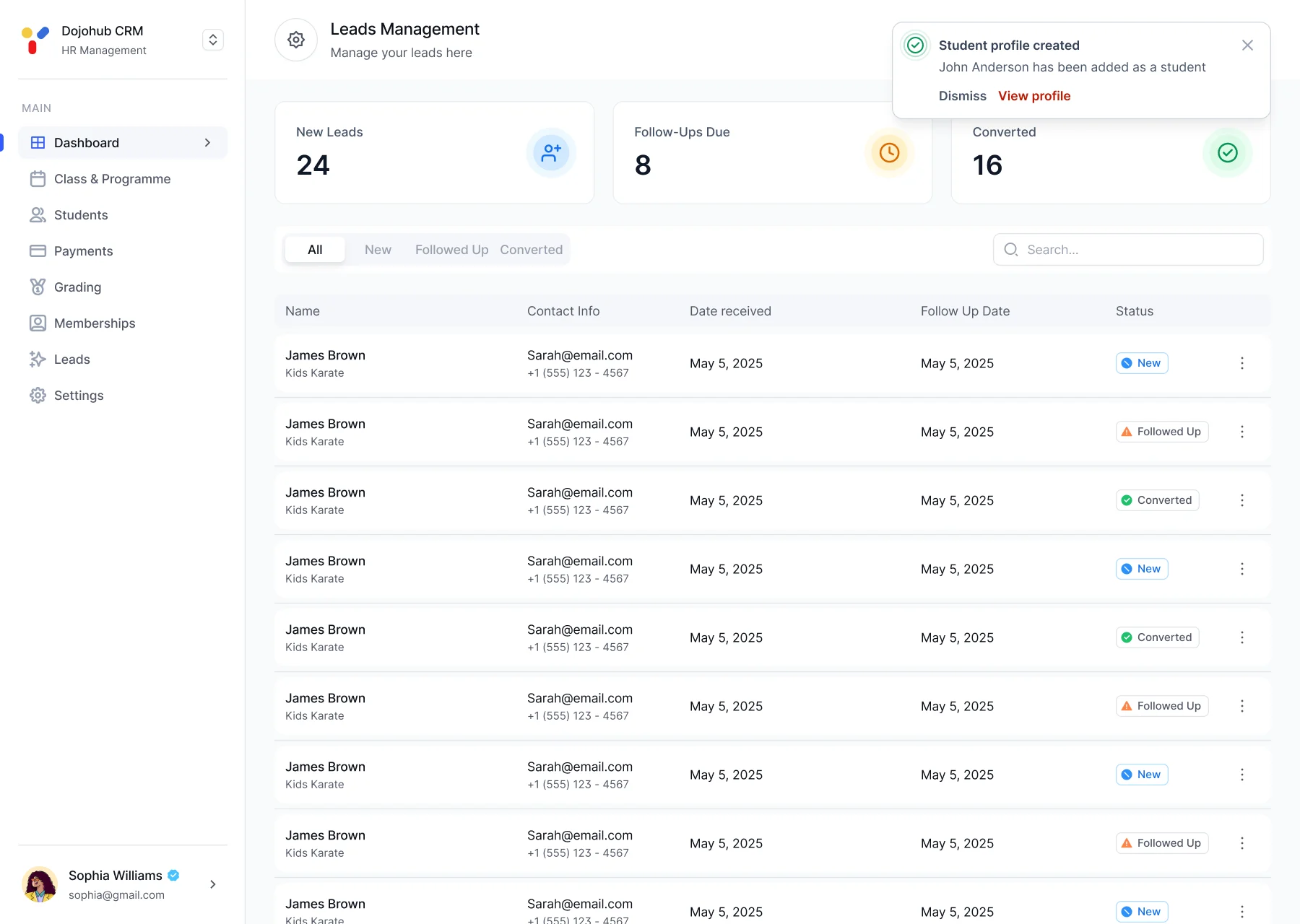
Turn a lead into a student · 1/4 Dashboard and pipeline
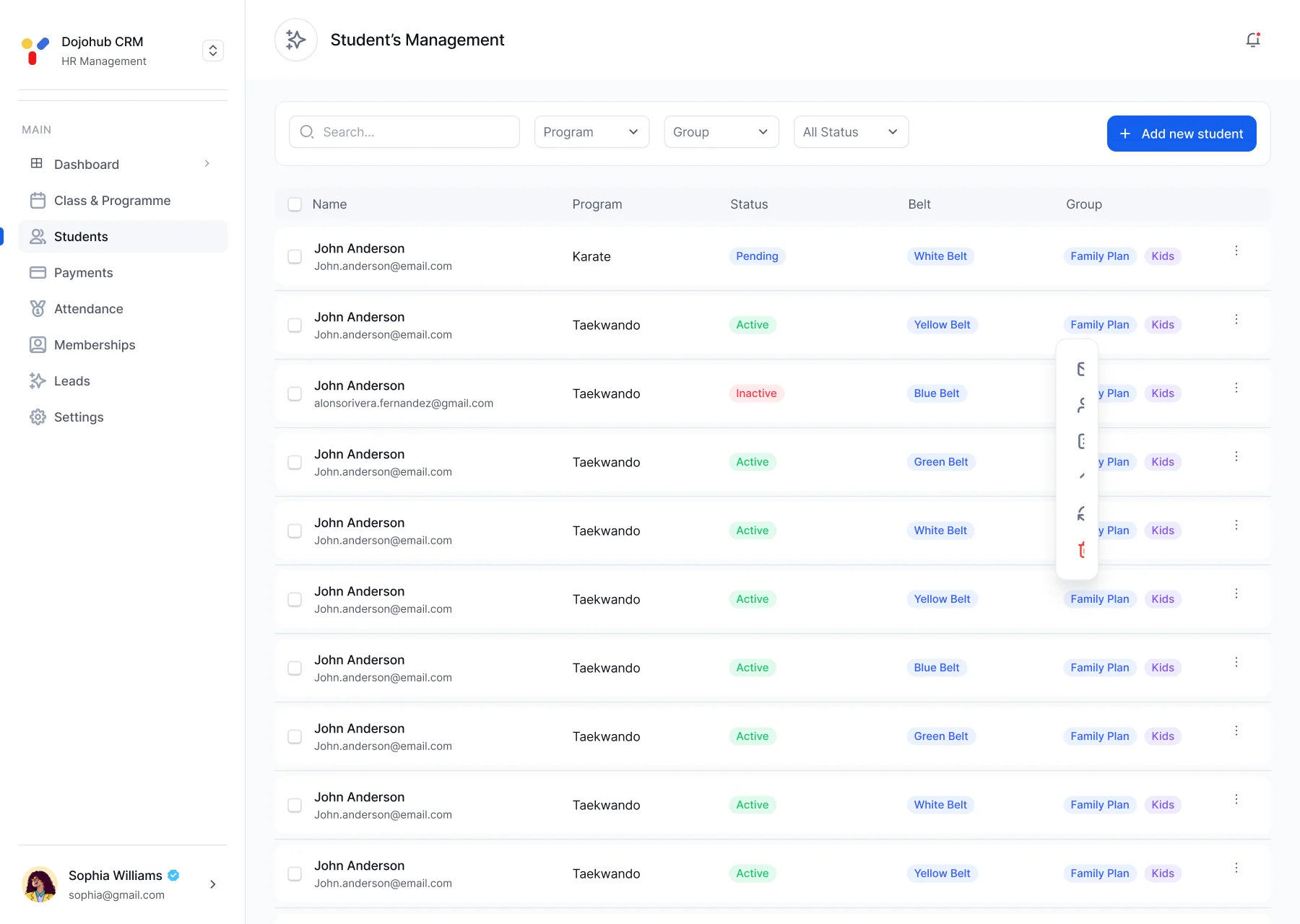
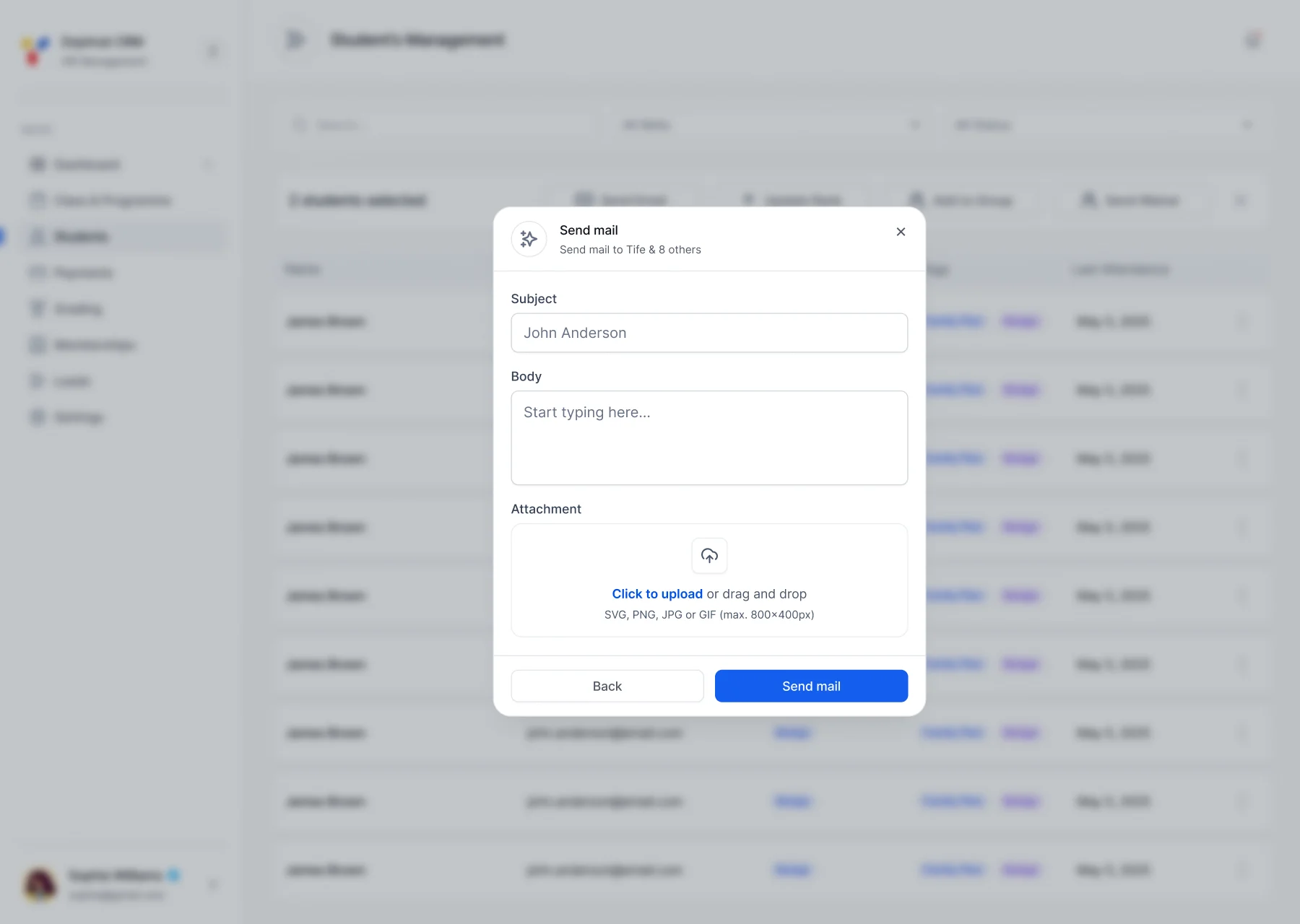
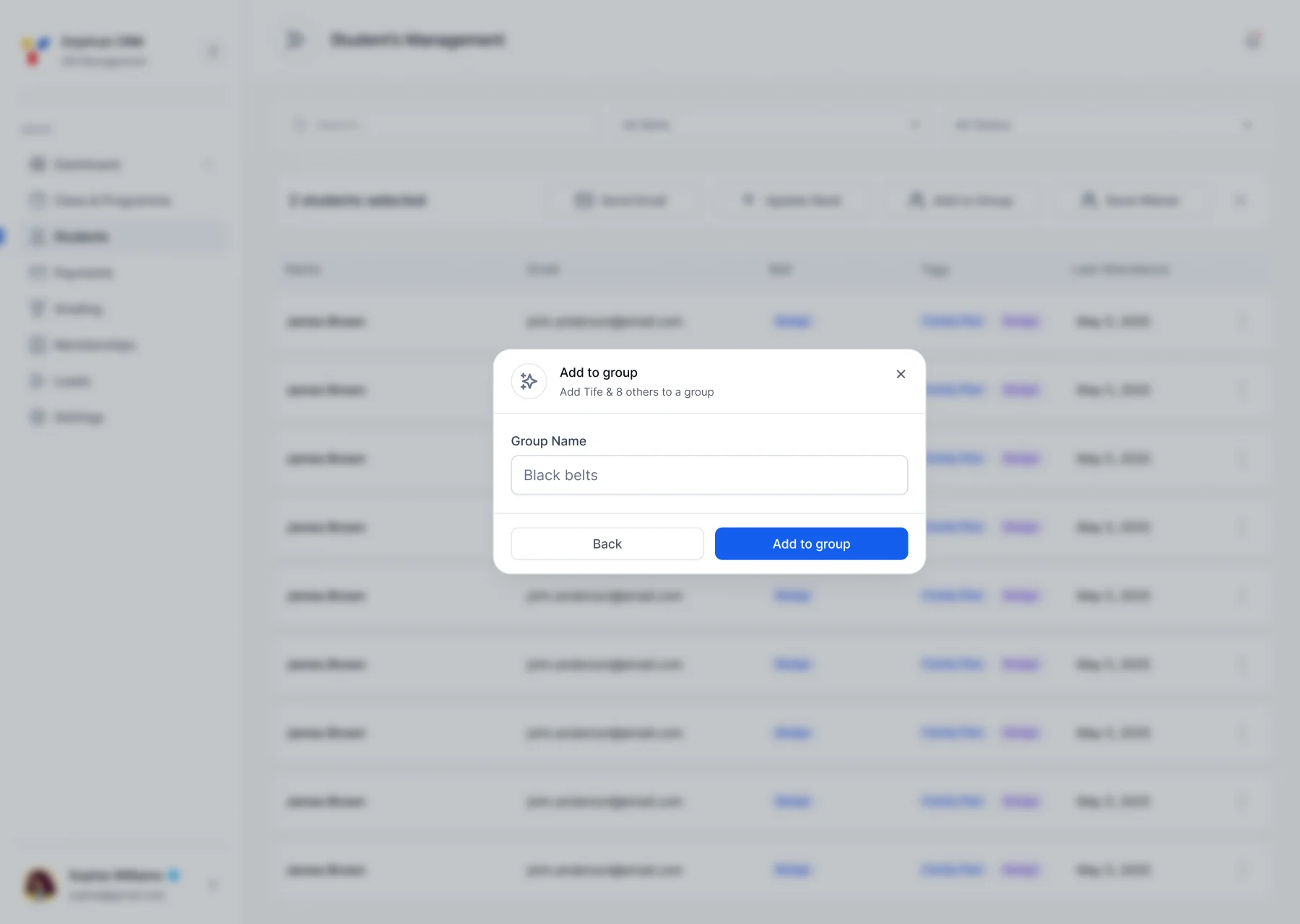
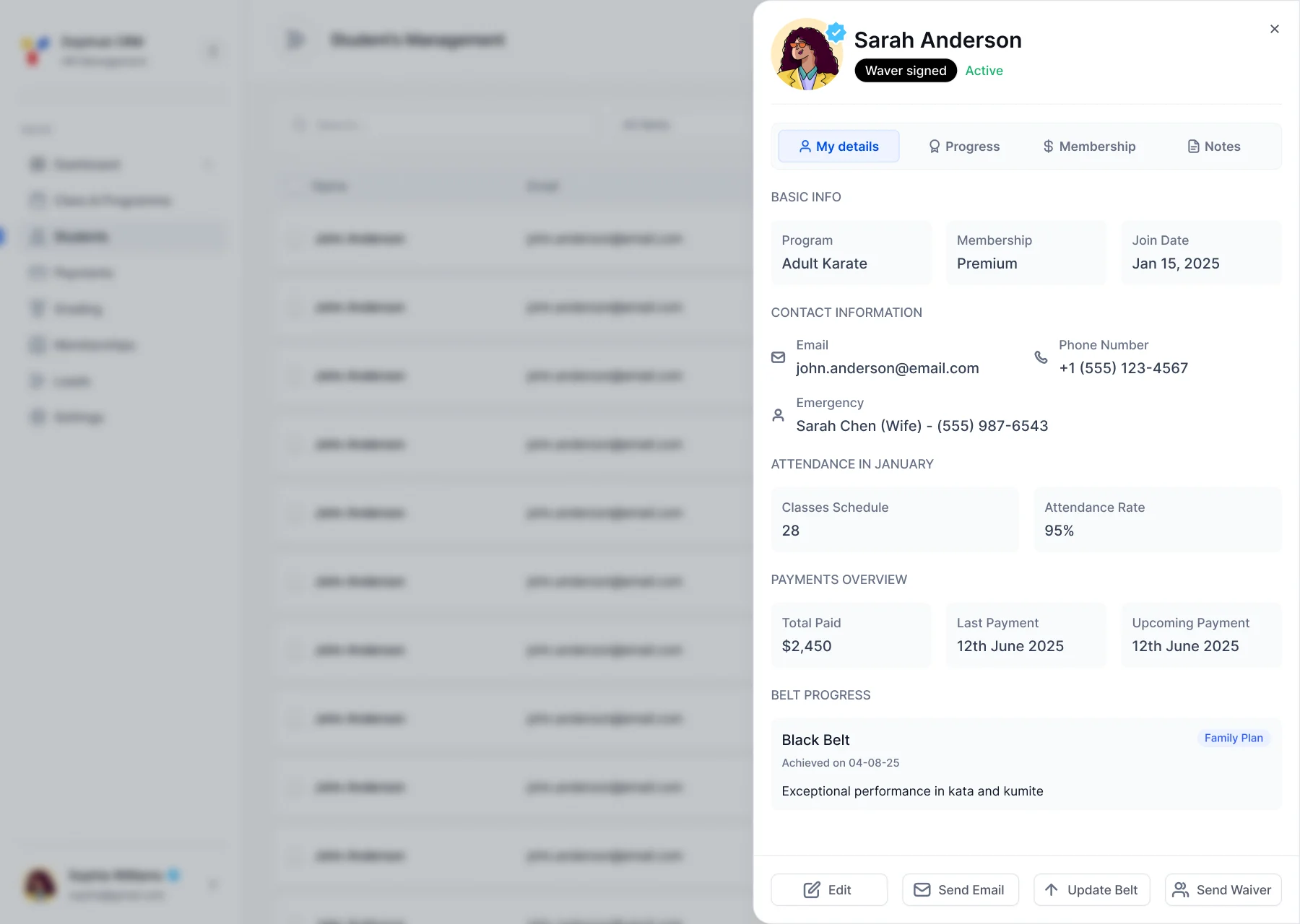
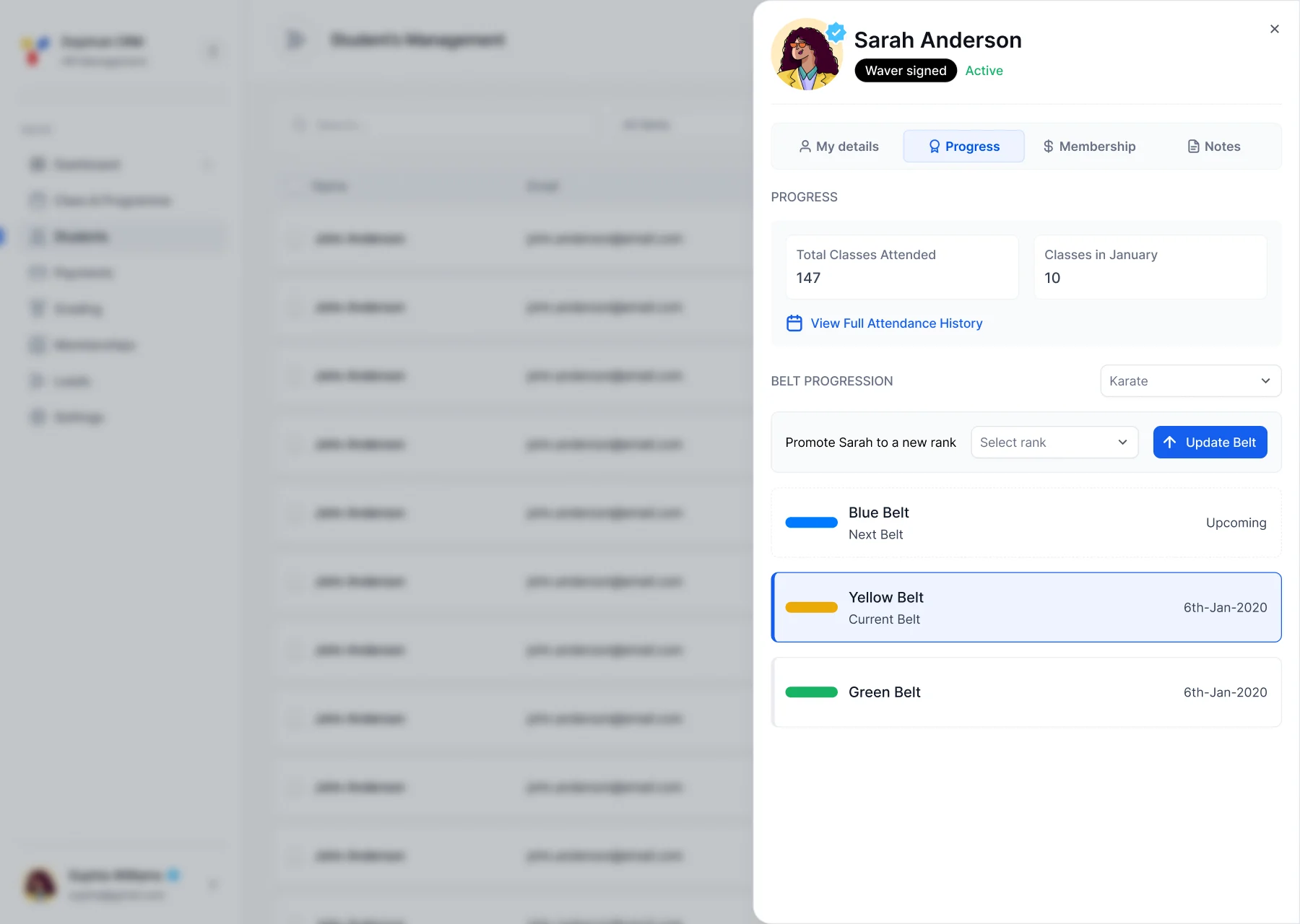
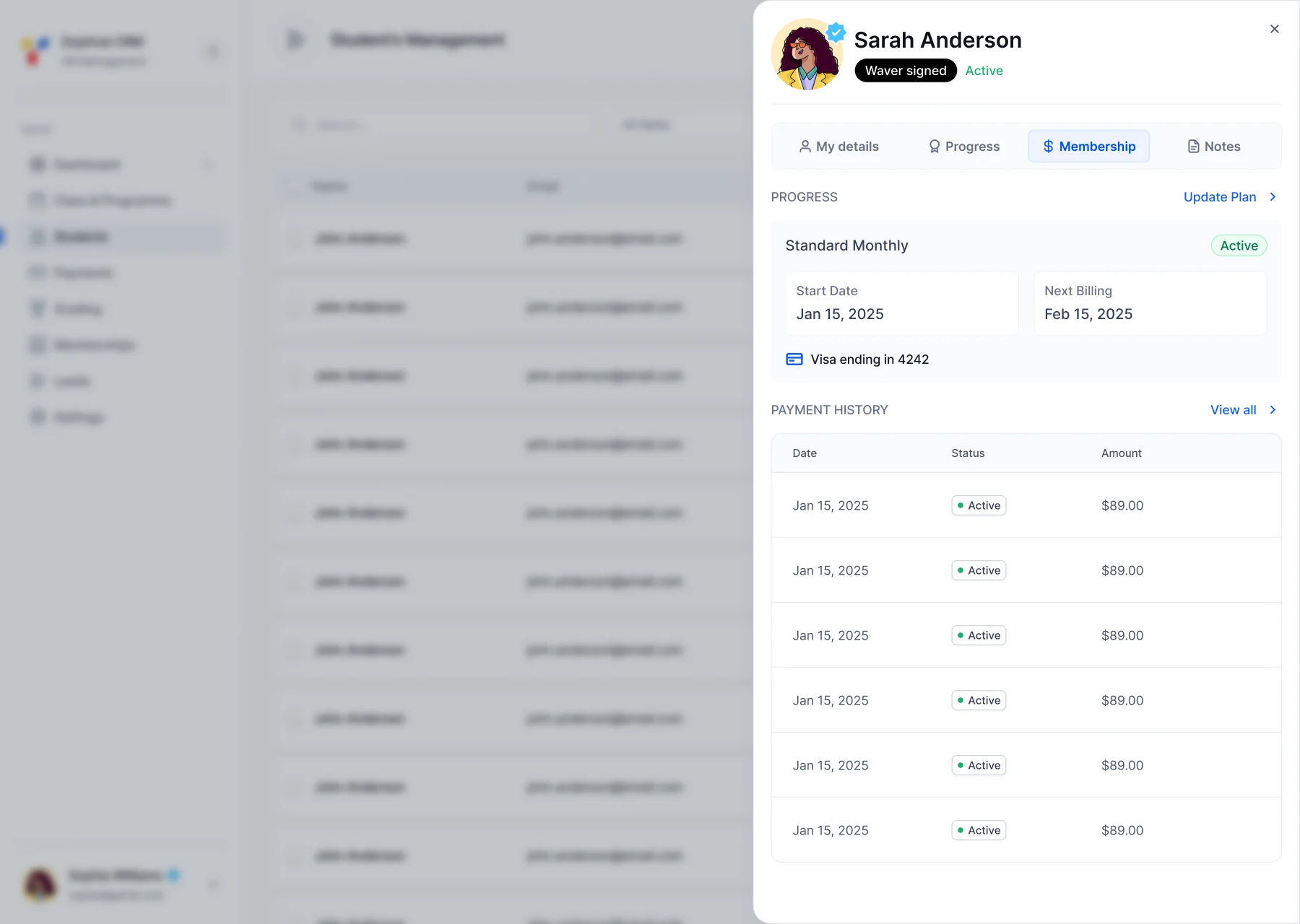
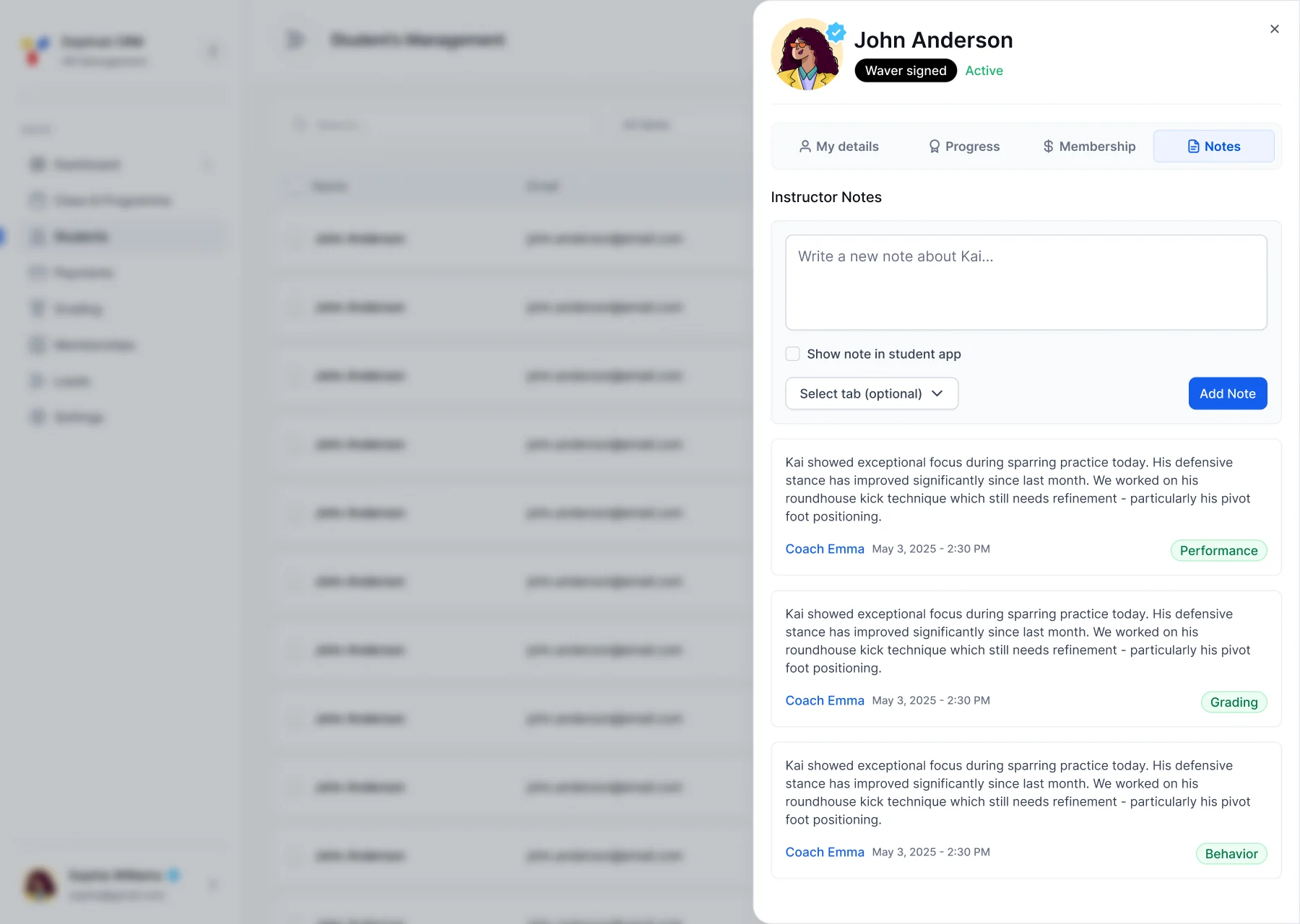
Manage students · 1/7 Students
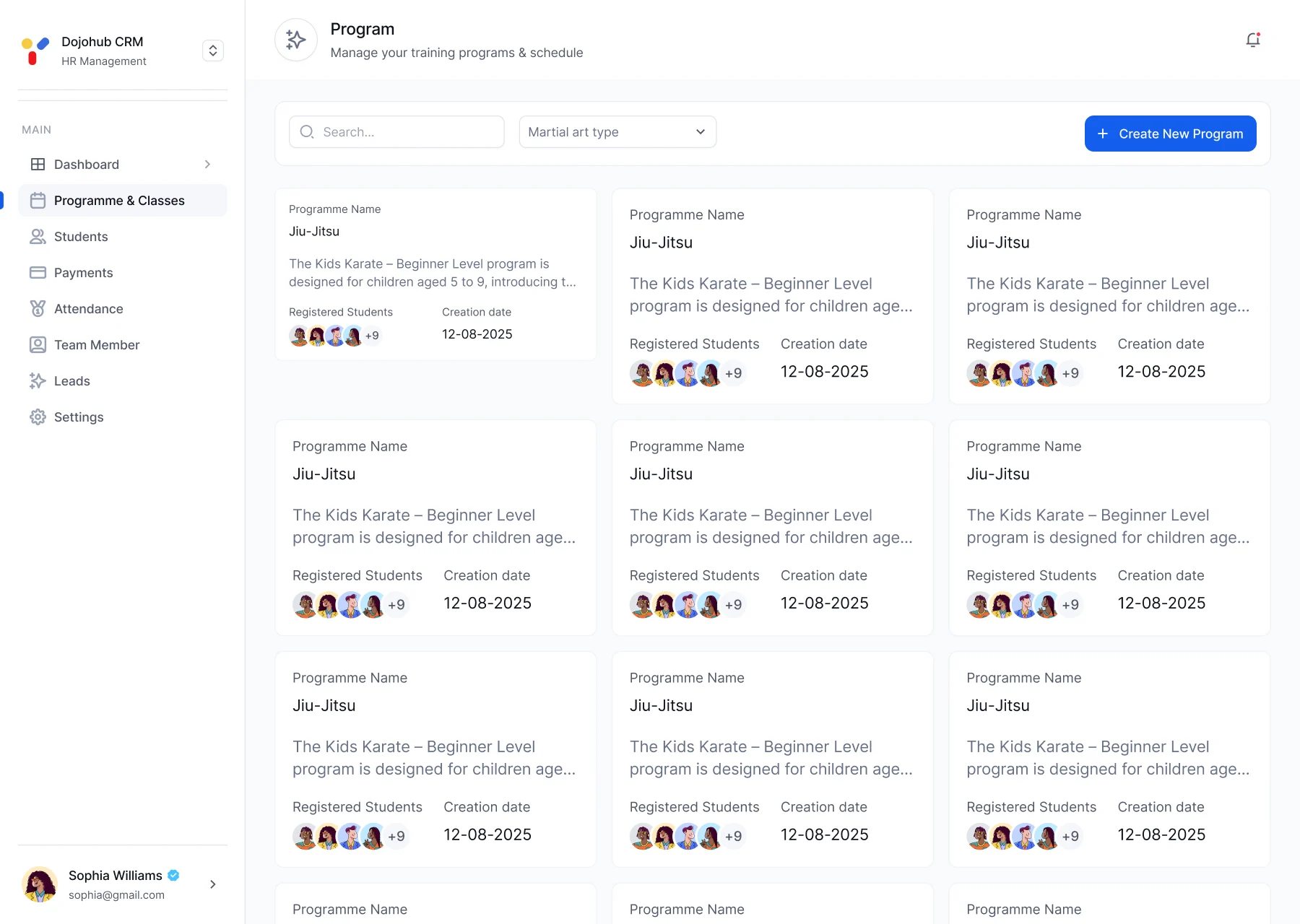
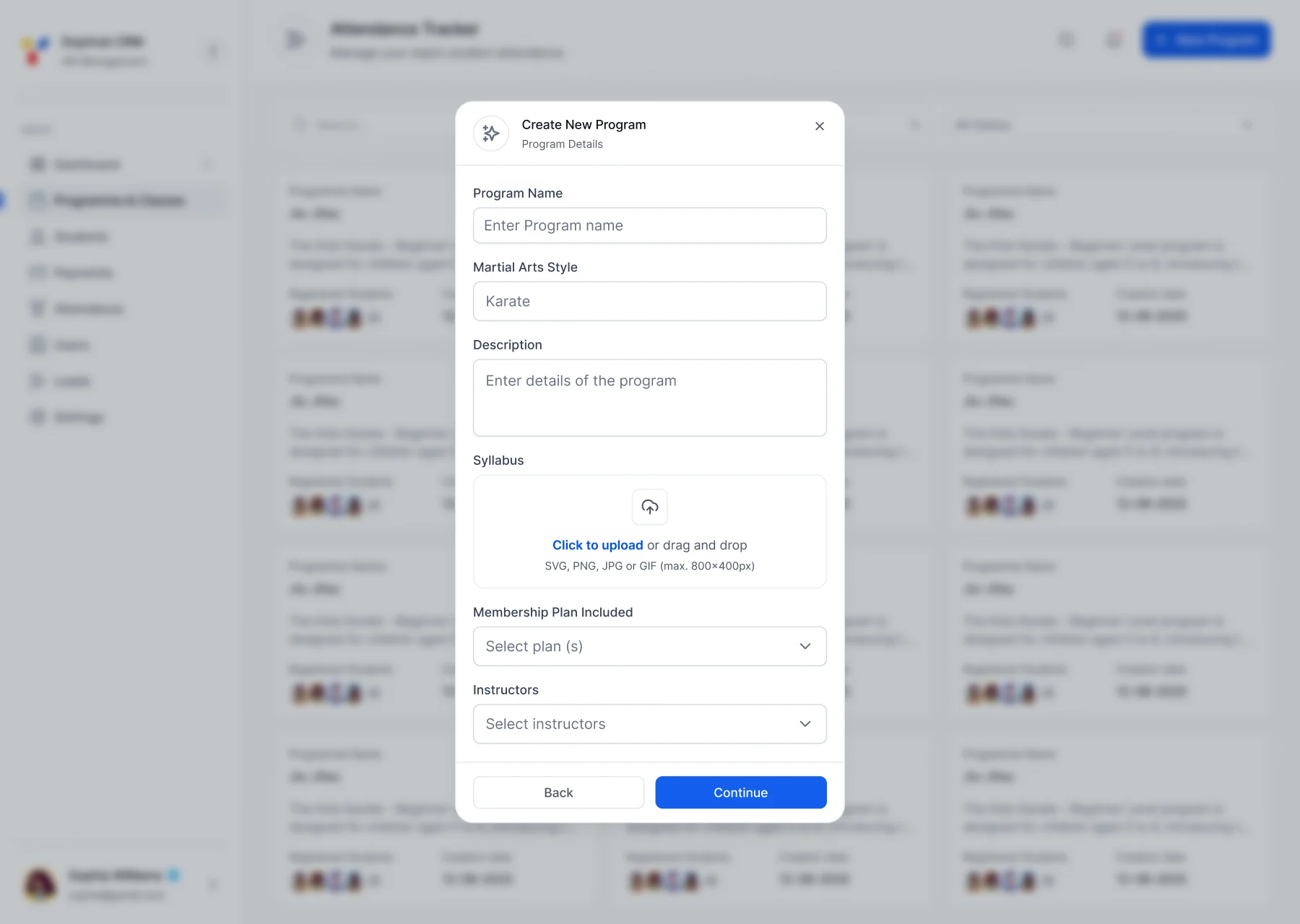
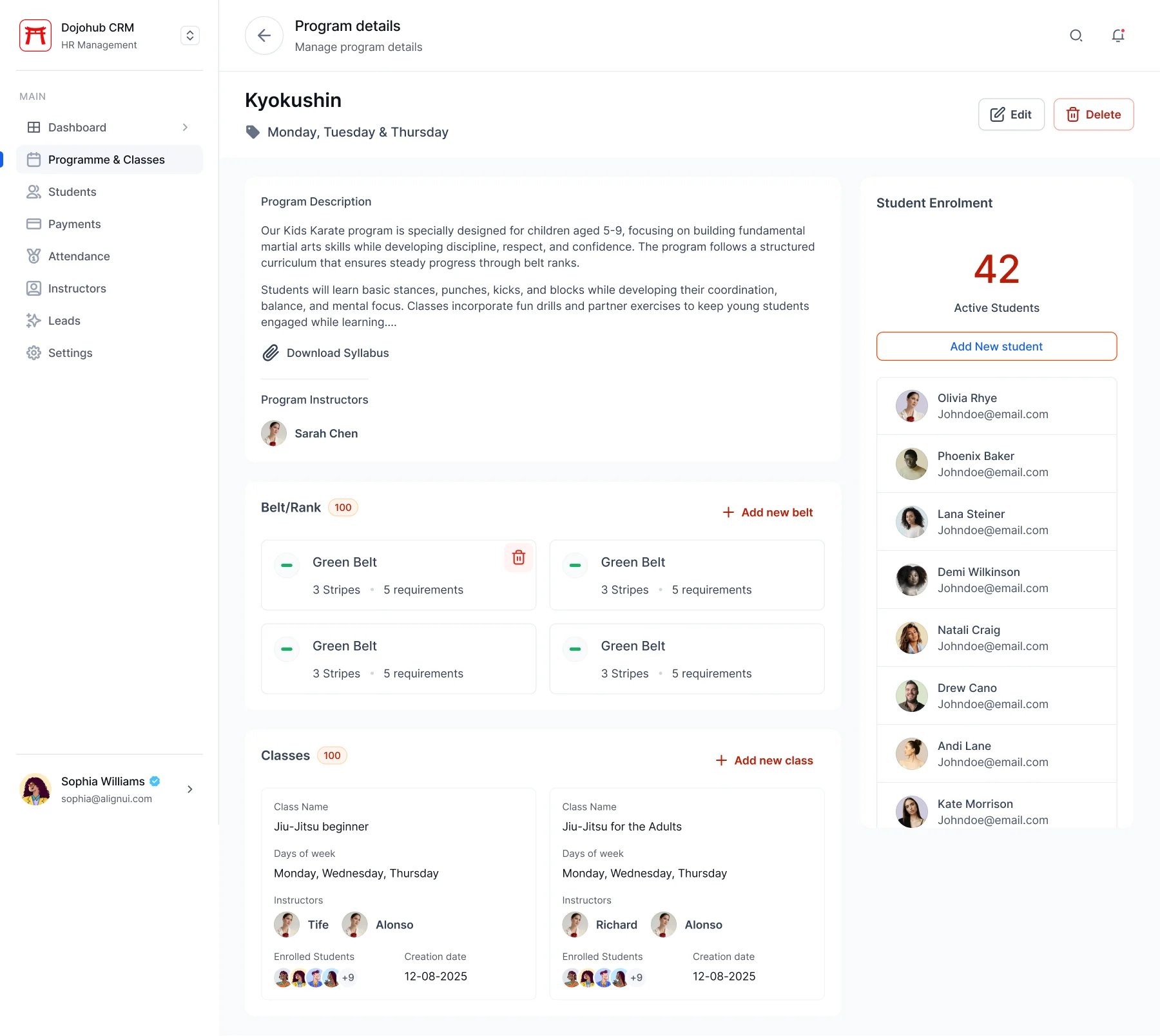
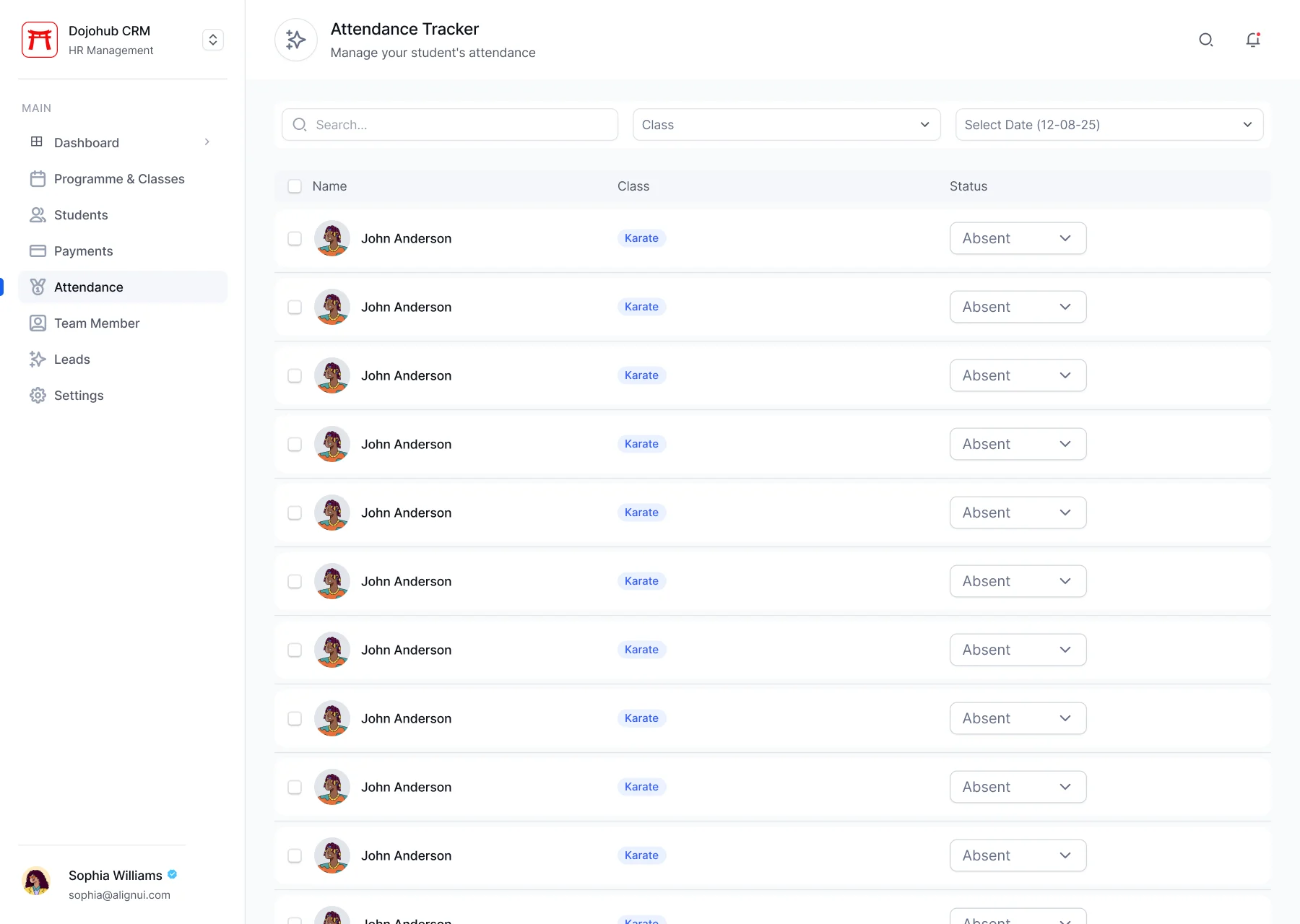
Programs, classes and attendance · 1/4 Programs
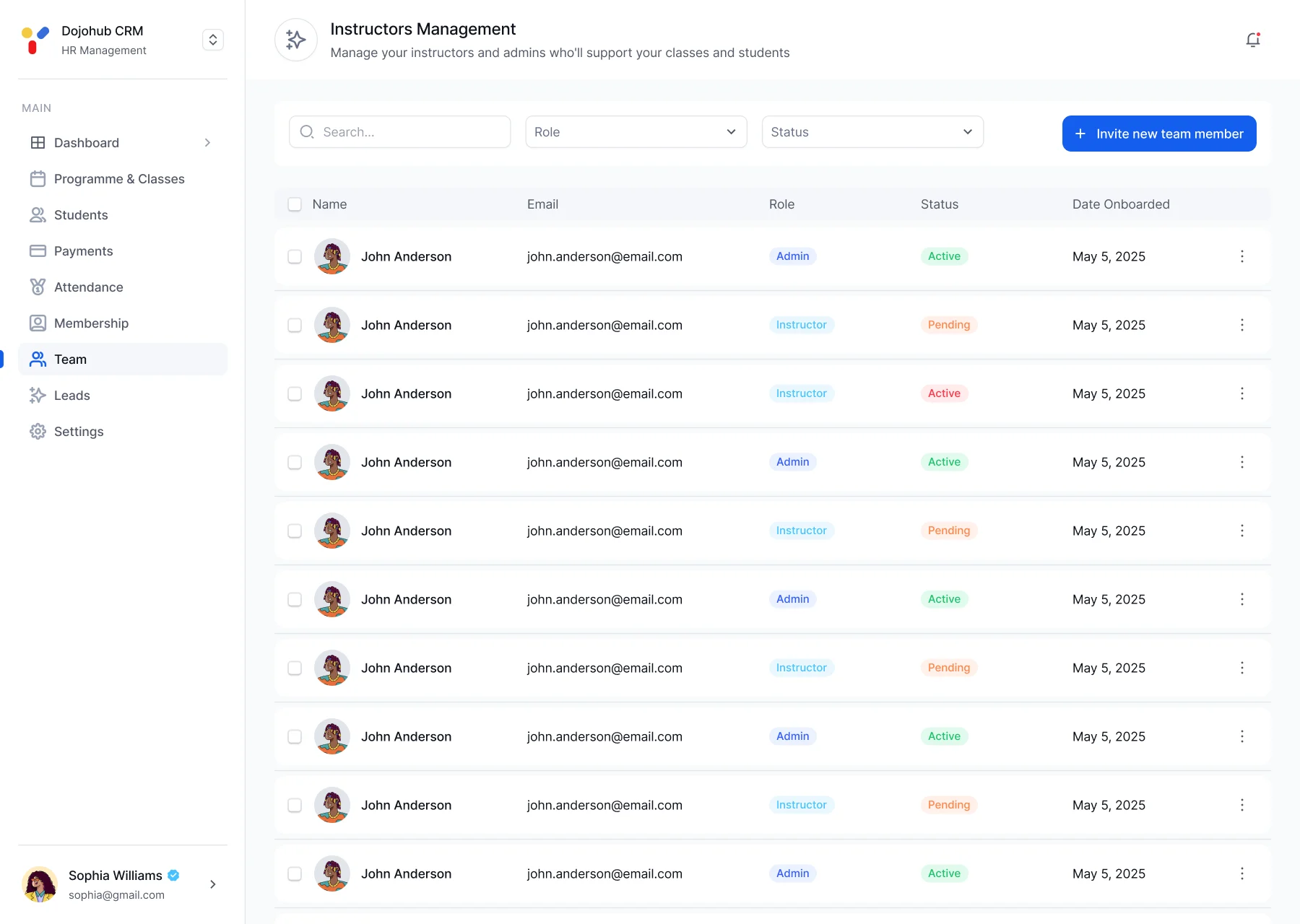
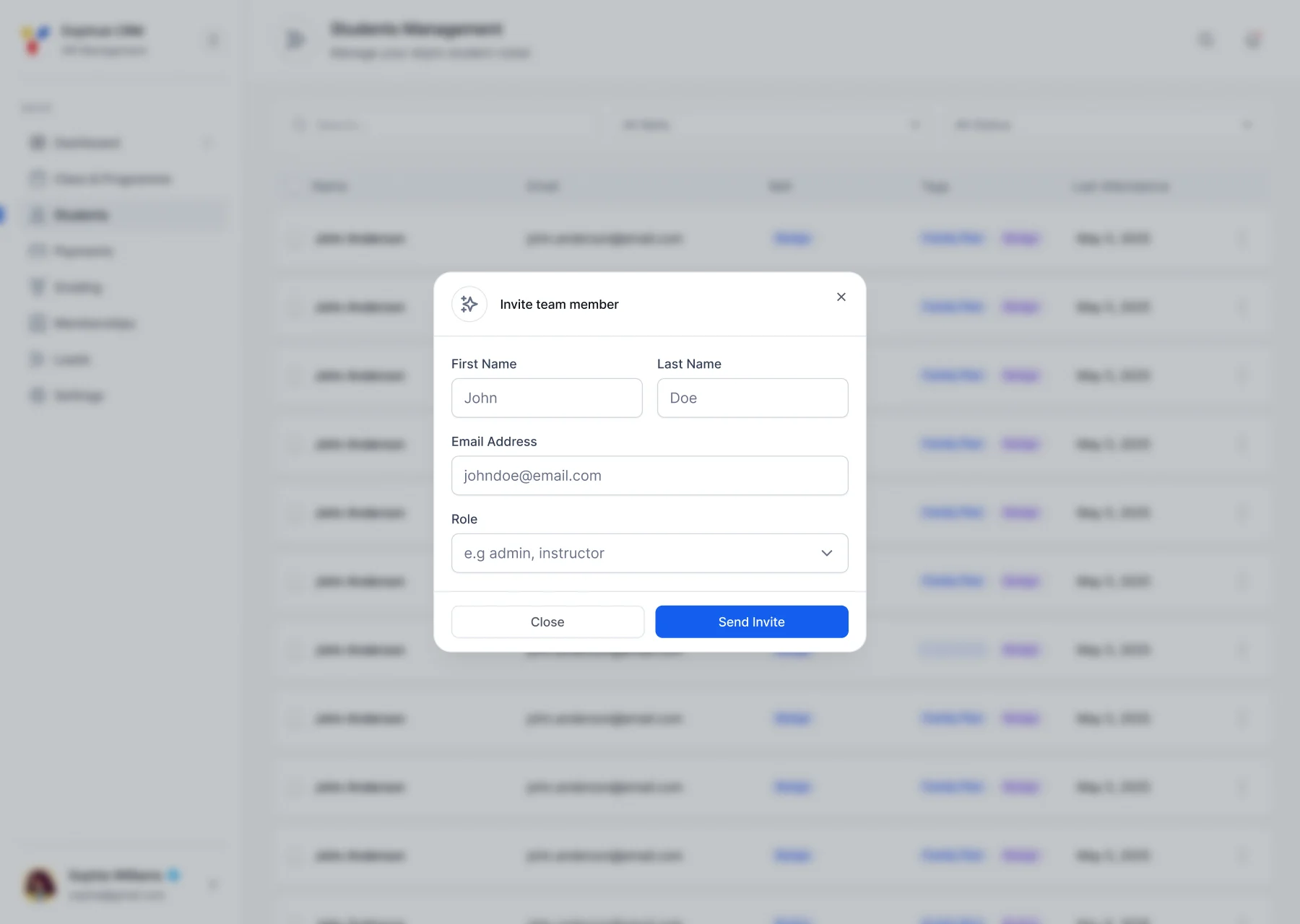
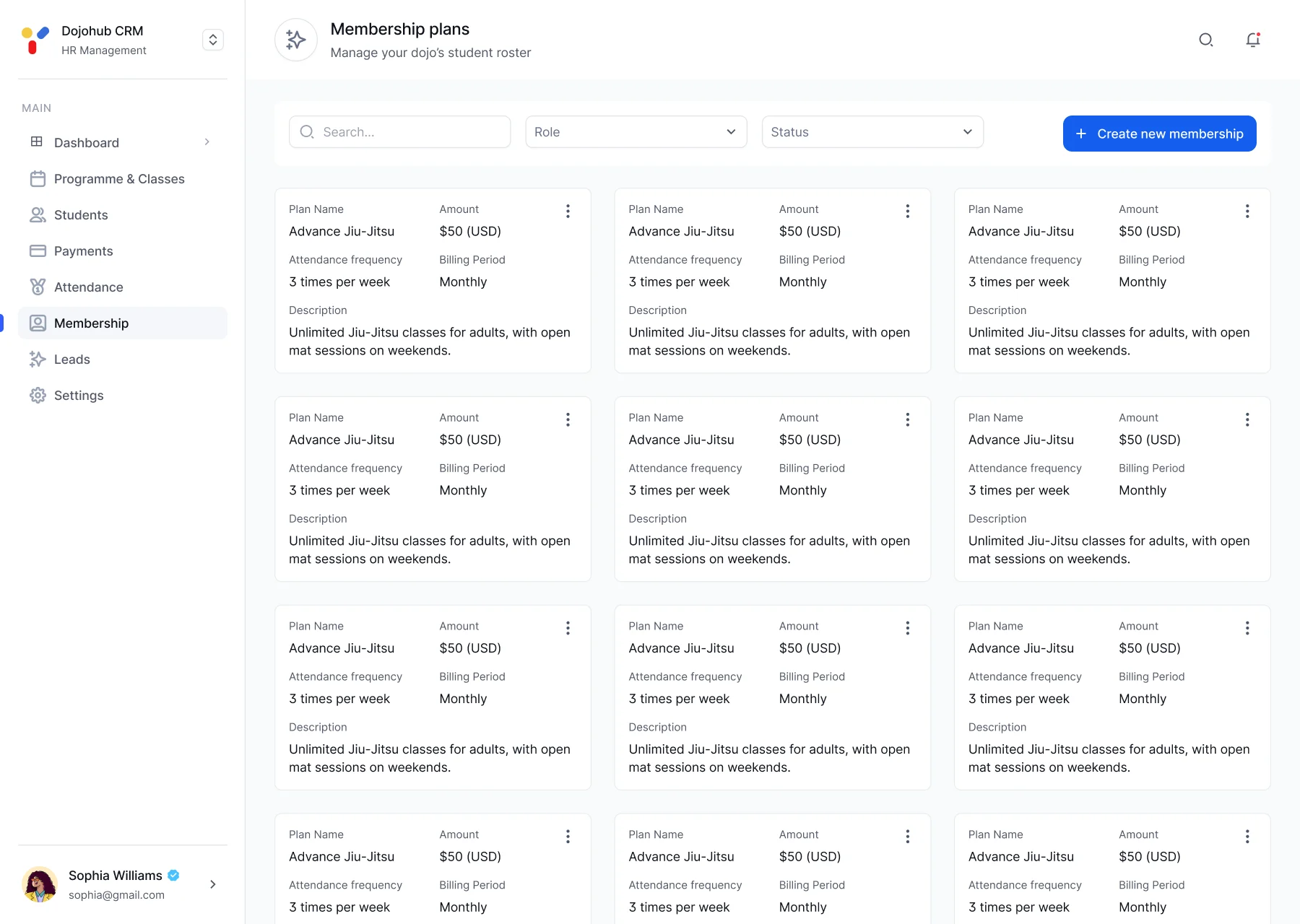
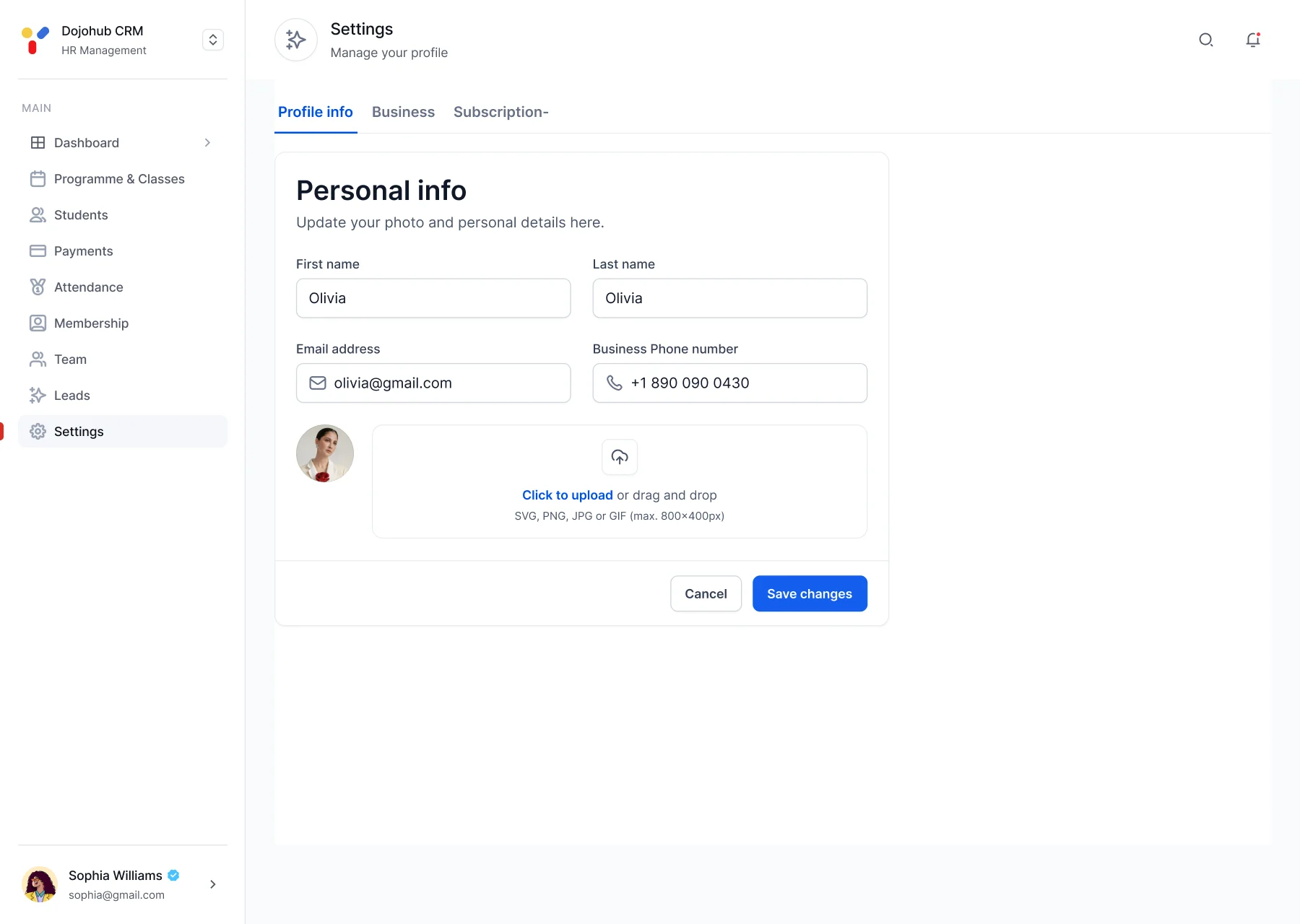
Team, memberships and settings · 1/4 Team
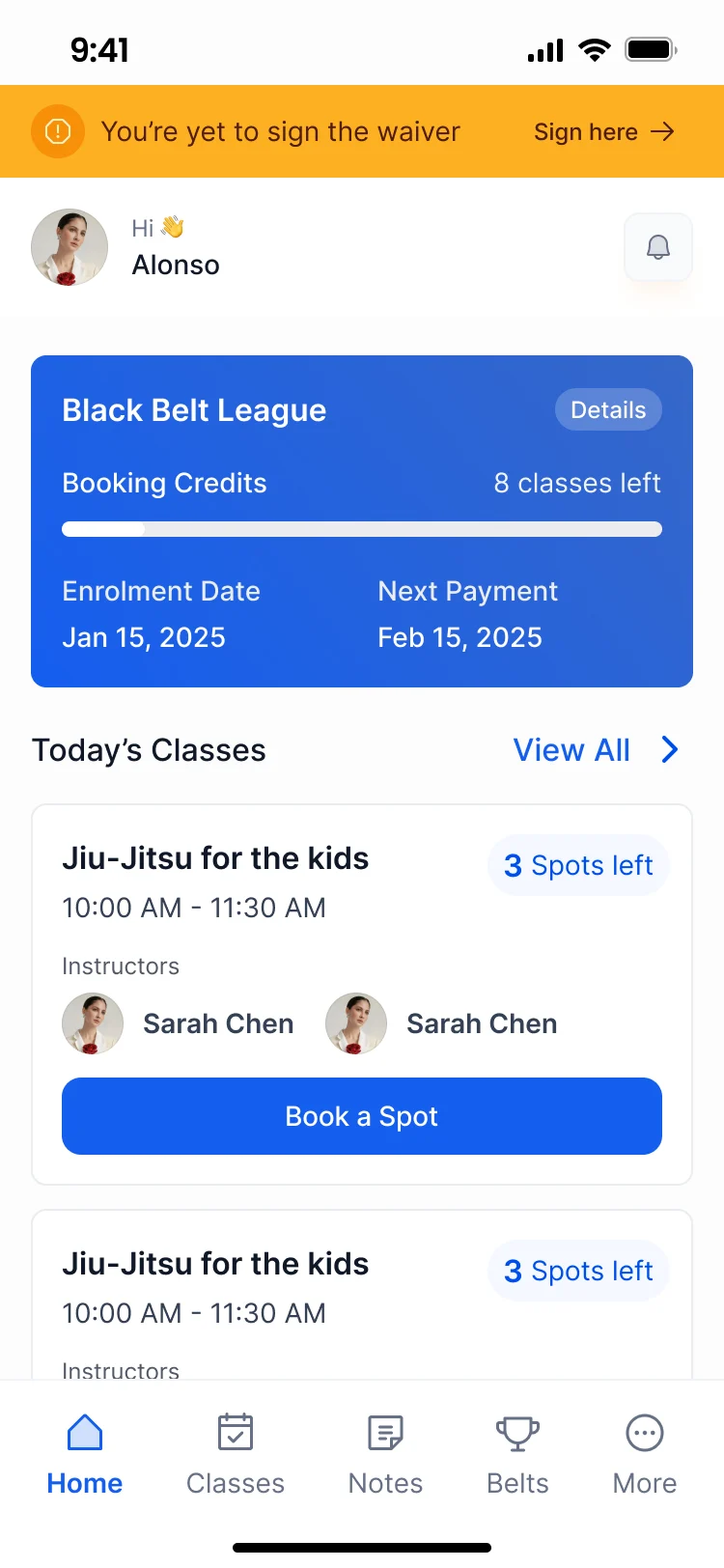
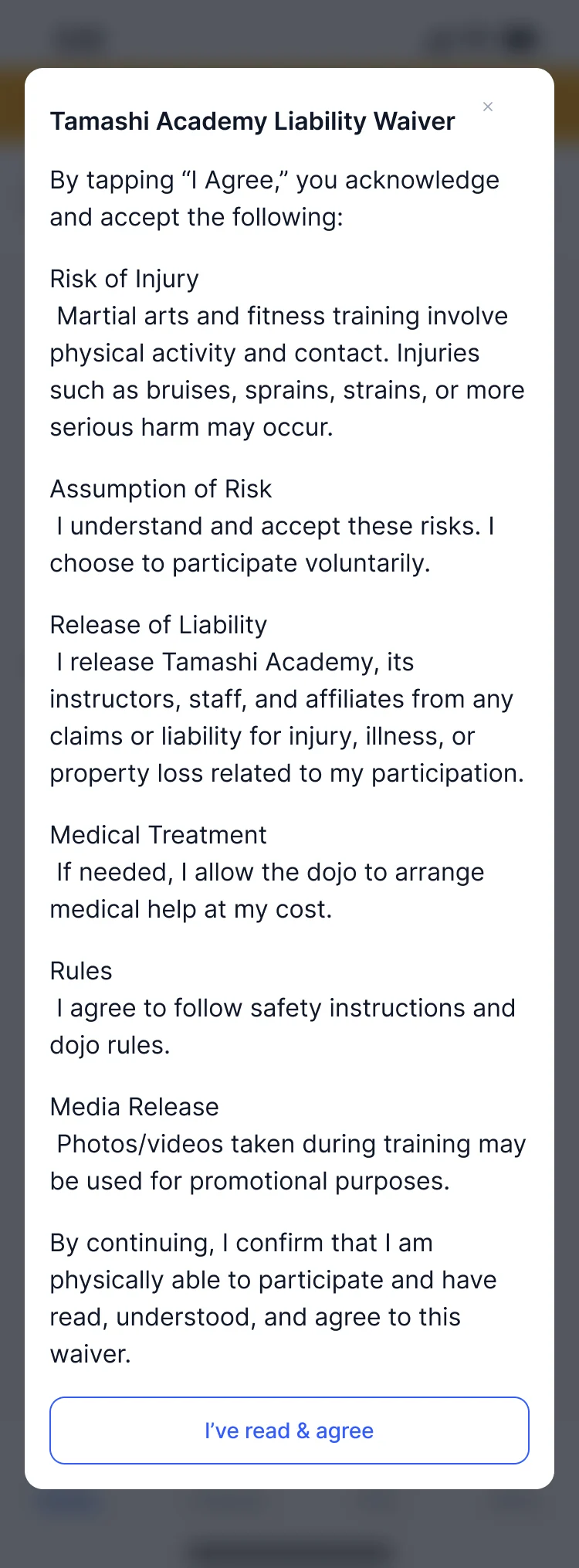

Student app: first open
Students sign the liability waiver before they book.
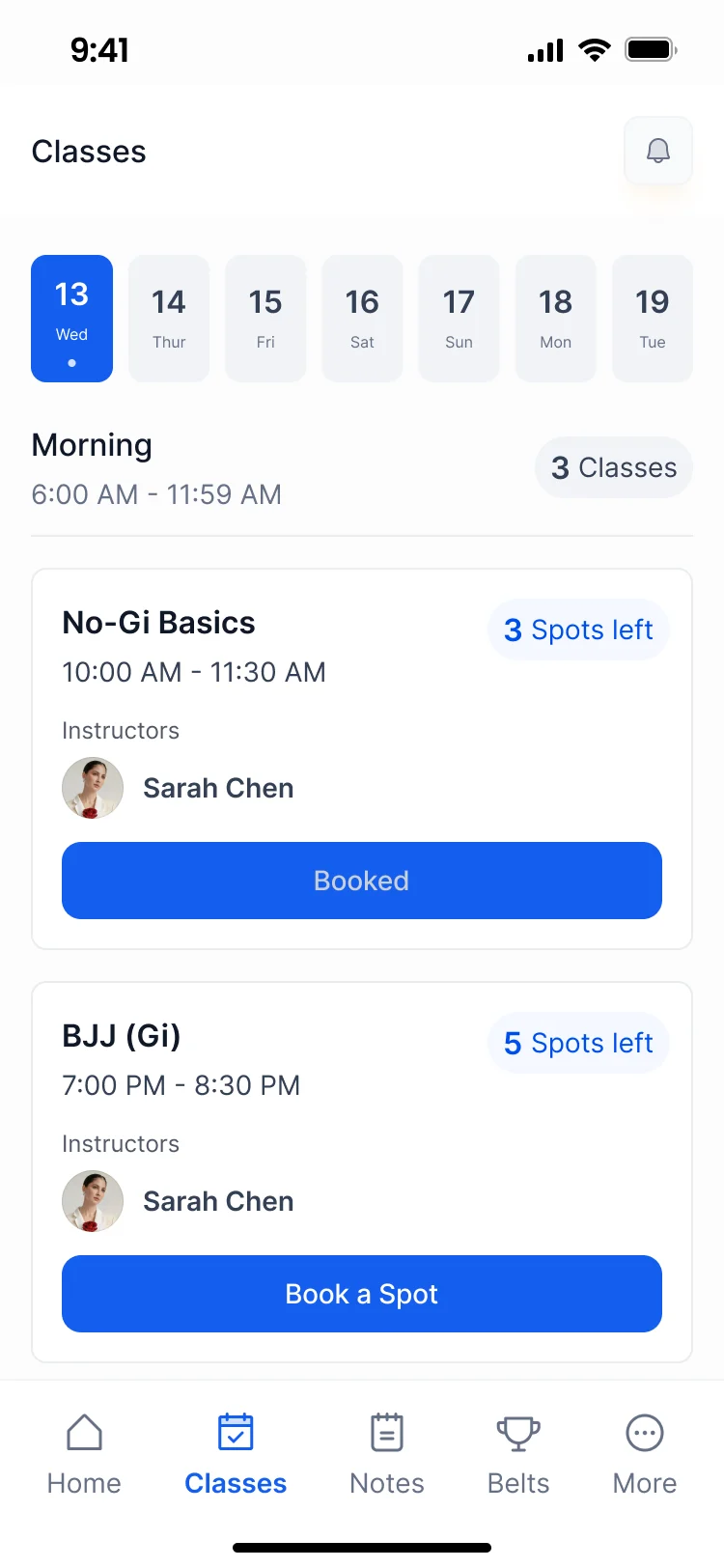
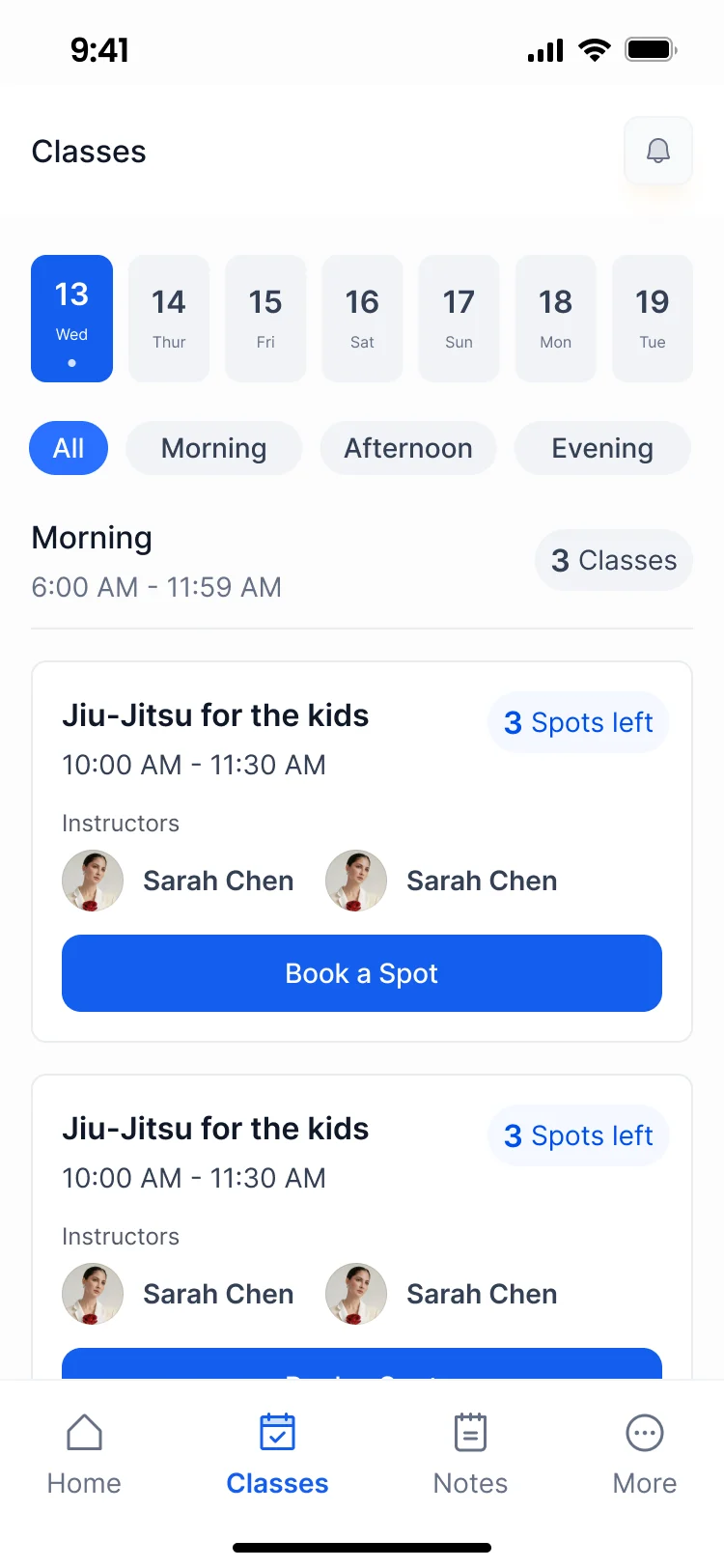

Student app: book a class
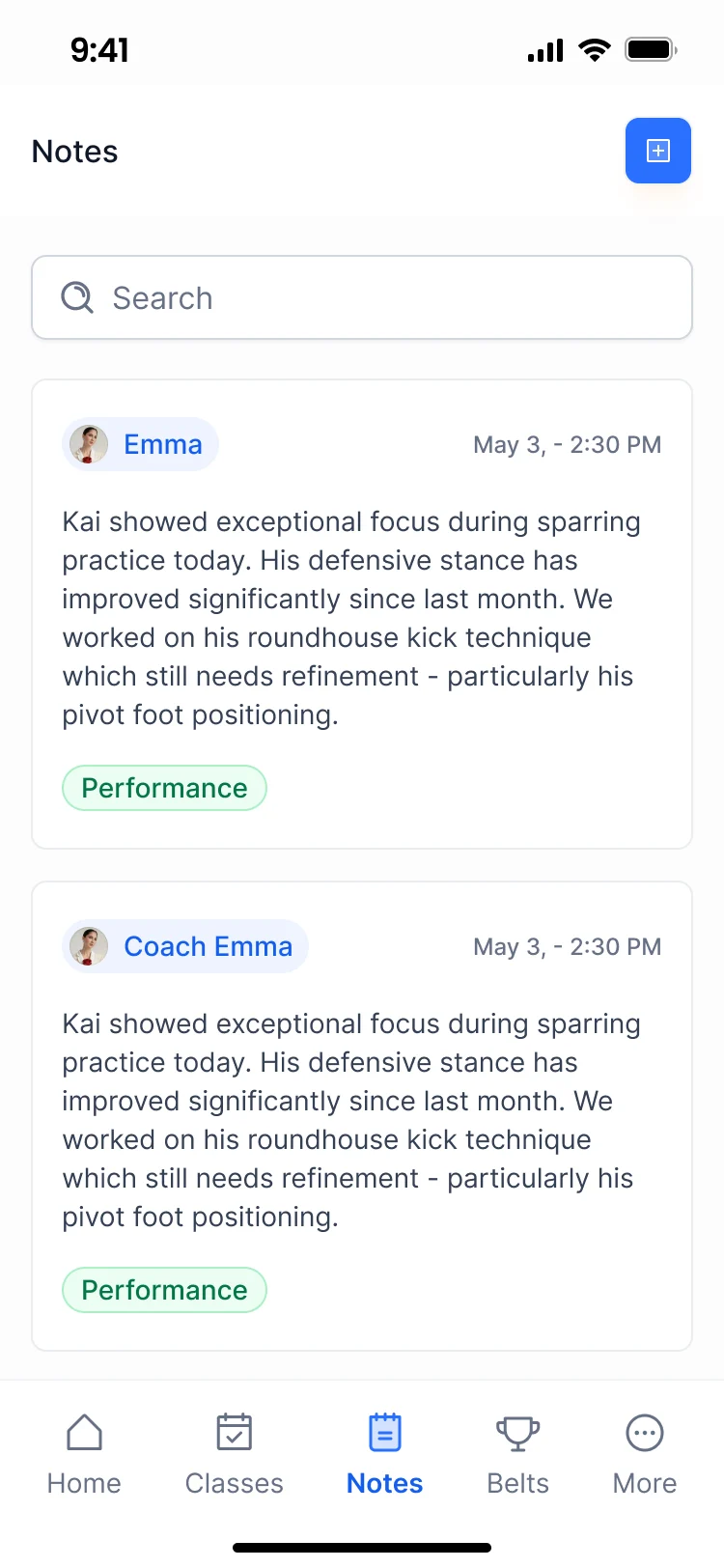
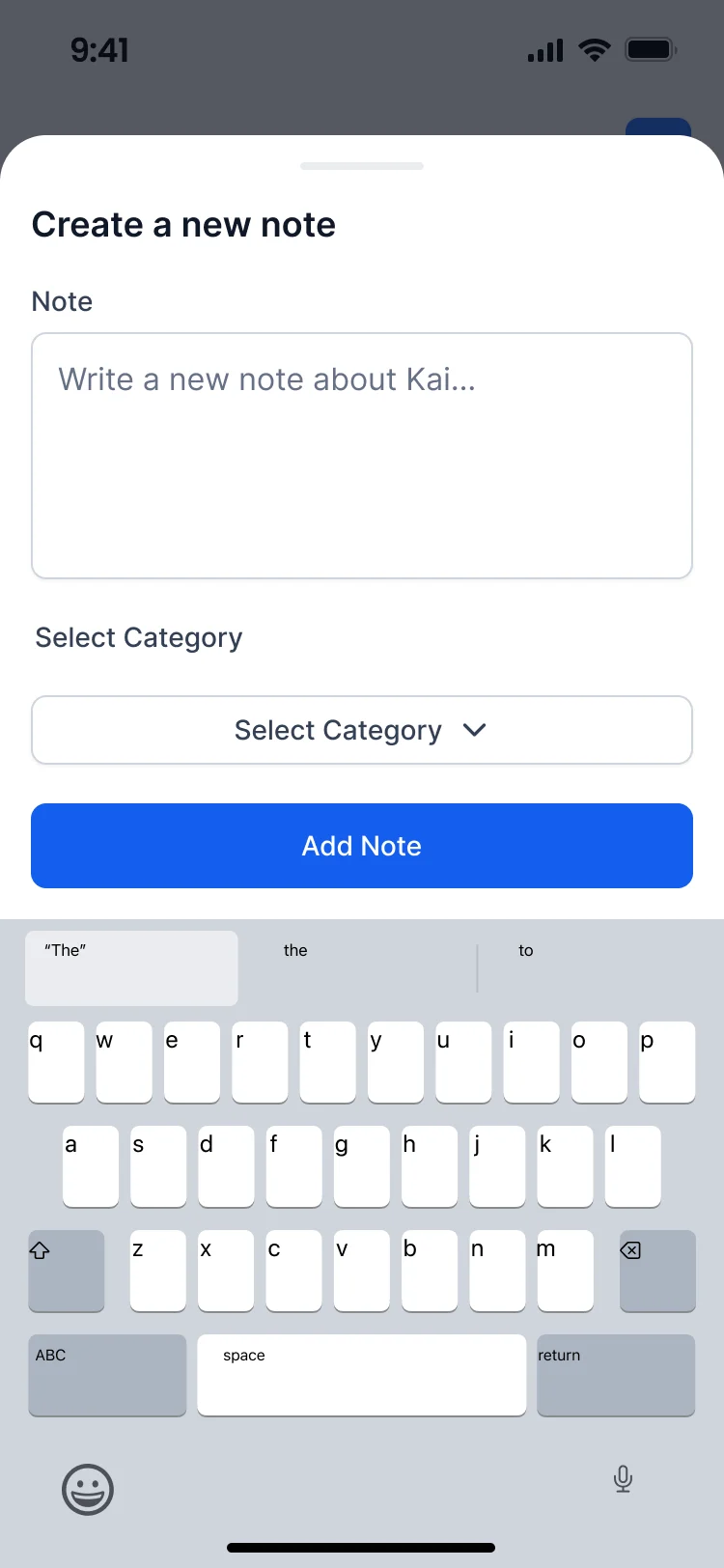

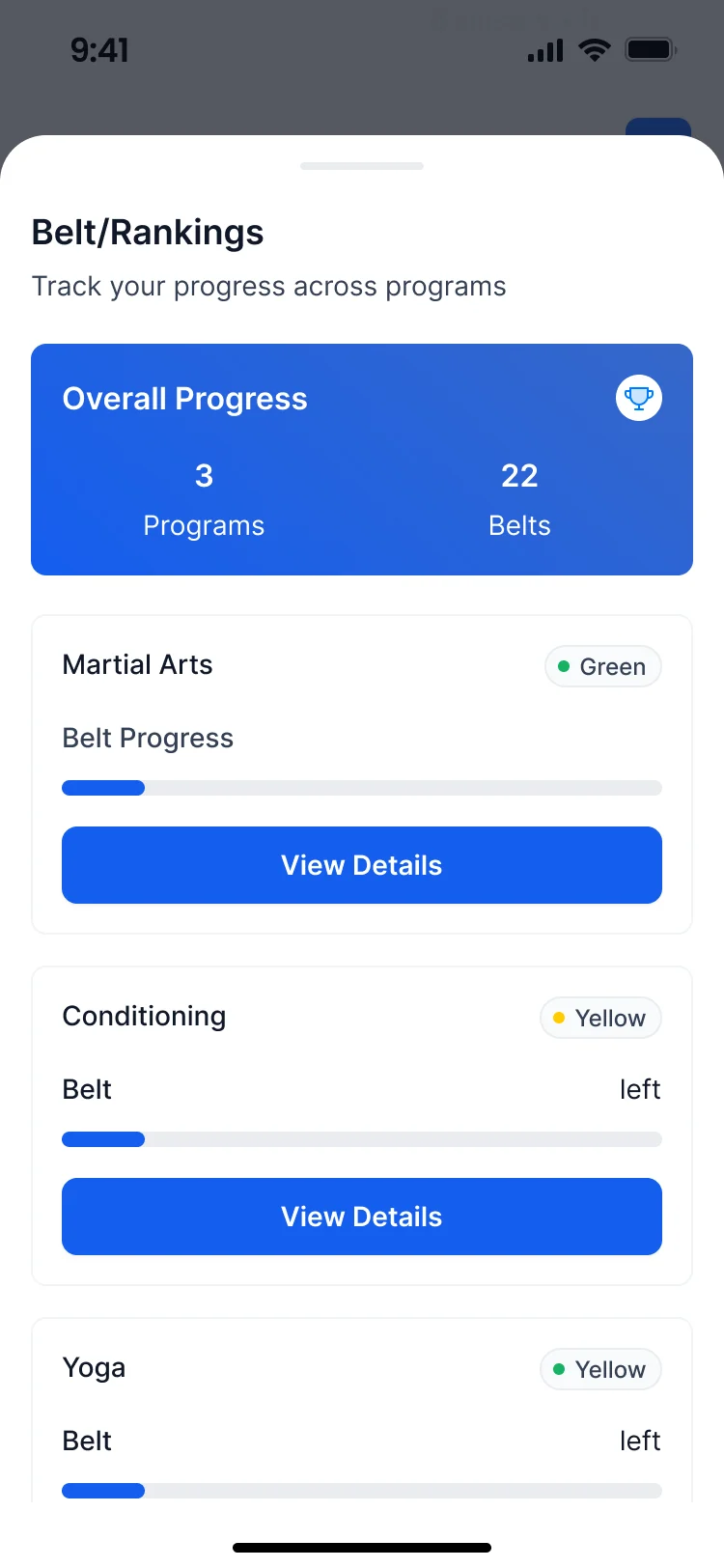
Student app: notes and belts
Instructor notes and belt progress, in the student's pocket.
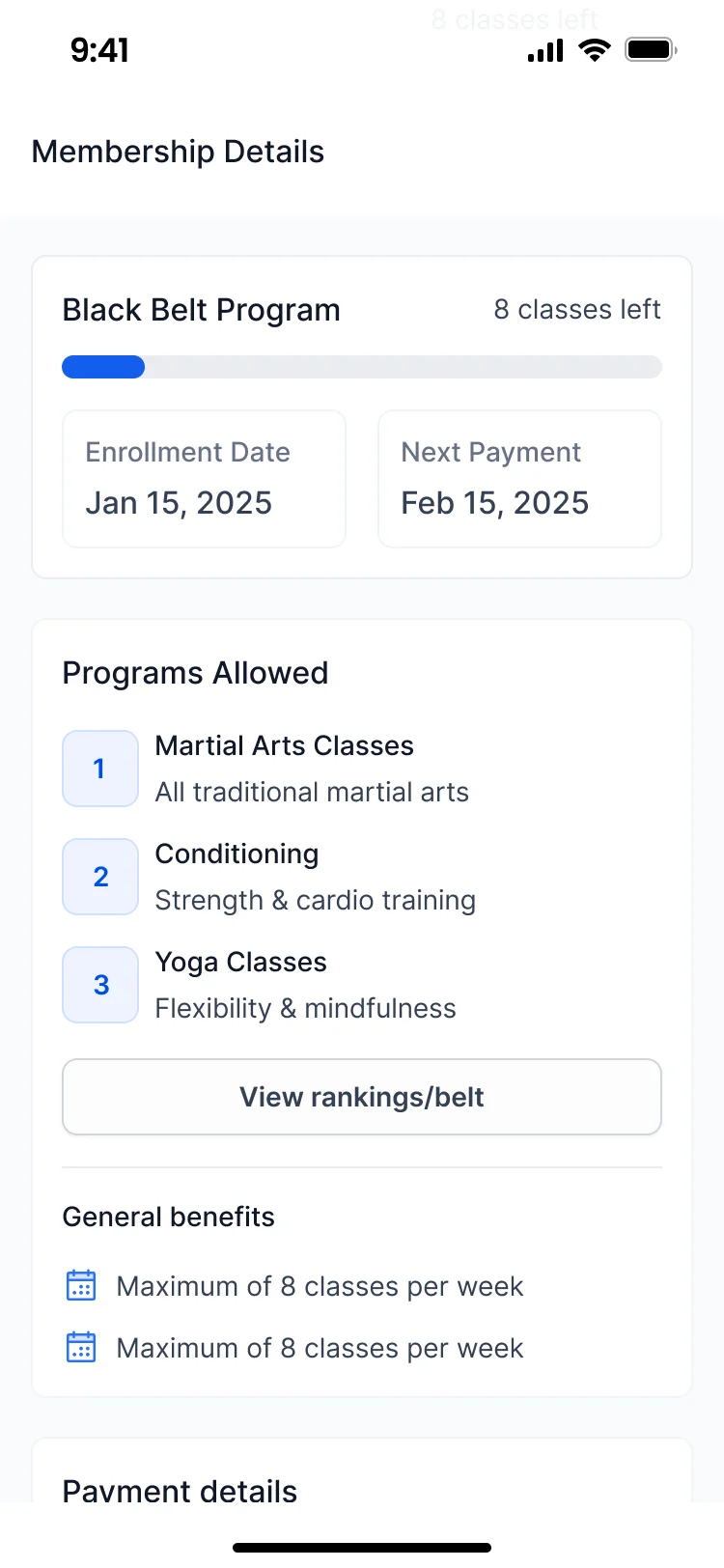

Student app: account
What happened
I designed and built the web platform and the mobile app in Bubble over six to seven months. DojoHub shipped on the web, iOS and Android and is now used by 10+ dojos, covering the full lifecycle from student enrollment to recurring billing. Owners set up their school, convert leads, grade students and collect payments from one dashboard, and students handle bookings, waivers and belts from their phone.
What I would do differently: map every feature to a clear scope before building. Planning the feature set up front would have kept scope creep out of the project.
“This saved us. We were drowning in spreadsheets. Now I can grade students, collect payments, and track everything from one place.”
Let's talk
Want something like Dojohub CRM for your business? Book a free strategy call and leave with a clear next step.